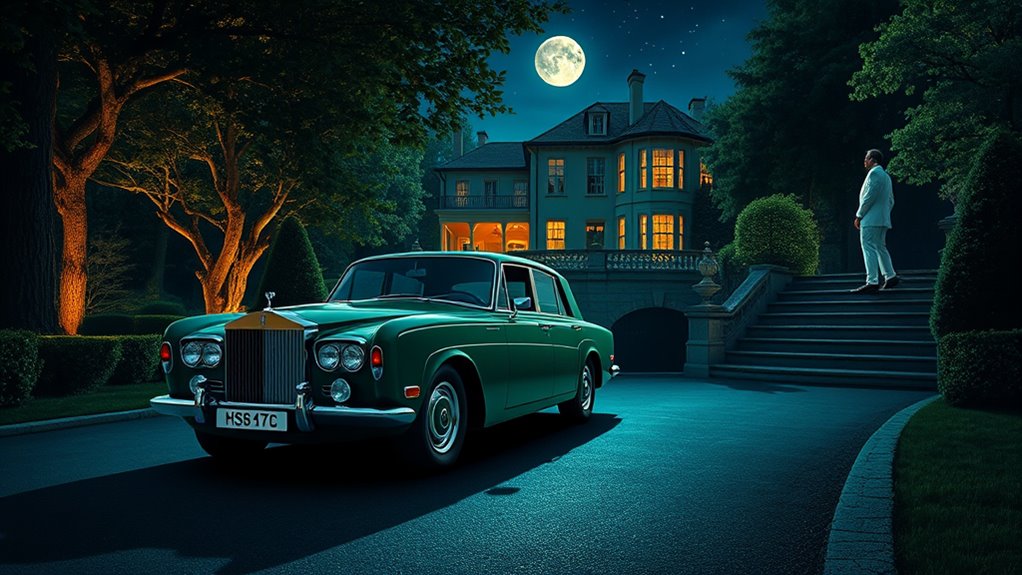

Gatsby believes he can repeat the past because he’s driven by nostalgia, which creates an illusion that history can be rewound and perfected. His obsession shows how powerful this longing is — it makes him think he can recreate a lost love and era. While many see the past as unchangeable, Gatsby’s story suggests that nostalgia can tip us into believing we control time. Keep exploring to uncover why this desire might be more dangerous than it seems.
Key Takeaways
- Gatsby believes that nostalgia allows him to reconstruct and relive the past, making it feel accessible again.
- His obsession with recreating a idealized history illustrates how nostalgia can distort reality and influence actions.
- Gatsby’s conviction shows that, psychologically, people often see the past as fixable and worth pursuing.
- The story demonstrates how longing for the past can motivate but also blind individuals to present realities.
- Ultimately, Gatsby’s pursuit reveals that while the past is idealized, it’s impossible to fully repeat or reclaim.

Many believe that the past is irretrievable, yet Jay Gatsby’s relentless pursuit of his former love suggests otherwise. His story embodies the idea that, in a way, you can attempt to time travel through the power of nostalgia obsession. You might think that longing for what’s gone is pointless, but Gatsby proves otherwise. He lives in a constructed world where the past remains alive, vibrant, and worth chasing. For him, the past isn’t just a memory—it’s a blueprint for the future he desperately wants to rebuild. His fixation on recreating a bygone era shows how powerful nostalgia can be, blinding him to the reality that time keeps moving forward. You may find yourself entranced by the idea that you can somehow recapture lost moments, like Gatsby’s faith that he can turn back the clock. His obsession isn’t just about love; it’s about holding onto a perfect, unblemished version of days gone by. This desire to rewrite history underscores the power of nostalgia to shape our perceptions and motivate our actions.
This obsession fuels his every move, making him chase illusions rather than accept change. You might imagine that if you could just get back to a specific moment, everything would be perfect again. Gatsby’s belief that he can rewrite history reveals how nostalgia can distort your perception of reality. Instead of accepting that time is relentless, he clings to the hope that he can manipulate it, bending it to fit his desires. It’s a dangerous game—believing you can revisit the past often leads to disappointment. Yet, Gatsby’s story shows how strong this nostalgia obsession can be, making you chase after an ideal that’s impossible to reclaim fully. His relentless hope suggests that, at least in your mind, time travel through memory is achievable.
You might realize that this obsession isn’t just about love or longing; it’s about an innate desire to fix what’s broken or lost. Gatsby’s unwavering belief that he can repeat the past reveals how human nature resists change and embraces illusion. His dream is a testament to the idea that, no matter how much time passes, the mind can conjure up a version of history that feels just as real as the present. Ultimately, Gatsby’s pursuit symbolizes the universal struggle to reconcile the passage of time with our desire to hold onto what’s meaningful. It’s a reminder that nostalgia, while powerful, can also distort reality—yet, deep down, many of us wish we could somehow turn back the clock and rewrite our stories.
Top picks for "gatsby repeat past"
Open Amazon search results for this keyword.
As an affiliate, we earn on qualifying purchases.
Frequently Asked Questions
What Inspired Jay Gatsby’s Obsession With Recreating the Past?
Your obsession with recreating the past stems from a deep memory fixation and idealized nostalgia. Gatsby clings to the belief that he can recapture a perfect moment with Daisy, believing that the past’s beauty can be restored. His idealization blinds him to reality, fueling his relentless pursuit. This fixation makes him think that, with enough effort, he can recreate the happiness and love he once experienced, ignoring life’s inevitable changes.
How Does Gatsby’s Background Influence His Longing to Repeat the Past?
You’re like a magnet drawn to a dream, unable to resist reliving your childhood aspirations. Gatsby’s background fuels his longing to repeat the past because he believes social mobility can rewrite his story. His humble beginnings inspire him to believe that, with enough effort, he can reinvent himself and attain the life he always imagined, making his past seem just within reach, no matter how impossible it might seem.
Are There Real-Life Examples of People Trying to Relive Their Pasts Like Gatsby?
Yes, you can find real-life examples of people engaging in nostalgic pursuits and a past obsession, much like Gatsby. You might see individuals trying to relive their youth through old hobbies, vintage fashion, or revisiting childhood homes. Sometimes, people chase after lost love or idealized memories, believing they can recreate the past. These efforts reflect a desire to recapture a time they see as better or more meaningful.
How Does Daisy’s Character Affect Gatsby’s Belief in Reclaiming the Past?
Did you know nearly 60% of people experience nostalgia obsession? Daisy’s character fuels Gatsby’s romantic idealism, making him believe he can reclaim their past love. Her charm and allure reinforce his hope, blinding him to reality. You see, her presence keeps his nostalgia obsession alive, convincing him that their love can be reborn. Daisy’s influence is the key to Gatsby’s unwavering belief that he can recreate the past with her.
What Psychological Factors Drive Gatsby’s Relentless Pursuit of the Past?
Your nostalgic yearning for the past fuels Gatsby’s relentless pursuit, making him believe he can recreate a perfect, idealized version of his life. His identity obsession blinds him to reality, pushing him to chase illusions rather than accept change. This drive stems from a deep desire to reclaim happiness and love, even if it’s impossible, showing how psychological factors like longing and obsession shape his actions.
Conclusion
So, remember, just like Gatsby’s relentless hope, you can chase your dreams and reshape your past. Don’t let the fears of failure block your path—your future is a blank page waiting for your story. With determination, you can turn back the clock and make the impossible possible, because your passion is the wind that fills your sails. Embrace the power within you, and watch your dreams bloom like a garden in spring.