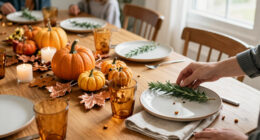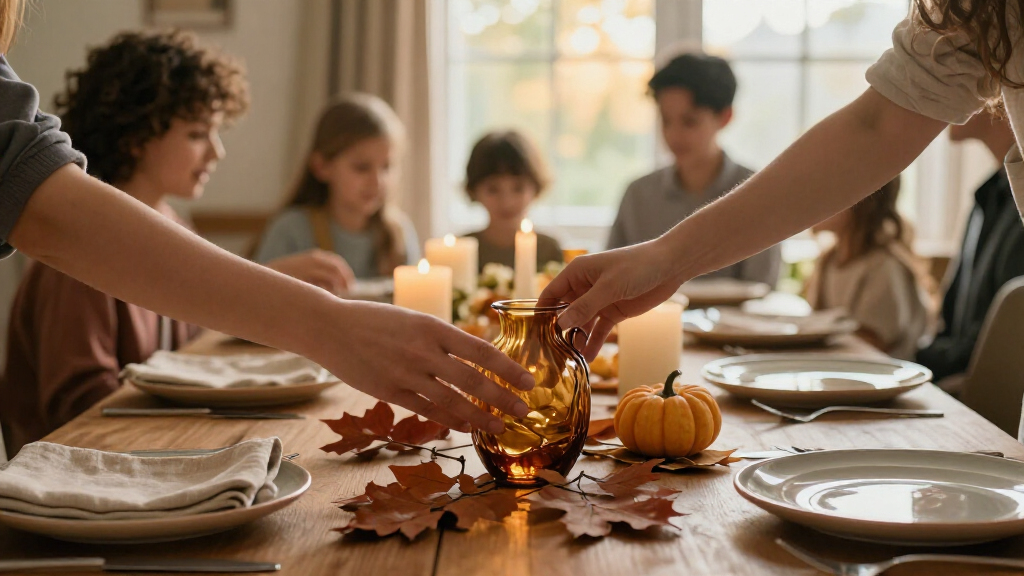

Create a welcoming Thanksgiving table that looks festive and still leaves space for dinner. This guide is for beginners who want to arrange a centerpiece, set place settings, and add seasonal details using items they own or can gather easily. Allow 1-2 hours, including time to clear and measure the table.

Get the little things that make your day delivered free with Prime
- Fast, free delivery on millions of items
- Prime Video, Amazon Music and more included
- Member-only deals all year

36PCS Mini Artificial Pumpkins Fall Decor Set
- ✔ Pieces: 36
- ✔ Assortment: 4 orange pumpkins, 2 white pumpkins, 2 gourds, 2 pinecones, 6 acorns, 20 fall leaves
- ✔ Materials: Plastic and polyethylene foam

Terracotta Cotton Cheesecloth Table Runner, 35 x 120 Inches
- ✔ Brand: Keketoarrange
- ✔ Dimensions: 120 × 35 inches
- ✔ Material: Cotton

15PCS Fall Pumpkins for Indoor Autumn Thanksgiving Home Decor
- ✔ Pieces: 15 artificial pumpkins
- ✔ Size: About 2.75 inches each
- ✔ Colors: Coffee, gold, beige, orange, and brown
Difficulty: Beginner | Time: 1-2 hours
What You’ll Need
Tools & Materials:
- Measuring tape or ruler
- Tablecloth, runner, or placemats
- Plates, flatware, glasses, and napkins for each guest
- Low centerpiece items such as pumpkins, gourds, flowers, or candles
- Serving dishes and trays planned for the meal
- Scissors or pruning shears if trimming flowers or greenery
Knowledge:
- Basic table setting
- Ability to check candle and flower arrangements for stability
Count guests and serving dishes before shopping or arranging. Use clean, food-safe items, and keep candles away from greenery, sleeves, and other flammable materials. If children or pets will be near the table, choose flameless candles or skip open flames.
36PCS Mini Artificial Pumpkins Fall Decor Set
When we want the Thanksgiving table to read as a harvest display at a glance, this is the most complete starting point of the three. Its assortment includes four orange pumpkins, two white pumpkins, two gourds, leaves, acorns, and pinecones, so we can build a loose centerpiece with more variation than the velvet-pumpkin set provides. Scatter the foliage around a bowl or arrange the pieces along the runner for a fuller table without adding fresh produce.That variety is also the tradeoff. Thirty-six separate pieces ask us to arrange them, and a generous spread can take over the space needed for serving dishes. The plastic and polyethylene foam construction is lightweight and reusable, but it will not have the weight or natural feel of real gourds. Compared with the terracotta runner, this set supplies the focal details rather than the table’s broad visual base. It makes the most sense when we want to decorate a centerpiece and several small gaps; skip it if we prefer a minimal table or expect one large statement piece.
Pros:
- Combines pumpkins, gourds, leaves, acorns, and pinecones in one set.
- Several colors and shapes make the arrangement easier to vary.
- Lightweight pieces can be rearranged across a centerpiece or mantel.
- Reusable artificial materials do not need watering or seasonal replacement.
Cons:
- The many small pieces require arranging to look cohesive.
- Plastic and foam do not have the weight or texture of real harvest materials.
- A full spread may crowd a small dining table.
Best for: Hosts who want a varied harvest centerpiece with small accents to distribute around a Thanksgiving table.
Not ideal for: Minimalist tables, anyone who wants a single ready-made focal object, or tables with little room between serving dishes.
Bottom line: Choose this set when centerpiece variety matters most; it gives us the broadest Thanksgiving harvest palette, provided we have room to arrange it.
“Choose this set when centerpiece variety matters most; it gives us the broadest Thanksgiving harvest palette, provided we have room to arrange it.”
Terracotta Cotton Cheesecloth Table Runner, 35 x 120 Inches
This runner takes a different approach from the two pumpkin assortments: it shapes the table first, leaving us to choose what sits on it. At 35 by 120 inches, the terracotta cotton fabric creates a broad, flowing base for serving pieces and a central arrangement. Its gauze and cheesecloth textures add softness that the artificial pumpkins cannot, and the stitched edges are intended to help prevent fraying.As a Thanksgiving pick, its strength is coordination. The warm solid color can tie the orange and brown tones of either pumpkin set together, while the included jute rope offers an optional rustic finishing detail. But the runner alone will not make a centerpiece; unlike the 36-piece set, it brings no leaves, gourds, or other tabletop objects. Its long dimensions can also be more fabric than a compact table needs, and terracotta may vary slightly from what a screen suggests. Choose it when the table needs an anchor and you already have, or plan to add, decorative accents.
Pros:
- Large 35 × 120-inch format spans a substantial table.
- Soft cotton with gauze and cheesecloth textures adds visual depth.
- Stitched edges are designed to help resist fraying.
- Machine or hand washing is listed, and a jute rope is included.
Cons:
- Does not include pumpkins or other centerpiece decorations.
- The long size may overwhelm a small table.
- Terracotta color can vary slightly by screen.
Best for: Hosts who want a textile base for a long dining table and plan to layer pumpkins, candles, or serving pieces over it.
Not ideal for: Shoppers seeking a complete centerpiece in one package or anyone whose table is too short for a 120-inch runner.
Bottom line: Pick the runner when you want the table itself to feel dressed; add one of the pumpkin sets if you also need a harvest focal point.
“Pick the runner when you want the table itself to feel dressed; add one of the pumpkin sets if you also need a harvest focal point.”
15PCS Fall Pumpkins for Indoor Autumn Thanksgiving Home Decor
Where the 36-piece assortment mixes shapes and foliage, this set keeps to one motif: 15 small flocked foam pumpkins in coffee, gold, beige, orange, and brown. Each is listed at about 2.75 inches, so the set fits naturally into a shallow bowl, along a narrow runner, or between place settings when we want a lighter touch. The velvet-like surface also adds a softer texture than the plastic and foliage mix in the top-ranked set.The focused assortment is convenient, but it limits what we can build. These pumpkins do not provide leaves, acorns, or pinecones, so a table arrangement may need greenery or another material to avoid looking like a row of repeated shapes. They also do not replace the terracotta runner as a table-spanning layer. Compared with the broader 36-piece set, this is easier to place in small doses but less capable of making a complete harvest scene on its own. Choose it for a restrained bowl filler or repeatable accents; skip it if we want a varied centerpiece from the box.
Pros:
- Fifteen pumpkins provide repeatable accents for bowls and trays.
- Five listed colors make it easier to coordinate with warm table linens.
- Flocked velvet texture adds softness compared with smooth plastic decor.
- Small listed size suits compact displays and narrow spaces.
Cons:
- Pumpkins only; no leaves or other shapes to add variety.
- Small pieces may look sparse across a large dining table.
- Foam construction may not feel as substantial as natural materials.
Best for: Anyone decorating a small table, bowl, tray, or place settings with coordinated, compact pumpkin accents.
Not ideal for: Hosts who want mixed foliage and harvest objects or need one set to fill a large table centerpiece.
Bottom line: Choose this set for compact, coordinated pumpkin accents; for a fuller centerpiece, the mixed 36-piece assortment offers more to work with.
“Choose this set for compact, coordinated pumpkin accents; for a fuller centerpiece, the mixed 36-piece assortment offers more to work with.”
As an Amazon Associate we earn from qualifying purchases.
Before You Start
Decide whether food will be served at the table or from a counter. A family-style meal needs open space for serving dishes, while plated service allows more room for decoration. Choose two or three colors to guide your choices, such as cream, rust, and green. Check that the table is stable and clean, and leave a clear path around it for chairs and guests.
Step-by-Step Instructions
Step 1: Clear and measure the table
Remove everyday items, then measure the usable tabletop length and width. Count the seats you need and mark a rough space for each guest. Leave enough clearance for chairs to pull out and for people to sit without bumping elbows.
Tip:Plan for the largest serving dishes, not just the plates. If space is tight, reserve a nearby counter for drinks or extra food.
Check: You can see where each place setting and serving dish will go, with a clear route around the table.
Step 2: Choose a base layer
Lay down a tablecloth, runner, or placemats. Smooth wrinkles and center the fabric or runner so it does not hang where guests will catch it with their knees. Pick a neutral base if your plates or centerpiece already have strong colors or patterns.
Tip:Check the tablecloth drop on all sides. A shorter drop is easier to manage with children and wheelchair users.
Check: The base layer sits straight, stays clear of chair legs, and does not cover the places reserved for serving dishes.
Step 3: Build a low centerpiece
Arrange a few pumpkins, gourds, flowers, or branches along the center of the table. Keep the display low enough for guests to see one another across it. Group items in odd numbers and vary their size, while leaving open gaps for serving dishes.
Tip:Use a tray or shallow bowl to keep small pieces together and make the centerpiece easier to move when food arrives.
Check: Guests can make eye contact across the table, and the centerpiece does not block a serving spot.
Step 4: Add candles or lighting
Place candles in sturdy holders at intervals through the centerpiece, or use flameless candles for a lower-maintenance option. Keep flames away from dry leaves, flowers, napkins, and anything guests might brush with a sleeve. Test the lighting from seated height.
Tip:Unscented candles keep aromas from competing with the meal. Do not leave lit candles unattended.
Check: The candles stand securely, cast light without blocking faces, and sit clear of flammable decor.
Step 5: Set each place
Place one dinner plate at each seat, centered in front of the chair. Set forks on the left and knives and spoons on the right, with knife blades facing the plate. Put a water glass above and to the right of the plate, and fold or place a napkin on the plate or beside the forks.
Tip:If you are serving multiple courses, add only the dishes and flatware guests will use. Extra pieces can crowd a small table.
Check: Each guest has a plate, napkin, appropriate flatware, and a reachable glass, with similar spacing from seat to seat.
Step 6: Add personal seasonal details
Place a name card, a small leaf, or a simple favor at each setting if you want to mark seats. Use one detail consistently rather than adding many unrelated objects. Keep items small enough to move when dinner is served.
Tip:Write names clearly and check spelling before placing cards. Avoid loose glitter or decorations that can fall into food.
Check: Guests can identify their seats, and the extra detail does not take up plate or glass space.
Step 7: Test the table from a guest’s seat
Pull out each chair and sit at several places around the table. Check sightlines, reach to the centerpiece, and room for elbows. Set out the actual serving dishes or similarly sized trays, then move decor until dishes fit without covering place settings.
Tip:Ask someone else to sit across from you if possible; it is easier to spot blocked views from both sides.
Check: Every seat has a clear view and enough room for food, drinks, and comfortable movement.
Step 8: Prepare for dinner service
Remove any decor that will compete with hot dishes or take up needed space. Keep matches, lighter, and candle snuffer nearby if using real candles. Before guests sit, check that glasses are clean, napkins are accessible, and the serving route is clear.
Tip:Take a photo of the finished table before dinner; it can help you recreate the setup next year.
Check: The table is ready for guests and food, with no unstable objects or blocked serving areas.
Common Mistakes to Avoid
- Choosing a tall or wide centerpiece that blocks conversation or food service. — Keep the arrangement low, measure its footprint, and leave open sections for dishes.
- Adding too many colors, textures, and small decorations. — Limit the palette to two or three colors and use a few repeated seasonal elements.
- Placing candles near dry foliage or where sleeves can brush them. — Use stable holders, leave clear space around flames, or choose flameless candles.
- Setting the table without accounting for the actual meal dishes. — Place the serving dishes on the table during the test fit and move decor before guests arrive.
Troubleshooting
Problem: The table feels crowded once serving dishes are added.
Solution: Remove extra decor, stack or relocate dishes, and move drinks or side dishes to a nearby counter. Keep each guest’s plate and glass within easy reach.
Problem: Guests cannot see one another across the table.
Solution: Lower the centerpiece by removing tall stems or moving taller pieces to a sideboard. Check sightlines again while seated.
Problem: The tablecloth slips or bunches when chairs move.
Solution: Recenter the cloth and smooth it before seating guests. Use a well-fitting runner or placemats if the cloth continues to move.
Problem: Fresh flowers wilt or shed leaves before dinner.
Solution: Trim stems and refresh water, remove damaged leaves, and keep the arrangement away from heat and direct sun. If it still looks tired, replace it with sturdy branches or seasonal produce.
What Success Looks Like
The finished table has one low, stable focal point; matching place settings for every guest; clear sightlines; and room for the meal’s serving dishes. Guests can sit, reach their food and drinks, and move around the table without catching fabric or decor. Candles, if used, are secure and separated from flammable materials.
Next Steps
Before guests arrive, wipe fingerprints from glassware, refill water glasses, and make a final check for stable decor and clear serving paths. After dinner, extinguish candles, remove perishable flowers and food, and store reusable pieces together. Keep your setup photo and note what worked so you can adjust the layout for next year.
Frequently Asked Questions
How tall should a Thanksgiving centerpiece be?
Keep it low enough that seated guests can see one another across the table. If you want height, place taller decorations on a sideboard or use narrow stems that do not fill the center sightline.
Can I decorate a small Thanksgiving table?
Yes. Use placemats, one compact tray of seasonal items, and a small vase or flameless candle. Move drinks and extra serving dishes to a nearby surface to preserve table space.
Should the centerpiece include scented candles or flowers?
Choose unscented candles and lightly scented or unscented flowers. Strong fragrances can compete with the food and may bother guests with sensitivities.
When should I set the table?
Set the base layer and durable decor the day before if the table is clean and protected. Add fresh flowers, food, and lit candles on the day of the meal, after checking the serving layout.
What if I do not have matching plates?
Use a consistent element to tie the settings together, such as matching napkins, placemats, or simple glassware. Arrange different plates evenly around the table so no one setting looks like an afterthought.