TL;DR
Thanksgiving table decor works best when it pairs a clear color palette with a low, compact centerpiece and enough room for guests and serving dishes. Use linens and tableware you own, then add a few seasonal touches such as clean gourds, apples, or greenery. The table should feel warm and intentional while making the meal easy to share.
A beautiful Thanksgiving table can still fail if your guests have to dodge a vase to see one another or move three pumpkins to pass the gravy. The best Thanksgiving table decor gives the meal a warm setting while leaving people room to talk, eat, and reach for the rolls.

Get the little things that make your day delivered free with Prime
- Fast, free delivery on millions of items
- Prime Video, Amazon Music and more included
- Member-only deals all year
You can build that feeling with a few choices: a palette that suits your home, a centerpiece that stays low and compact, and place settings that feel finished without crowding the table. You do not need a matching dinnerware set or a cart full of seasonal decorations. A folded napkin, an apple, and a candleholder you already own may do more than another decorative object.
This guide walks you through color, centerpieces, place settings, small tables, and budget friendly ways to reuse what you have. The aim is simple: a table that looks inviting in the soft afternoon light and still works when the serving dishes arrive.
Choose two or three colors that connect your dishes, linens, and seasonal accents.
Keep centerpieces low and compact so guests can see across the table and pass food.
Use clean produce, greenery, or objects you already own before buying a full decor set.
Check place settings and serving space with the actual plates and bowls before guests arrive.
Keep flames, damp leaves, and bulky decor away from linens, sleeves, and busy serving areas.
Choose a color palette that makes the whole table feel settled
For Thanksgiving table decor, choose two or three colors that connect your linens, dishes, and seasonal accents. Warm neutrals with rust and gold feel classic, while cream, deep green, and natural wood give the table a quieter look. A limited palette helps mismatched pieces feel like they belong together because repeated colors give the eye a path across the table. With fewer competing colors, differences in shape and texture read as character instead of clutter.
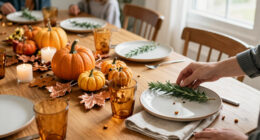
Start with what you already own. If your everyday plates are white and your napkins are blue, you can add warm color with pears, small pumpkins, or a rust colored runner instead of buying new dishes. Imagine a cream tablecloth, white plates, and a row of green and orange gourds: the colors feel related, but the table still has room to breathe. Let the strongest color appear in just a few places; repeating it in napkins and produce is usually enough to tie the setting together.
Use texture to keep a restrained palette from looking flat. Linen, woven placemats, clear glass, and a few matte ceramic pieces each catch light differently. You might set a simple white plate on a braided placemat and fold a soft green napkin beside it; the result feels considered even though no two materials match. Texture also adds visual interest without requiring more objects, which helps keep the table open for food.
Color choices can depend on your room. A dark wood table may already bring warmth, so pale linens and greenery can brighten it. A white table may benefit from deeper tones. Treat the palette like a frame for the meal, not a rulebook: the room’s existing colors are useful context, and a palette that works with them will feel more natural than one that competes for attention.
Popular right now

Bose QuietComfort True Wireless Earbuds with Active Noise Cancellation, Bluetooth 5.3, USB-C Charging, IPX4, Black

Dyson Ball Animal 3 Upright Corded Vacuum

eufy C28 Robot Vacuum and Mop for Pet Hair, 15,000 Pa
As an affiliate, we earn on qualifying purchases.
Build a centerpiece people can see across
A good Thanksgiving centerpiece stays low, narrow, and easy to move, so guests can see one another and servers can still set down food. Height and footprint both matter: a tall vase can block conversation, while a wide arrangement can crowd the serving dishes even if it barely rises above the table. Those limits affect how the meal flows; guests need clear sightlines for conversation and enough shared space to pass or set down bowls.
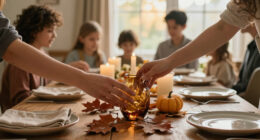
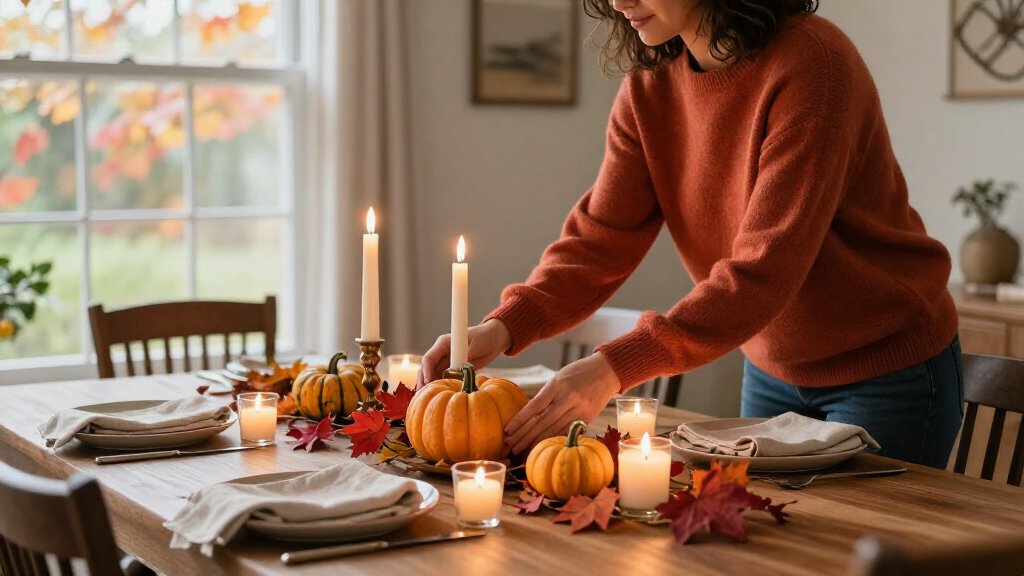
Try a slim runner with three small groupings instead of one large arrangement. For example, place a few clean mini pumpkins at the center, add two short candleholders, and leave gaps between them. Those open spaces give you somewhere to put a gravy boat or a bowl of cranberry sauce when dinner begins. Several small groupings are easier to shift as serving needs change, though they take a little more care to keep balanced than one simple vase.
Natural materials add autumn character without much fuss. Apples, pinecones, branches, dried flowers, and small gourds can work well. Wash produce before it sits near food, and keep damp leaves off cloth linens so they do not leave marks. If you use fresh flowers, trim them low and choose a stable vase that will not tip when someone reaches for a plate. Fresh flowers bring color and fragrance but need water and a sturdy vessel; dried or reusable stems need less attention, though brittle pieces can snag sleeves or shed.
Candles add a soft glow as the afternoon turns dusky, but open flames need clear space from sleeves, fabric, and greenery. Use sturdy holders, keep them away from busy serving areas, and never leave lit candles unattended. Battery operated candles can give you the same pool of amber light without an open flame, which is useful when guests are moving dishes around or children are at the table.
Layer place settings without squeezing the plates
Thoughtful place settings come from a few useful layers: a placemat or charger, a dinner plate, a napkin, and simple flatware. Each layer adds a little texture, but too many extras can leave guests with nowhere to rest a glass or elbows. Keep the setting sized to the actual table and the plates you plan to serve. The aim is to make each place feel intentional while preserving the space people need to eat comfortably.
For an easy example, place a woven mat under a white dinner plate, then fold a cloth napkin beside it and add your everyday fork and knife. A water glass completes the setting. If you want one personal touch, tuck a small apple or a handwritten place card near the napkin instead of adding a second decorative plate. A single accent draws attention without taking up the space another dish would occupy.
Place cards are especially useful when you are hosting a large group or balancing different seating needs. They can help guests find a spot without a round of “Where should I sit?” while the hot dishes wait on the counter. They can also let you plan ahead for who needs an easy route to a seat or room for a mobility aid. You can write names on simple card stock, a small leaf, or a tag tied around a napkin; choose a format guests can read easily without having to pick up or move other items.
Think about comfort before adding a charger or extra glass. Guests who use mobility aids may need a clear path to their chair, and everyone needs enough elbow room to eat. A charger gives the setting a defined edge, but it takes up space and may be unnecessary if the dinner plate already looks finished. If the setting feels crowded before dinner starts, remove a layer. The table will feel calmer, and your guests will notice the meal more than the accessories.
Make a small table work for a generous meal
On a small Thanksgiving table, keep decor compact and vertical only when it stays out of sightlines, then move extra serving dishes to a sideboard or counter. A narrow runner, a few small accents, and simple place settings preserve space for plates and passing food. The meal feels welcoming when everyone can reach what they need. Because the table has limited surface area, each decorative piece competes directly with a plate, glass, or serving bowl; choosing fewer items makes the room easier to use.
Say you are hosting four people at a round table that already feels snug. A wide garland and four chargers may look lovely in a photograph, but they can leave no space for the stuffing bowl. Try one small vase of clipped branches in the center, skip the chargers, and serve drinks from a nearby counter instead. This shifts the visual emphasis from a fully layered setting to a shared meal, and it avoids making guests pass dishes over the centerpiece.
A buffet arrangement can make the room easier to use. Place the main dishes on a sideboard, then let guests serve themselves before they sit down. Keep the dining table focused on plates, glasses, and conversation. This requires guests to get up for seconds, so it may be less convenient for anyone with limited mobility; keep the route clear and put frequently needed items within easy reach. If you do not have a sideboard, a cleared kitchen counter can fill the same role.
Before guests arrive, set out the plates and one or two serving bowls as a space check. You will see right away whether a centerpiece is too wide or a glass is awkwardly placed. This rehearsal reveals practical problems that a bare table can hide, such as a bowl interrupting the path for passing food. Adjusting early is easier than asking someone to hold the salad while you move a pumpkin during dinner.
Get an intentional look without buying a new set
You can create a polished Thanksgiving table on a budget by starting with the dishes, linens, and candleholders you already own, then adding only a few seasonal items. Repeated colors and textures make a table feel connected, even when each plate comes from a different cupboard. A complete matching set is not the price of admission; using familiar pieces also lets you spend on the parts of the meal or gathering that matter more to you.
Try this simple order of operations:
- Clear and measure the table. Note how much room each guest needs and where the serving dishes will go.
- Choose one anchor. Use a runner, tablecloth, or bare wood as the visual base.
- Repeat one accent color. Bring it back in napkins, produce, leaves, or glassware.
- Add one centerpiece idea. Group a few small items rather than buying a large arrangement.
- Set the table with the real plates. Remove any layer that crowds the place settings.
For instance, a secondhand brass candleholder, a clean pear, and cloth napkins from the linen drawer can make ordinary white plates feel special. If you shop for anything, choose something reusable, such as napkins or a sturdy serving bowl. Reusable items cost more upfront but can serve across many meals; seasonal produce can serve as decor and later become part of the meal, though local prices and availability vary. The better choice depends on what you already have and whether you will use the item again.
Mixing old and new pieces often adds more character than a matching kit. A chipped but clean heirloom platter beside modern glassware tells a small story about the people gathering around the table. That lived in feeling is part of what makes a holiday meal feel like yours, and it can make a carefully assembled table feel more personal than a perfectly coordinated set.
Compare centerpiece ideas before you set the table
The right centerpiece depends on your table size, serving plan, and comfort with upkeep. Fresh flowers bring fragrance and natural variation; faux stems can be reused; produce gives you seasonal color without a separate bouquet. Each choice can work if it stays clean, stable, and easy to move. The tradeoff is how much attention the arrangement needs and how much room it takes from the meal.
| Centerpiece | Works well when | Watch for |
|---|---|---|
| Fresh flowers | You want color and a light natural scent | Keep stems trimmed low and the vase stable |
| Faux flowers | You want an accent you can store and reuse | Dust them and avoid arrangements that look oversized |
| Pumpkins and gourds | You want an easy seasonal look with little setup | Choose clean pieces and leave space for dishes |
| Branches and dried materials | You want texture in a restrained palette | Keep brittle or prickly pieces away from sleeves and flames |
A family with young children might prefer a compact group of gourds over several glass vases. Someone hosting a quieter dinner may enjoy a low bunch of fresh flowers. Neither choice is automatically better; the useful question is what will suit the people and the food on your table. A durable, easy-to-move arrangement can be more practical when the table will be busy, while flowers may be worth the extra care when fragrance and color are part of the mood you want.
You can also combine a few options, as long as the arrangement stays simple. One short vase, a pair of battery candles, and a handful of apples can feel balanced. Leave a clear route through the middle for serving bowls, and move any item that guests keep reaching around. If the arrangement needs constant adjustment once people sit down, it is taking more attention from the gathering than it adds to the table.
Keep the table welcoming for every guest
A welcoming table supports the people sitting at it, so decor should leave room for comfort, access, and the meal itself. Keep walkways clear, give each place setting enough space, and check whether anyone needs an easier route to a seat. These choices matter because a beautiful arrangement cannot make up for a guest struggling to sit down or reach what they need. Small practical choices can make a gathering feel more relaxed.
If a guest has a food allergy, labels near shared dishes can help everyone identify what is safe to eat. Keep the labels easy to read and place them beside the food rather than hiding them under a centerpiece. Labels help guests make an informed choice, but they do not replace clear communication about ingredients or how dishes were prepared. You can also ask guests about seating needs ahead of time and avoid putting decor where it blocks a cane, walker, or serving path.
For a large group, put extra candles and decorative pieces on a sideboard instead of squeezing them between plates. That surface can also hold a small sign, a bowl of apples, or a stack of napkins. The dining table stays open, while the room still carries the same autumn mood. This works especially well when the sideboard is easy to reach; if guests must cross a busy serving route to get napkins, keep the most needed items closer to the table.
Use a final “sit down” check before the meal: take a seat at each side of the table, look across at the people opposite you, and reach for a glass or serving bowl. If something blocks your view or feels awkward to reach around, guests will likely notice it too. The check tests the table from the guest’s perspective, when sightlines, chair access, and serving space become real rather than theoretical. A little empty space is not wasted space; it is room for the meal to unfold.
Frequently Asked Questions
How do I decorate a Thanksgiving table on a budget?
Begin with dishes and linens you own, then repeat one accent color with a few seasonal items. A couple of clean gourds, apples, or branches can make a simple centerpiece without requiring a new matching set.
What colors work well for Thanksgiving table decor?
Rust, gold, burgundy, warm neutrals, and evergreen are classic choices. Soft white, muted green, or a mostly neutral palette can feel seasonal too, especially when you add natural textures like linen, wood, or produce.
How tall should a Thanksgiving centerpiece be?
Keep it low enough that guests can see one another across the table. If you use a taller arrangement, keep it narrow and make sure you can move it easily when serving begins.
Can I use pumpkins or gourds as table decor?
Yes. Small, clean pumpkins and gourds can sit at the center or beside place settings. Leave enough open space for dishes, and wash produce before placing it near food.
How can I make a small Thanksgiving table look festive?
Use a slim runner, a compact centerpiece, and fewer place setting layers. If possible, put serving dishes on a sideboard or counter so the table stays open for plates and conversation.
How do I make candles safer around a centerpiece?
Use stable holders and keep open flames away from greenery, fabric, sleeves, and serving areas. Never leave lit candles unattended; battery operated candles are a handy option when the table gets busy.
Conclusion
Start with the table you have, then add a palette, one compact focal point, and place settings that leave people room to eat. A few useful details will make the Thanksgiving table decor feel intentional without turning the meal into a display.
When the candles glow and the bowls begin to travel, the best decoration is the space that lets everyone see one another.