Mahatma Gandhi’s words, “Where there is love, there is life,” remind you that true strength comes from moral conviction and compassion. He showed that peaceful resistance, rooted in love and truth, can challenge injustice and bring lasting change. By acting with patience and unwavering belief, you can see how love empowers others and transforms society. Exploring his life reveals how love is a powerful force—keep discovering how his peaceful methods continue to inspire change today.
Key Takeaways
- Gandhi believed love and nonviolence are powerful forces for social and political change.
- His principle that “Where There Is Love, There Is Life” highlights love as a vital source of strength.
- Nonviolent resistance relies on love, patience, and moral conviction to challenge injustice peacefully.
- Gandhi’s acts of love and compassion inspired global movements for freedom and human dignity.
- True resilience and transformation stem from love, fostering hope, unity, and moral clarity amid adversity.
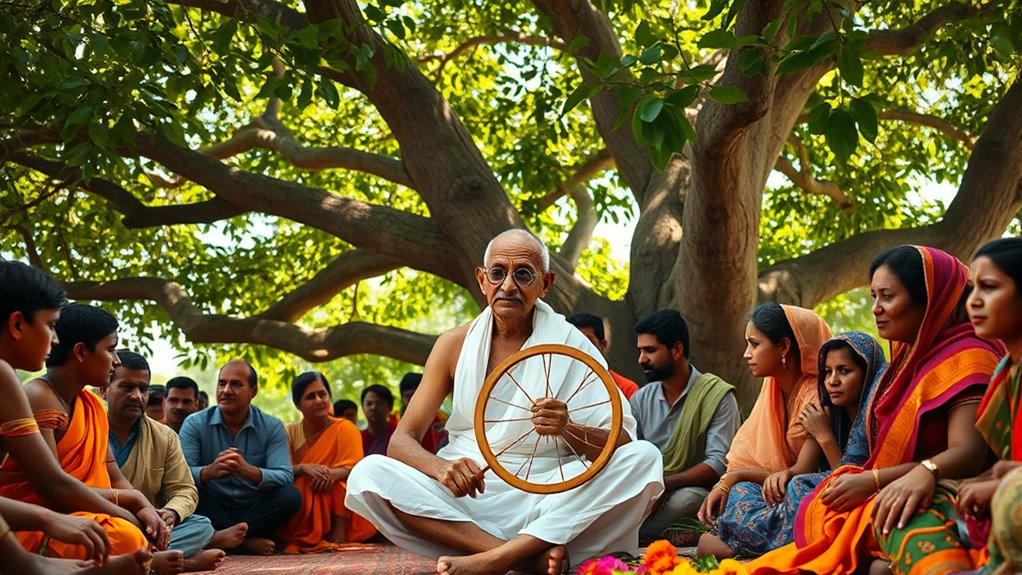
Have you ever wondered how one person’s nonviolent resistance could change a nation? Mahatma Gandhi demonstrated that it’s possible to challenge injustice without resorting to violence. His approach centered on civil disobedience—a deliberate act of defying unjust laws peacefully. Instead of fighting with weapons or violence, Gandhi urged people to refuse compliance with oppressive rules through peaceful protest. This method wasn’t just about breaking laws; it was about sending a powerful message that injustice must be resisted with love and moral strength. Gandhi believed that nonviolent resistance was more than just tactics; it was a way of life rooted in truth and compassion. By practicing civil disobedience, he showed that standing up against tyranny doesn’t require hatred or violence but can be achieved through patience, perseverance, and unwavering conviction. When faced with oppressive British colonial rule, Gandhi led mass movements that mobilized millions of Indians, inspiring them to act according to their conscience. These acts of civil disobedience gained worldwide attention and demonstrated that collective, peaceful resistance could dismantle deeply entrenched systems of injustice. Gandhi’s philosophy proved that change is possible when people refuse to be passive victims and instead choose to resist with dignity. His nonviolent resistance wasn’t passive; it was a strategic, active form of protest that demanded courage and moral clarity. As you reflect on his efforts, realize that his success lay in the power of love and truth to overcome hatred and oppression. Gandhi’s example teaches us that true strength isn’t measured by violence but by the capacity to stand firm in your beliefs without losing your humanity. His campaigns—like the Salt March or the Quit India Movement—are testaments to how simple acts of nonviolent resistance can shake the foundations of unjust regimes. They remind us that even in the face of intimidation, you can choose to resist peacefully, holding onto love and moral conviction. Gandhi’s legacy shows that civil disobedience isn’t just a tactic for political change but a way to elevate human dignity and inspire others to see justice through the lens of compassion. His life encourages you to believe that change begins with individual acts of love and resistance—proof that where there is love, there truly is life. Recognizing that his success was rooted in nonviolent resistance underscores the importance of peaceful methods in effecting social change.

Digital Picture Frame, 10.1 inch Frameo Digital Frame WiFi, 1280 * 800 IPS HD Touchscreen, 32GB Storage, Instant Share Pictures Video, Smart Photo Frame Electronic, Gifts for Mom, House Warming
10.1 inch HD Touchscreen Display; Flyruit wifi frameo digital frame features a 10.1 inch display, its clear 1280x800p...
As an affiliate, we earn on qualifying purchases.
Frequently Asked Questions
What Inspired Gandhi’s Philosophy of Nonviolence?
You’re inspired by Gandhi’s philosophy of nonviolence through his deep adherence to Ahimsa ethics, which emphasize compassion and respect for all living beings. His Satyagraha inspiration came from the belief that truth and love can peacefully challenge injustice. By practicing nonviolence, you learn that true strength lies in patience, humility, and moral courage, demonstrating that peaceful resistance can bring meaningful social change.
How Did Gandhi Influence Global Civil Rights Movements?
You see Gandhi’s global influence shaping civil rights by inspiring courageous campaigns and compassionate protests worldwide. His commitment to nonviolence and truth sparked social change, motivating leaders like Martin Luther King Jr. and Nelson Mandela. By demonstrating that peaceful persistence promotes progress, Gandhi’s principles continue to influence international civil rights struggles, inspiring individuals everywhere to stand up, speak out, and seek justice with love and unwavering resolve.
What Was Gandhi’s Role in India’s Independence?
You see, Gandhi played a vital role in India’s independence by leading the colonial resistance against British rule through nonviolent protest. His political leadership inspired millions to stand up for their rights peacefully, organizing marches, boycotts, and civil disobedience. By uniting people and advocating for freedom, Gandhi’s efforts ultimately helped India achieve independence, establishing him as a symbol of nonviolent resistance worldwide.
How Did Gandhi’s Personal Life Reflect His Teachings?
Your actions mirror Gandhi’s teachings of personal integrity and spiritual discipline. You live simply, reflecting humility and dedication, just as he did. You practice nonviolence, uphold truth, and show compassion in everyday life. These choices demonstrate that his personal life was a testimony to his ideals—consistently aligning actions with beliefs. By embodying these principles, you honor his legacy and prove that true change starts with personal integrity.
What Are Some Modern Examples of Gandhi’s Principles in Action?
You can see Gandhi’s principles today through civil disobedience and community activism. Movements like climate protests or social justice campaigns often use peaceful resistance to challenge injustice, reflecting Gandhi’s approach. By standing up against unfair policies and organizing community efforts, people embody his belief in nonviolent change. These actions show that love and perseverance can inspire real societal transformation, just as Gandhi’s teachings continue to motivate modern activism.

Smart White Digital Picture Frame WiFi Send Photos from Your Phone 16GB Storage 10.1inch 1280x800 IPS Touch Screen Digital Photo Frame Auto-Rotate Wall Mountable Photo Picture Frame Digital
【HD IPS LCD screen extraordinary picture quality】digital picture frame is designed with high-quality hd 1280*800 resolution.picture quality is...
As an affiliate, we earn on qualifying purchases.
Conclusion
Remember, when you embrace love, you truly find life’s essence, just as Gandhi taught. His wisdom echoes through time, reminding you that compassion and nonviolence are your most powerful tools. Even in today’s fast-paced world, channeling his spirit can help you navigate challenges with grace. So, stay rooted in love, and let it be your guiding light—because, in the end, where there’s love, there’s life, like a timeless song that never goes out of style.

Digital Picture Frame 10.1 Inch WiFi Digital Photo Frame IPS HD Touch Screen Smart Cloud Photo Frame with 32GB Storage, Auto-Rotate, Easy Setup to Share Photos or Videos Remotely via AiMOR APP (Black)
GIFT THE BEST PHOTO FRAME FOR YOUR LOVED ONES: Order an Anna Bella digital picture frame and preload...
As an affiliate, we earn on qualifying purchases.

Frameo Digital Picture Frame, 10.1 Inch Smart WiFi Photo Frame with 1280x800 HD IPS Touch Screen, Auto-Rotate, Wall Mountable, Share Photos/Videos Instantly via Frameo App from Anywhere
Instant Wireless Sharing: Share photos instantly from anywhere using the secure Frameo digital frame app (iOS & Android)....
As an affiliate, we earn on qualifying purchases.