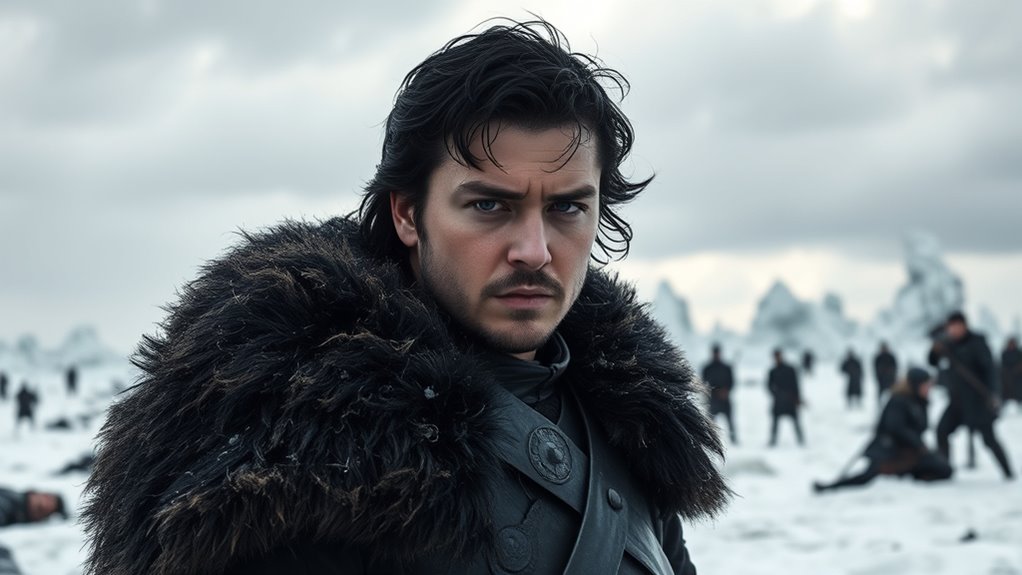

Jon Snow embodies the principle that leaders must share responsibility for their decisions, especially when wielding power. He faces tough moral dilemmas, refusing to shy away from difficult choices like executing traitors and risking his own life to uphold justice. His leadership style emphasizes moral integrity, sacrifice, and personal accountability. If you want to understand how true strength comes from unwavering moral clarity, keep exploring Jon’s inspiring approach to leadership.
Key Takeaways
- Jon Snow embodies moral integrity by personally executing traitors, exemplifying the belief that leaders must share in the risks of their decisions.
- His leadership emphasizes personal responsibility and accountability, reinforcing that those who give orders should also face the consequences.
- Jon’s refusal to shy away from difficult moral choices demonstrates his commitment to justice and moral clarity.
- His actions inspire loyalty and respect, showing that moral consistency is vital for effective leadership.
- The principle “the man who passes the sentence should swing the sword” underscores his belief that true authority involves personal sacrifice and moral courage.
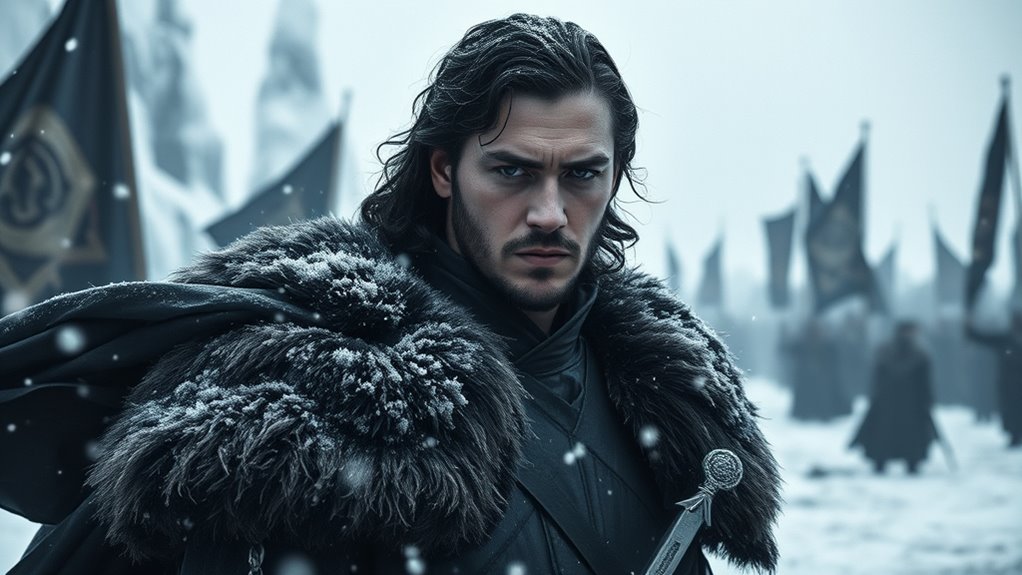
In the world of Westeros, few characters embody the principle that “the man who passes the sentence should swing the sword” quite like Jon Snow. As you observe him, you notice how deeply he struggles with moral dilemmas, constantly balancing justice and mercy. His leadership philosophy is rooted in the belief that true authority requires personal sacrifice and responsibility. You see him not just issuing commands from behind a throne but actively engaging in the brutal, often uncomfortable realities of leadership. When Jon makes decisions, he does so with a sense of moral clarity, even when those choices come at great personal cost. His unwavering sense of duty echoes the importance of moral integrity, a core element of authentic leadership. Jon’s approach to leadership is shaped by his unwavering sense of duty. Unlike many in Westeros, he refuses to shy away from difficult moral questions. You might find him contemplating whether to execute a traitor, knowing that sparing one could jeopardize the safety of many. His decisions often put him at odds with others who prefer political expediency over moral integrity. Yet, Jon believes that leadership demands moral courage—willingness to face the consequences of hard choices. This internal conflict is palpable, especially when he’s forced to weigh the lives of individuals against the greater good. It’s a testament to his character that he doesn’t see leadership as a privilege but as an obligation to uphold justice, even when it’s unpopular.
Jon Snow exemplifies moral clarity and personal sacrifice in leadership, confronting brutal realities with unwavering integrity.
His moral dilemmas don’t just shape his personal growth—they define how he leads. You realize that Jon’s leadership philosophy involves leading by example. When he kills a traitor or fights alongside his men, he demonstrates that no one is above the code he lives by. He understands that a true leader must be willing to do the dirty work, to be the first to face danger and the last to seek glory. This commitment to moral consistency earns him loyalty and respect, even from those who disagree with him. By facing moral dilemmas head-on, he cultivates trust and integrity, showing that leadership isn’t about wielding power but about bearing it responsibly.
Ultimately, Jon Snow’s moral dilemmas forge his leadership philosophy—one grounded in humility, sacrifice, and unwavering moral conviction. You see in him a leader who refuses to compromise his principles, knowing that true strength lies in moral clarity. His willingness to swing the sword himself, rather than delegate that burden, exemplifies his belief that leadership demands personal accountability. In Westeros, where morality is often blurred, Jon Snow remains a beacon of integrity, reminding you that the man who passes the sentence should indeed swing the sword.
Top picks for "snow pass sentence"
Open Amazon search results for this keyword.
As an affiliate, we earn on qualifying purchases.
Frequently Asked Questions
What Is Jon Snow’s Real Parentage?
You discover that Jon Snow’s real parentage is a family secret: he’s actually the son of Lyanna Stark and Rhaegar Targaryen, making him a legitimate heir with a royal lineage. This revelation changes everything about his identity and claims to the throne. By uncovering his true parentage, you understand that Jon’s background is intertwined with noble secrets, which profoundly impacts his role and destiny in the fight for the Iron Throne.
How Did Jon Snow Become Lord Commander?
Ever wonder how Jon Snow became Lord Commander? You step into the world of northern politics and wildling alliances, where he rises through bravery and wisdom. He proves himself by uniting the Night’s Watch and forging vital alliances, earning respect despite initial doubts. His leadership qualities shine, and he’s elected Lord Commander because he embodies the strength needed to face looming threats beyond the Wall, securing his place through skill and integrity.
What Are Jon Snow’s Key Leadership Qualities?
You see Jon Snow’s key leadership traits in his unwavering integrity, humility, and courage. His decision-making skills stand out as he thoughtfully considers consequences, often putting others before himself. You recognize his ability to inspire loyalty and trust, leading by example rather than command. Jon’s blend of compassion and strength makes him a natural leader, earning respect from allies and enemies alike, and showing true dedication to his principles and people.
How Does Jon Snow Handle Moral Dilemmas?
You handle moral dilemmas by confronting moral ambiguity head-on, weighing the consequences of your choices carefully. You prioritize ethical decision-making, often putting others’ needs above your own, even when the right course isn’t clear. You stay true to your principles, understanding that sometimes tough decisions are necessary for the greater good. Your integrity guides your actions, demonstrating that true leadership involves making difficult choices with moral clarity.
What Is Jon Snow’s Ultimate Fate in the Series?
You learn that Jon Snow’s ultimate fate involves becoming King in the North and ultimately sacrificing himself for the domain. His journey tests family loyalty and leadership challenges, pushing him to make tough decisions. You see him face betrayals and tough moral choices, but his integrity and sense of duty guide him. In the end, Jon’s fate reflects his unwavering commitment to protecting his people, even at great personal cost.
Conclusion
You now see Jon Snow as the embodiment of true leadership—brave enough to make tough choices and humble enough to face the consequences. When you think about someone who genuinely bears the weight of justice, it’s clear no one does it better. Like a legend carved in stone, his resolve reminds us that the man who passes the sentence should swing the sword. You’d follow him into battle without a second thought—he’s that inspiring.