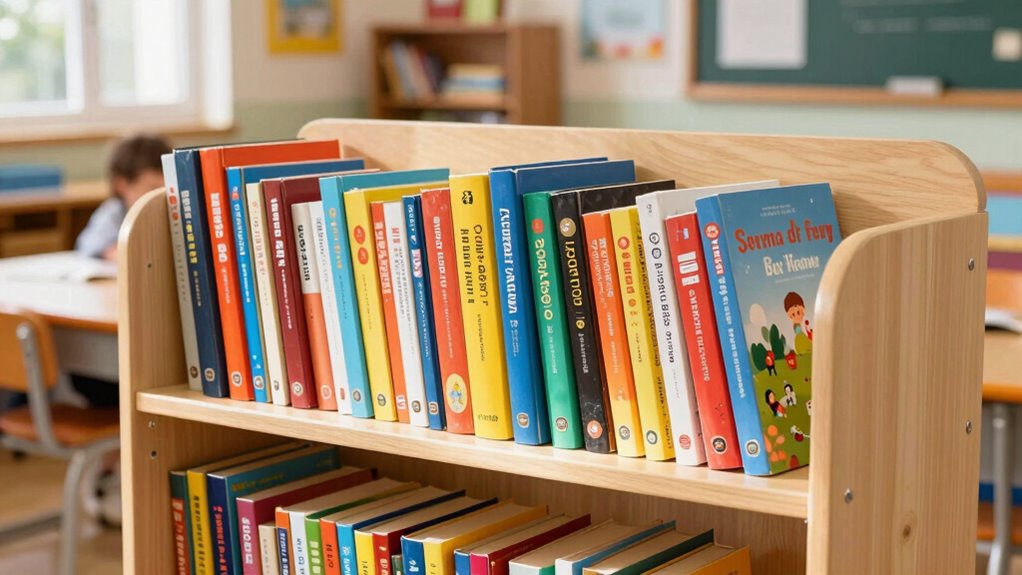

A well-organized classroom bookshelf makes it easy for you to access a variety of books that match students’ interests and reading levels. When books are thoughtfully arranged by themes or levels, students feel more confident exploring independently. An inviting environment encourages them to spend more time choosing and engaging with books, fostering habits of exploration and ownership. Keep reading to discover how these strategies can inspire lifelong curiosity and confidence in learners.

Get the little things that make your day delivered free — and shop member deals
- Fast, free delivery on millions of items
- Access to Prime Big Deal Days deals on October 6–7
- Prime Video, Amazon Music and more included
Key Takeaways
- Well-organized shelves make books easily accessible, encouraging students to choose and read independently.
- Thematic grouping and clear organization help students quickly find books that match their interests and reading levels.
- Inviting environments foster a sense of ownership, motivating students to explore books on their own.
- Organized shelves promote positive emotional responses, increasing students’ confidence and willingness to read independently.
- Consistent access to a variety of books supports the development of long-term reading habits and autonomy.
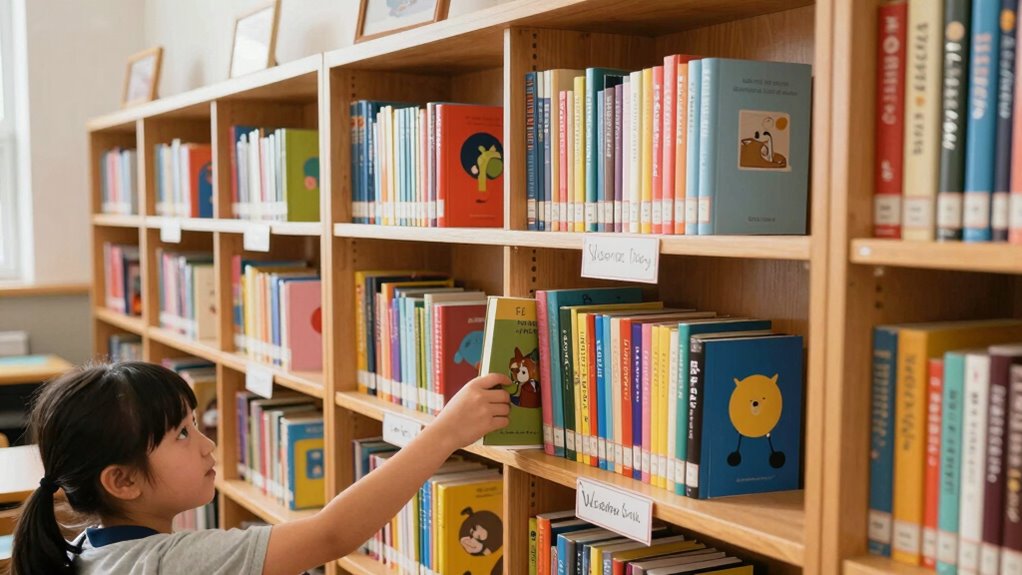
Having easy access to a well-stocked classroom bookshelf can considerably influence students’ reading habits. When books are organized thoughtfully, it creates an inviting environment that encourages students to explore independently. Effective book organization isn’t just about sorting books alphabetically or by genre; it’s about designing a system that makes it easy for students to find what interests them. For example, grouping books by themes or reading levels can help students quickly locate titles that match their interests and abilities. When students can effortlessly navigate the collection, they’re more likely to pick up a book and dive into reading without feeling overwhelmed or discouraged. This ease of access fosters a sense of ownership and autonomy over their reading choices, which directly boosts student engagement.
As students become more engaged, they develop a natural curiosity about reading, rather than viewing it as a chore. When your classroom bookshelf is inviting and well-organized, students see it as a resource they can trust to supply engaging stories and valuable information. This trust motivates them to explore new genres and authors, broadening their reading horizons. When students are engaged, they’re more likely to read regularly, which helps establish consistent reading habits. You’ll notice students returning to the bookshelf on their own, choosing books that resonate with their interests, and feeling excited about reading. It’s this self-directed exploration that nurtures independence, allowing students to become confident, lifelong readers.
Furthermore, a thoughtfully organized classroom bookshelf can serve as a visual cue that reading is valued and accessible. When students see a variety of books at their fingertips, it signals that their interests matter and that reading is an everyday activity. Incorporating principles from interior design basics, such as effective preparation and visual appeal, can help create an environment that promotes reading independence. Additionally, understanding space organization techniques can maximize the usability and aesthetic appeal of the bookshelf, making it even more inviting. A well-planned arrangement can also reflect color psychology, encouraging positive emotions and motivation toward reading. An organized and appealing bookshelf can also support natural light, which has been shown to improve mood and focus. Recognizing the importance of emotional needs of students when designing the space can further enhance their comfort and motivation. Over time, this habit of independent reading becomes ingrained, helping students develop critical thinking skills, vocabulary, and comprehension naturally. As you observe students picking books independently and becoming more engrossed in their reading, you realize that a well-organized and inviting bookshelf isn’t just a storage space—it’s a catalyst for fostering a lifelong love of reading.
classroom bookshelf organization
As an affiliate, we earn on qualifying purchases.
As an affiliate, we earn on qualifying purchases.
Frequently Asked Questions
How Often Should Classroom Bookshelves Be Updated?
You should update classroom bookshelves at least once a month to keep book organization fresh and engaging. Regular shelf maintenance guarantees students stay interested and find new titles easily. By rotating books, removing outdated or damaged ones, and adding new options, you encourage independent reading habits. Staying proactive with shelf updates helps create a dynamic reading environment, motivating students to explore different genres and authors consistently.
What Genres Are Most Effective for Encouraging Independence?
You’ll find that genre variety acts like a colorful garden, enticing students to pick their own reading adventure. Mysteries, fantasy, and graphic novels spark curiosity, fueling reading motivation. When students see diverse genres on your shelves, they’re more likely to explore independently, discovering stories that resonate with them. This mix keeps their passion for reading alive, transforming the bookshelf into a gateway for personal discovery and lifelong habits.
How Can Teachers Involve Students in Selecting Books?
You can involve students in selecting books by encouraging student choice and listening to their book preferences. Create opportunities for them to suggest titles or genres they’re interested in and incorporate their suggestions into the classroom bookshelf. Letting students choose books based on their preferences fosters ownership and enthusiasm for reading. Regularly check in with them about their interests, and offer diverse options to keep their motivation high.
Are Digital Books as Beneficial as Physical Bookshelves?
Digital access opens doors to endless stories at your fingertips, but physical engagement creates a tactile bond that digital books can’t replicate. While digital books are convenient and versatile, physical bookshelves foster a sense of ownership and curiosity. Both play essential roles; digital access complements traditional reading by offering variety, but nothing beats the tactile joy of selecting a physical book. Embrace both to nurture independent reading habits in your classroom.
How Do Bookshelves Support Diverse Reading Levels?
You can support diverse reading levels by organizing your bookshelves for reading accessibility, making it easy for students to find books suited to their skills. By grouping books by difficulty or genre, you encourage independent reading and boost confidence. This thoughtful book organization helps every student engage with texts at their level, fostering a love for reading and ensuring that all learners feel supported and motivated to explore new topics.
As an affiliate, we earn on qualifying purchases.
Conclusion
Imagine your classroom bookshelf as a garden, each book a seed waiting to grow curiosity and independence. When you nurture diverse titles, students blossom into confident readers, enthusiastic to explore on their own. Studies show that access to varied books increases reading time and enjoyment. Just like a garden flourishes with care, your bookshelf cultivates young minds, turning hesitant readers into passionate explorers—one book at a time.
As an affiliate, we earn on qualifying purchases.
As an affiliate, we earn on qualifying purchases.
Halloween Picks
halloween
As an affiliate, we earn on qualifying purchases.