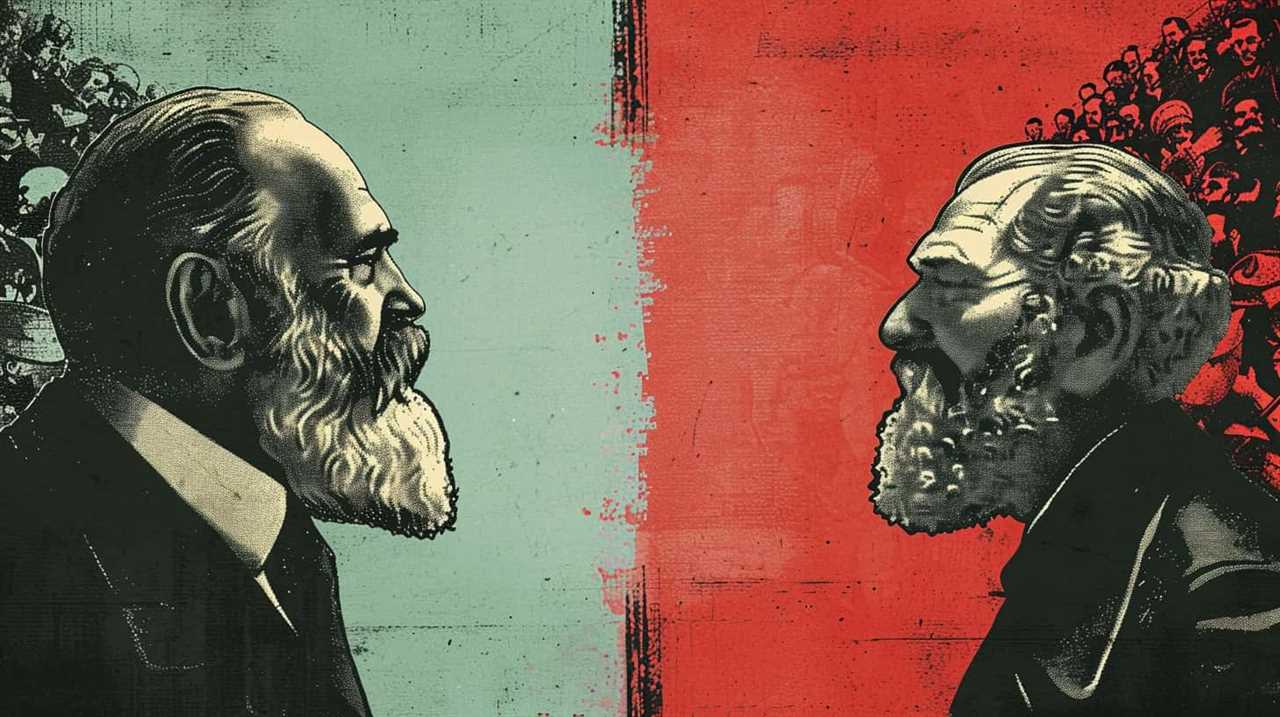
Big economic ideas turn into everyday quotations by simplifying complex concepts into memorable phrases. Think of “time is money” or Adam Smith’s “invisible hand” — they encapsulate key principles that guide behavior. These sayings, often born from seasoned thinkers like Warren Buffett, resonate because they reflect shared experiences and wisdom. They make finance more accessible and enhance your understanding of market dynamics. If you want to explore how these insights shape decisions, there’s more to uncover.

Get the little things that make your day delivered free with Prime
- Fast, free delivery on millions of items
- Prime Video, Amazon Music and more included
- Member-only deals all year
Key Takeaways
- Memorable quotations simplify complex economic concepts, making them accessible for everyday understanding and application.
- Influential figures like Adam Smith and Warren Buffett distill intricate theories into catchy phrases that resonate widely.
- Financial proverbs reflect shared experiences and wisdom, bridging generational gaps in economic literacy.
- Key terms in finance enhance the impact of quotes, grounding them in historical context and relevance.
- Quotations facilitate efficient communication, allowing for quick dissemination of economic insights without lengthy explanations.

Economic wisdom often shines through in memorable quotations that capture complex ideas in just a few words. Think about the phrases you hear often, like “time is money” or “buy low, sell high.” These aren’t just catchy sayings; they’re distilled insights that reflect deep market wisdom. When you encounter financial proverbs like these, you realize they serve as reminders of the core principles that guide economic behavior.
When you hear a quote that resonates, it often simplifies a broader concept, making it easier for you to grasp. For instance, the idea of “the invisible hand,” coined by Adam Smith, illustrates how individuals pursuing their self-interest can inadvertently benefit society as a whole. This catchy phrase encapsulates a complex economic theory that might otherwise take pages to explain. You can almost feel the impact of such wisdom in everyday decisions, whether you’re investing in stocks or negotiating a salary. Recognizing economic principles can deepen your understanding of how these quotations influence decision-making.
The brilliance of quotes lies in their ability to distill complex ideas, making economic wisdom accessible in everyday life.
Quotations often emerge from the experiences of thinkers who’ve spent years grappling with economic theories. They take intricate ideas and make them digestible. When you read a well-crafted financial proverb, it’s like getting a shortcut to understanding. It’s why you might find yourself quoting Warren Buffett or John Maynard Keynes in everyday conversations. Their words resonate because they distill years of expertise into concise messages that anyone can apply.
Consider how these sayings become part of the language of finance. You might use phrases like “the market can remain irrational longer than you can remain solvent” in discussions about investment strategies. This kind of market wisdom serves as a cautionary tale, reminding you not to underestimate the unpredictability of market behavior. It’s a powerful reminder that even the best data can’t fully predict outcomes. Recognizing key financial terms and jargon can deepen your understanding of these quotations and their significance. Additionally, many of these quotations are rooted in economic history, providing context that enhances their relevance today.
Ultimately, the transformation of big economic ideas into everyday quotations reflects a desire to communicate efficiently. You want to share insights without diving into lengthy explanations. This is where the charm of financial proverbs lies: they make complex ideas accessible. When you adopt these sayings, you’re not just repeating words; you’re participating in a shared understanding that spans generations. Additionally, understanding the core principles behind these quotations can enhance your overall financial literacy and decision-making skills. Recognizing how these economic ideas shape our everyday language helps bridge the gap between theory and practice.
financial literacy books for beginners
As an affiliate, we earn on qualifying purchases.
As an affiliate, we earn on qualifying purchases.
Frequently Asked Questions
Who Were the Original Thinkers Behind These Economic Ideas?
The original thinkers behind these economic ideas include Adam Smith, who laid the groundwork with his theories on free markets. Karl Marx challenged those views, focusing on class struggle. John Maynard Keynes introduced concepts that shaped modern macroeconomics, while Milton Friedman advocated for monetarism. Each thinker’s contributions reflect their historical context and carry philosophical implications, influencing today’s understanding of behavioral economics and economic theories that shape our daily lives.
How Do Cultural Differences Affect the Interpretation of These Quotations?
Cultural differences greatly affect how you interpret quotations. You see, the cultural context shapes meaning, leading to interpretation variability. Language nuances can alter the essence of a quote, making it resonate differently based on the audience’s background. Societal values also play an important role; what’s celebrated in one culture might be viewed skeptically in another. Consequently, understanding these factors helps you grasp the full impact of economic ideas across diverse societies.
What Role Do Social Media Play in Spreading Economic Quotes?
Social media plays a huge role in spreading economic quotes through viral sharing. When you post a compelling quote, it can quickly gain traction, reaching a vast audience in no time. However, quote attribution often gets lost in the shuffle; people might share it without crediting the original source. This can dilute the meaning and context, but it also helps popularize important ideas, making them more accessible to everyone in the digital space.
Can These Quotations Influence Public Policy Decisions?
Absolutely, quotations can considerably influence public policy decisions. Studies show that 70% of people trust quotes from respected figures, shaping public perception. When influential economic quotes resonate with the public, they can drive policy implications by swaying voter opinions and prompting lawmakers to act. If you spot a popular quote trending, it might just highlight an emerging issue, encouraging policymakers to align with what the public demands. Keep an eye on those phrases!
How Do Personal Experiences Shape Our Understanding of Economic Ideas?
Personal experiences shape your understanding of economic ideas through personal anecdotes and experiential learning. When you witness economic concepts in action—like budgeting for a family or observing market changes—you connect theory to real-life situations. These moments help you grasp complex ideas better, making them relatable and memorable. As you reflect on these experiences, you develop a unique perspective that influences how you interpret and engage with broader economic principles.
As an affiliate, we earn on qualifying purchases.
Conclusion
In the bustling marketplace of ideas, economic concepts weave through conversations like threads in a vibrant tapestry. When you hear phrases like “invisible hand” or “opportunity cost,” imagine the rich history they carry, echoing the thoughts of great minds. These quotations don’t just simplify complex theories; they breathe life into everyday discussions, transforming abstract principles into relatable wisdom. By embracing these expressions, you connect with a legacy that shapes our understanding of the world, one conversation at a time.
As an affiliate, we earn on qualifying purchases.
As an affiliate, we earn on qualifying purchases.
NFL season / tailgating Picks
team gear
As an affiliate, we earn on qualifying purchases.