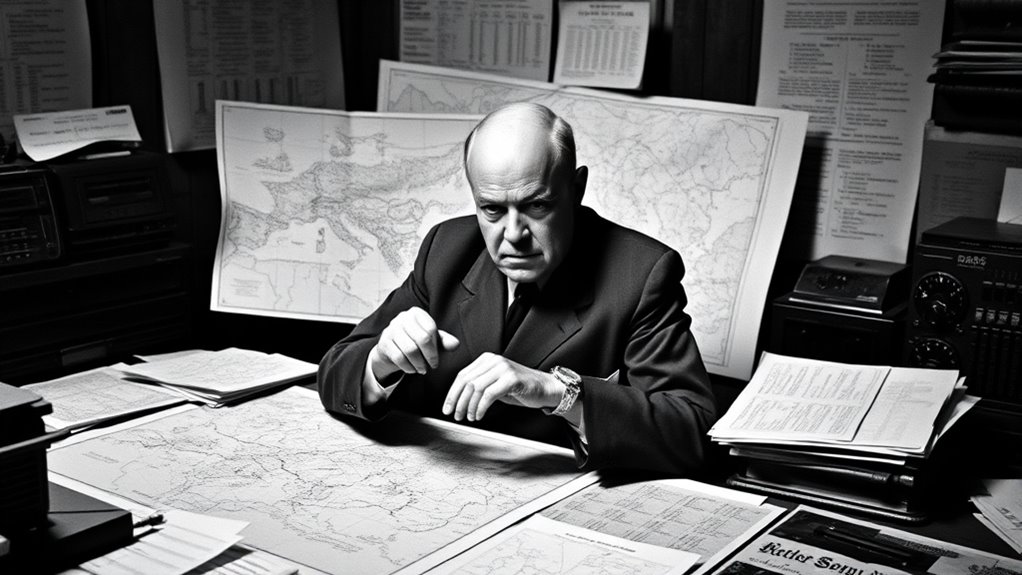

Dwight D. Eisenhower’s approach teaches you that effective planning is vital, but flexibility matters even more. Having a solid plan provides direction, yet being able to adapt quickly when circumstances change helps you stay on course. By balancing structure with strategic flexibility and preparing contingency strategies, you increase your chances of success. If you keep exploring, you’ll discover how embracing this mindset can transform your approach to challenges and decision-making.

Get the little things that make your day delivered free with Prime
- Fast, free delivery on millions of items
- Prime Video, Amazon Music and more included
- Member-only deals all year
Key Takeaways
- Eisenhower emphasized the importance of strategic planning as a foundation for success, but recognized plans must be flexible to adapt to changing circumstances.
- Effective planning involves creating a framework that allows quick adjustments, emphasizing strategic flexibility rather than rigid adherence.
- Contingency planning acts as a safety net, enabling prompt responses to setbacks and unforeseen challenges.
- Balancing structured plans with adaptability ensures informed decision-making and resilience during unpredictable events.
- Eisenhower’s philosophy underscores that while planning is crucial, responsiveness and flexibility determine ultimate success.

Effective planning can make or break your ability to accomplish goals, and nobody exemplified this better than Dwight D. Eisenhower. His approach to planning was rooted in the understanding that while a solid plan is essential, it’s equally important to remain adaptable. Eisenhower knew that no matter how detailed your preparations are, unexpected obstacles will always arise. This is where strategic flexibility becomes your greatest asset. You need to be ready to pivot when circumstances shift, adjusting your tactics without losing sight of your ultimate objective. Eisenhower’s emphasis on flexibility allowed him to respond swiftly to changing battlefield conditions, and you should adopt that mindset in your own planning processes.
Effective planning requires adaptability and flexibility to overcome unexpected obstacles and achieve your goals.
Contingency planning played a vital role in Eisenhower’s success, and it’s a principle you can’t afford to ignore. Instead of obsessing over a perfect plan, focus on developing backup strategies for potential setbacks. Think of contingency planning as your safety net, ensuring that even if your initial plan falters, you can quickly adapt and continue moving forward. Eisenhower’s ability to anticipate possible failures and prepare for them enabled him to remain resilient under pressure. When you incorporate contingency plans into your planning, you reduce the risk of being caught off guard and increase your chances of achieving your goals despite unforeseen challenges. Recognizing the importance of contingency planning can significantly enhance your strategic effectiveness.
Eisenhower understood that effective planning isn’t about rigidly sticking to a predefined course but about creating a flexible framework that guides your actions. You need to balance structure with adaptability, knowing when to follow the plan and when to deviate based on new information. This dynamic approach allows you to make informed decisions quickly, rather than being paralyzed by indecision or overly committed to a plan that no longer fits the reality on the ground. By integrating strategic flexibility and contingency planning into your process, you’ll be better equipped to handle surprises and capitalize on opportunities that arise unexpectedly.
In essence, Eisenhower’s philosophy reminds you that planning is a critical tool, but it’s only effective if paired with the ability to adapt. The best-laid plans are those that can evolve in response to real-world conditions. When you embrace this mindset, you’ll not only improve your chances of success but also develop resilience and confidence in your ability to navigate uncertainty. Remember, a plan is just a starting point; your ability to adjust and respond is what ultimately determines the outcome.
As an affiliate, we earn on qualifying purchases.
Frequently Asked Questions
How Did Eisenhower Adapt Plans During Unforeseen Wartime Events?
You adapt your plans through strategic flexibility, focusing on contingency planning to respond to unforeseen wartime events. Eisenhower constantly assessed the situation, adjusting strategies as new information emerged. He prioritized maintaining overall objectives while being ready to modify tactics, ensuring mission success despite uncertainties. This approach allowed him to stay responsive, making effective decisions that balanced disciplined planning with necessary adaptability in dynamic wartime conditions.
What Role Did Flexibility Play in Eisenhower’s Strategic Planning?
You see, while plans are vital, flexibility defines true strategic mastery. Eisenhower’s legacy tactics relied on adaptable decision frameworks, allowing him to pivot swiftly during unexpected wartime events. This balance between preparation and adaptability enabled him to seize opportunities and mitigate risks effectively. By embracing change within his strategies, Eisenhower demonstrated that flexibility isn’t just an asset—it’s essential for enduring success in unpredictable situations.
How Did Eisenhower Balance Planning With Improvisation?
You balance planning with improvisation by embracing battlefield adaptability and leadership agility. Eisenhower encourages you to prepare thoroughly but stay flexible, adjusting strategies as situations evolve. You remain alert to opportunities for improvisation, trusting your instincts and judgment while sticking to your overarching plan. This approach allows you to respond swiftly to unexpected challenges, ensuring success without being rigid, and demonstrating effective leadership agility in dynamic circumstances.
What Tools or Methods Did Eisenhower Use for Effective Planning?
You might think Eisenhower relied solely on rigid plans, but he actually used strategic tools and decision frameworks to stay adaptable. Ironically, these frameworks didn’t lock him in; they guided him through uncertainty. By applying strategic tools like the Eisenhower Matrix and decision frameworks such as scenario planning, he balanced detailed planning with flexibility, ensuring his actions could evolve when circumstances changed unexpectedly.
How Does Eisenhower’s Planning Philosophy Apply to Modern Leadership?
You can apply Eisenhower’s planning philosophy by prioritizing strategic adaptability and decision-making agility. Focus on creating flexible plans that allow you to adjust quickly to changing circumstances. Emphasize continuous reassessment and learning, so you stay responsive and proactive. This approach helps you lead effectively, ensuring your team can navigate uncertainties while maintaining focus on your core objectives. Ultimately, adaptable planning empowers you to succeed amid unpredictable challenges.
As an affiliate, we earn on qualifying purchases.
Conclusion
Remember, while meticulous planning sets the stage, flexibility keeps you afloat when things go awry. You must be ready to adapt and change course, because no plan is foolproof. Think of it as steering a ship—you need a solid map but also the skill to navigate choppy waters. Keep your eyes on the destination, but don’t be surprised if the journey takes unexpected turns. After all, the only way to truly succeed is to roll with the punches.
As an affiliate, we earn on qualifying purchases.
As an affiliate, we earn on qualifying purchases.
NFL season / tailgating Picks
team gear
As an affiliate, we earn on qualifying purchases.