
In Bridgerton, you’ll see how love, ambition, and duty are tightly woven into Regency London’s strict social rules. Society expects women to prioritize reputation and propriety, while men focus on wealth and influence. Marriage is often strategic, balancing personal desires with family alliances. Secret romances flourish amid societal pressures, creating tension and drama. If you want to uncover how these themes shape the characters’ lives and choices, there’s much more to explore beyond the surface.
Key Takeaways
- *Bridgerton* depicts the societal importance of reputation, with characters navigating love and ambition within strict social hierarchies.
- The series highlights how strategic marriages serve family interests, often prioritizing duty over personal desire.
- Romantic relationships are influenced by societal expectations, with secret romances developing amid public decorum.
- Characters balance personal passions with societal norms, creating tension between love, ambition, and duty.
- The show illustrates how societal obsession with appearances and reputation shapes personal choices and dramatic conflicts.
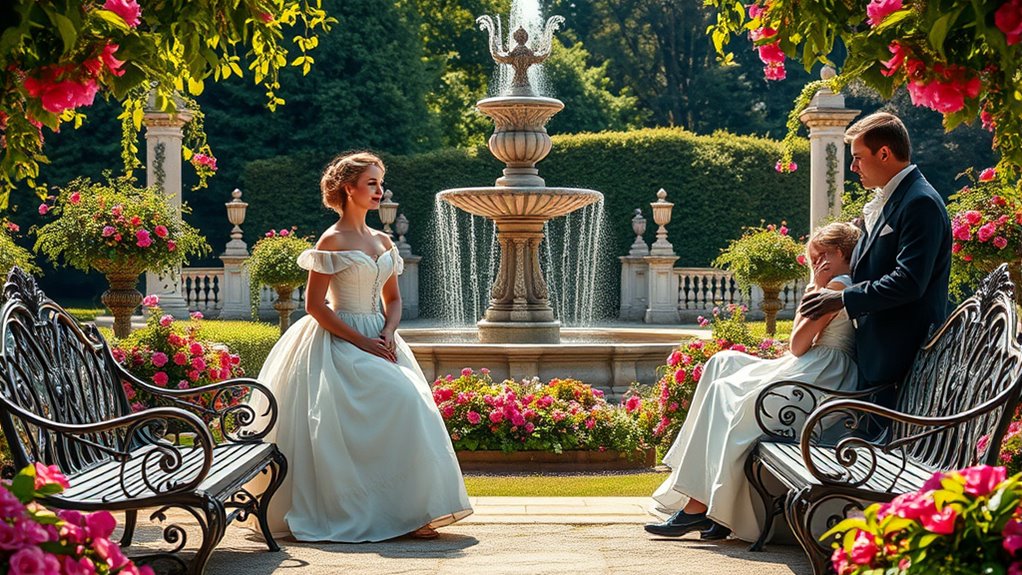
Have you ever wondered what life was truly like in Regency London, where love, ambition, and duty often clashed? If so, you might find yourself immersed in the intricate world of high society, where every move is carefully scrutinized and every decision carries weight. At the heart of this society are the marriage negotiations—formal, strategic, and often dictated more by societal expectations than personal desire. As a young woman or man seeking a suitable match, you’d find yourself steering through a complex web of social rules and family ambitions. Your prospects are influenced not only by personal qualities but also by the alliances your family hopes to forge. These negotiations involve delicate conversations, where wealth, social standing, and connections are weighed against one another. You might be expected to accept certain suitors, even if your heart isn’t in it, because your family’s reputation depends on securing advantageous matches.
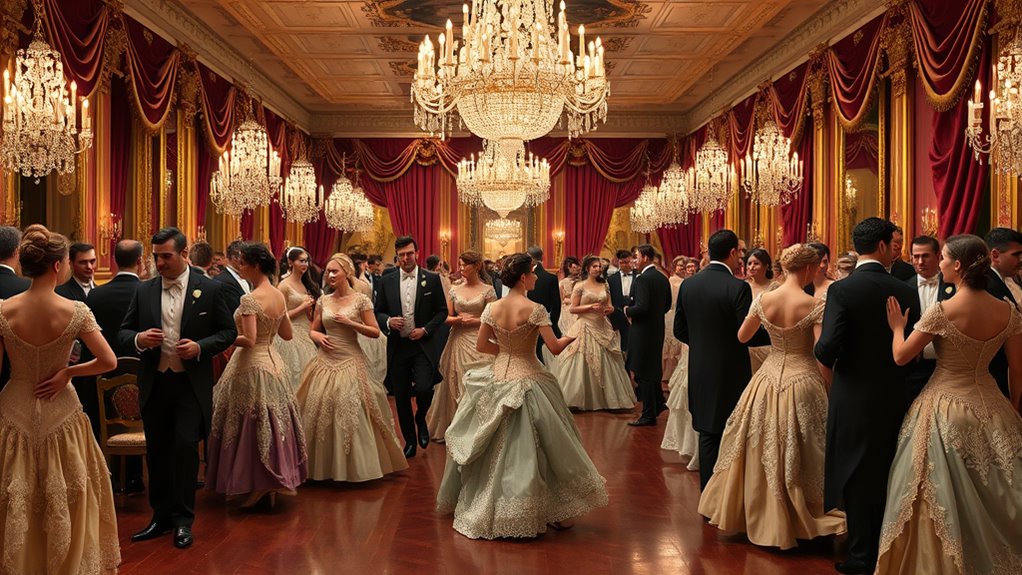
Societal expectations in Regency London are rigid, shaping every aspect of your life. You’re expected to embody virtues like modesty, decorum, and obedience, especially if you’re a woman. Your worth is often measured by your beauty, manners, and ability to secure a good marriage. Men, on the other hand, are judged on their wealth, career prospects, and social influence. As you participate in balls, dinners, and social visits, you’re constantly aware of the unspoken rules governing your behavior. Failing to conform risks social ostracism or damaging your reputation forever. These expectations create a pressure-cooker environment where genuine emotion can be stifled beneath layers of politeness and propriety. Additionally, the use of airless paint sprayers in home improvement reflects the era’s emphasis on efficiency and presentation, paralleling how societal standards prioritize appearance and reputation.
In this world, love is often secondary to duty and strategic alliances. You might dream of finding someone you truly love, but the reality is that most relationships are arranged with the future in mind. Courtship is a careful dance—public displays of affection are rare and often frowned upon, while private moments are scrutinized by friends and family alike. Yet, beneath the surface, passions ignite, and secret romances blossom against the odds. The tension between societal expectations and personal desires creates compelling drama, where characters grapple with their own ambitions and the constraints imposed upon them. Bridgerton captures this delicate balance perfectly, illustrating how love can flourish even in a society obsessed with appearances, ambition, and duty.
Regency style costume dress for women
As an affiliate, we earn on qualifying purchases.
As an affiliate, we earn on qualifying purchases.
Frequently Asked Questions
How Historically Accurate Is the Show’s Portrayal of Regency London?
You’ll find that the show takes some creative liberties but generally offers a charming glimpse of Regency London. Costume accuracy is impressive, capturing the era’s fashion well, though some details are modernized for style. Social etiquette, however, is often simplified or dramatized, so don’t expect perfect historical precision. Overall, it’s an entertaining portrayal that balances historical elements with storytelling flair, but it’s not a strict documentary.
What Sources Did the Authors Use to Research Regency Customs?
Did you know that over 80% of authors researching Regency customs rely on primary sources like letters, diaries, and newspapers? They also use secondary analyses to interpret these materials. You’ll find that authors often consult historical archives, government documents, and contemporary writings, which help them create an authentic portrayal of Regency London. These sources give you a vivid, accurate picture of customs, manners, and social norms from that era.
Are There Real-Life Figures Who Inspired the Characters?
You’ll find that some characters are inspired by real-life historical figures, adding authenticity to the story. The authors often drew from famous literary inspirations and historical figures, blending their traits to craft compelling characters. For example, you might see parallels to influential figures from Regency society, which helps bring depth and realism. These real-life figures and literary inspirations enrich the characters, making their ambitions, love, and duty feel more authentic and relatable.
How Did Regency Societal Norms Influence Character Decisions?
You feel overwhelmed by Regency society’s crushing weight, where marriage expectations and social hierarchy dictate every move. These norms force characters to make impossible choices—sacrificing love for status or duty. The rigid class system shapes decisions, pushing characters into alliances they wouldn’t choose otherwise. Society’s relentless pressure creates a world where your future hinges on who you marry and your place in the social hierarchy, leaving no room for true happiness.
What Impact Did the Show Have on Modern Perceptions of Regency England?
The show shapes your view of Regency England by blending modern fashion with historical settings, making it more relatable. It highlights social mobility’s importance, showing characters endeavoring for status and love despite societal constraints. You see a romantic, vibrant world that influences your perception of that era, making you appreciate both the elegance and the challenges of Regency society, while also recognizing how these themes resonate in today’s pursuit of identity and success.
Victorian era inspired jewelry set
As an affiliate, we earn on qualifying purchases.
As an affiliate, we earn on qualifying purchases.
Conclusion
As you step back into the bustling world of Regency London, remember that like the characters in Bridgerton, your own story is woven with love, ambition, and duty. Just as Elizabeth Bennet navigates society’s expectations, you too can find balance amidst chaos. Embrace the passions that drive you and the responsibilities that shape you, for in this grand dance of life, your story is uniquely yours—an elegant tapestry waiting to unfold beneath the stars.
Regency London themed home decor
As an affiliate, we earn on qualifying purchases.
As an affiliate, we earn on qualifying purchases.
antique looking perfume bottles
As an affiliate, we earn on qualifying purchases.
As an affiliate, we earn on qualifying purchases.