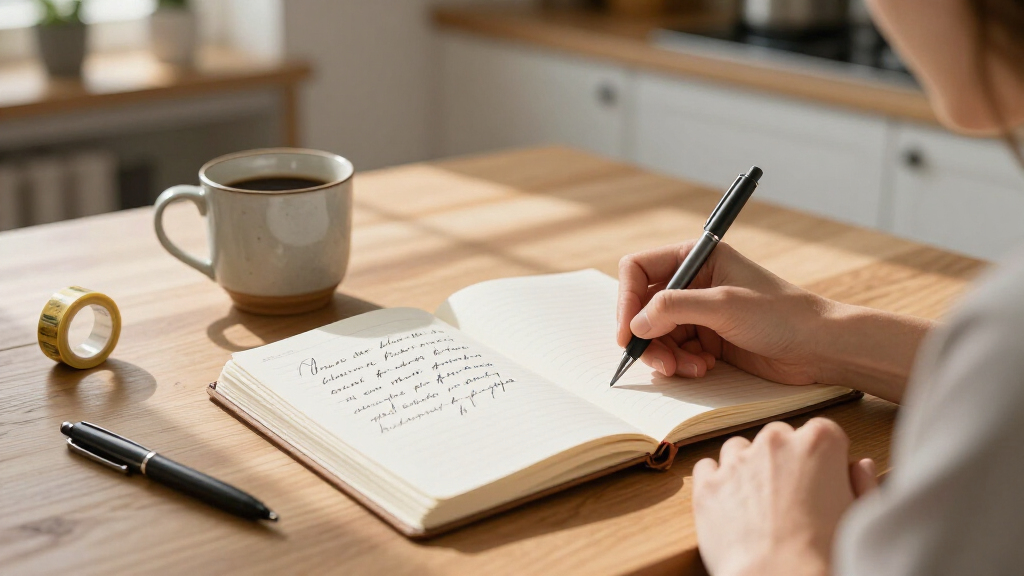

Search for a motivational quote notebook and you land between two very different products that look deceptively similar in a thumbnail. On one side are the mass-market notebooks sold in multipacks or under ten dollars: blank or lined pages, a quote printed on every few pages, a soft cover that will not survive a backpack. On the other side are premium guided journals from brands like Papier, Intelligent Change, and Knock Knock, where quotes are woven into structured prompts — gratitude sections, intention-setting pages, reflection frameworks — and the paper, binding, and cover are built to last years. The real decision is not about price alone. It is about whether you want a notebook you write in, or a system you follow. If you already journal daily and just enjoy an occasional burst of inspiration, the cheap notebook does the job. If you are buying motivation because you have not yet built the habit, structure matters far more than savings. This guide compares both across the criteria that actually change the experience, so you can match the product to your habits rather than your impulses.

Get the little things that make your day delivered free with Prime
- Fast, free delivery on millions of items
- Prime Video, Amazon Music and more included
- Member-only deals all year
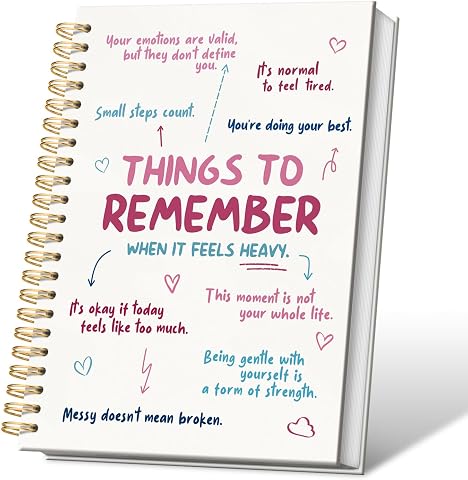
VONTP Inspirational Motivational Spiral Notebook
- ✔ Brand: VONTP
- ✔ Size: 5.5 x 8.3 inches
- ✔ Sheet Count: 80 sheets
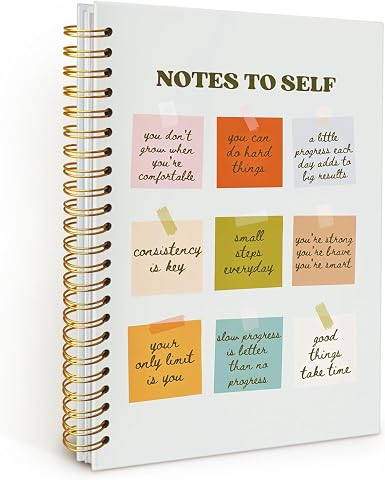
Wheatwin Note to Self Mental Health Journal
- ✔ Brand: Wheatwin
- ✔ Dimensions: 5.5 x 8.3 inches
- ✔ Pages: 80 lined pages
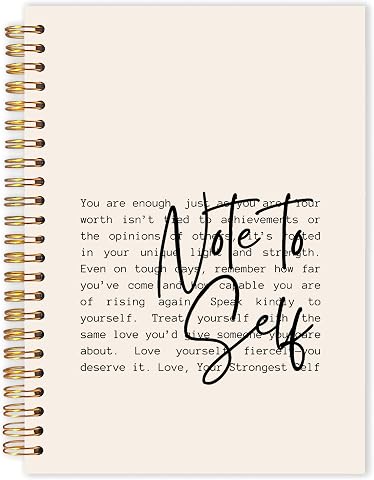
Qabliqo Inspirational Spiral Notebook
- ✔ Brand: Qabliqo
- ✔ Size: 5.5 x 8.3 inches
- ✔ Binding: Spiral with hardcover
At a Glance
| Criteria | Budget motivational quote notebooks (mass-market, under $10) | Premium guided quote journals (Papier, Intelligent Change, Knock Knock tier, $20–40) | Winner |
|---|---|---|---|
| Build quality and durability | Soft cover, glued spine, shows wear within weeks | Hardcover, sewn or lay-flat binding, built for years | B |
| Quality of the quotes | Generic, repetitive, sometimes misattributed | Curated, attributed, tied to the page’s purpose | B |
| Structure and guidance | None — blank or lightly lined pages | Prompts, sections, reflection frameworks | B |
| Paper and writing experience | Thin paper, ink bleed with fountain pens | Thicker stock, handles most pens well | B |
| Daily habit support | None — motivation fades with novelty | Structure carries you on low-motivation days | B |
| Aesthetic and gift-worthiness | Basic; fine for desk use, weak as a gift | Gift-ready design and packaging | B |
| Price per use | Excellent if used daily, terrible if abandoned by week two | Higher upfront cost, better value only with sustained use | Depends |
VONTP Inspirational Motivational Spiral Notebook
The VONTP Inspirational Motivational Spiral Notebook earns our top spot because it executes the fundamentals better than either competitor. Its smooth, high-quality ruled paper resists ink bleed-through, which is the single most important trait for a notebook you will actually write in daily — especially if you prefer gel pens or richer inks. Compared with the Wheatwin, which shares the same 5.5 x 8.3 inch size and page count, the VONTP pulls ahead on paper performance, giving it an edge for students and professionals taking dense notes rather than casual journaling.The hardcover plus spiral binding combination is well executed here: the cover protects pages from wear in a backpack, while the spiral lets the notebook lay completely flat, which matters for long writing sessions at a desk. The 0.32-inch line spacing is generous enough for larger handwriting without feeling wasteful. Its bold, colorful inspirational quote designs position it well as a gift for women and teachers, covering a broader audience than the Wheatwin’s more specific feminine styling.The tradeoffs are real, though. Some product descriptions contain translation errors, which hints at uneven quality control, and the brand is newer to market, so long-term durability reports are limited. If you want a proven, gift-wrapped presentation out of the box, the Wheatwin is the safer bet. But for everyday writing performance, this pick makes the most sense for most buyers.
Pros:
- Smooth, high-quality paper that resists ink bleed-through
- Hardcover protects notes while spiral binding lays completely flat
- Compact size slips easily into a backpack for on-the-go use
- Broad gift appeal for women and teachers
Cons:
- Translation errors in descriptions suggest quality control issues
- Newer product, so long-term durability is unverified
- 80 sheets may run out quickly for heavy note-takers
Best for: Students, teachers, and professionals who write daily and need reliable, bleed-resistant paper
Not ideal for: Buyers who want a highly polished, gift-wrapped presentation or a long track record of durability
Bottom line: The most complete package in this lineup, balancing paper quality, durability, and design better than either alternative.
“The most complete package in this lineup, balancing paper quality, durability, and design better than either alternative.”
Wheatwin Note to Self Mental Health Journal
Where the VONTP plays it safe with broad appeal, the Wheatwin Note to Self Mental Health Journal leans fully into a specific identity — and that focus is its strength. The feminine bow pattern paired with positive affirmations gives it a cohesive, intentional look that the more generic Qabliqo cannot match. It is the only notebook in this lineup that arrives individually wrapped, which means it is genuinely gift-ready without you needing to add packaging. For birthdays, teacher appreciation gifts, or a pick-me-up for a friend, this option stands out as the easiest to give.Its double coil spiral binding is a meaningful upgrade over a standard single coil, holding pages more securely through repeated opening and closing in a bag. Combined with the hardcover, it feels built for real daily use at home, school, or the office. The ruled pages handle journaling, note-taking, and light doodling well, though we would not reach for it first for sketching — the Qabliqo’s cleaner layout suits creative work better.The limitation is straightforward: 80 lined pages is on the low end for a dedicated mental health journal, where daily reflection can fill pages fast. If the recipient journals every evening, expect to replace this within a season. Compared with the VONTP, you also give up a little paper polish in exchange for style and presentation. This model is better suited to gift-givers and design-conscious buyers than to demanding daily writers.
Pros:
- Individually wrapped for genuine gift readiness
- Double coil binding is more durable than standard spiral
- Cohesive bow-and-affirmation design with clear identity
- Versatile enough for journaling, doodling, and creative projects
Cons:
- Only 80 lined pages, limiting for frequent journalers
- Feminine styling narrows its audience
- Paper quality does not quite match the VONTP’s bleed resistance
Best for: Gift-givers and buyers seeking a stylish, affirmation-focused journal for women and girls
Not ideal for: Heavy daily journalers who need more than 80 pages before replacing a notebook
Bottom line: The most gift-ready and stylistically confident option, best when presentation matters as much as performance.
“The most gift-ready and stylistically confident option, best when presentation matters as much as performance.”
Qabliqo Inspirational Spiral Notebook
The Qabliqo Inspirational Spiral Notebook is the most flexible tool in this comparison, and it earns its place by refusing to specialize. Where the Wheatwin commits to a feminine aesthetic and the VONTP prioritizes writing performance, the Qabliqo handles note-taking, journaling, planning, and sketching with equal competence. Its clean, modern cover design with a single inspirational quote reads as neutral enough for an office meeting or a classroom, which neither competitor manages as convincingly.Portability is where it shines brightest. This is the lightest option of the three, slipping into a handbag or backpack without adding noticeable bulk — a genuine advantage if you carry a notebook everywhere for capture-as-you-go planning. Like the VONTP, its spiral binding opens flat for comfortable writing, and the hardcover provides adequate protection for everyday carry, though it does not feel quite as purpose-built for rough handling as the Wheatwin’s double coil construction.The drawback is aesthetic risk: the quote and design are more polarizing than the other two, and what reads as modern to one buyer may feel bland or mismatched to another’s setting. If design personality is your priority, the Wheatwin offers more character. But if you want one notebook that works everywhere — desk, commute, classroom — without calling attention to itself, this pick makes the most sense.
Pros:
- Handles note-taking, journaling, planning, and sketching equally well
- Lightest and most portable option in the lineup
- Neutral modern design suits offices and classrooms
- Opens flat for comfortable writing
Cons:
- Quote and design may not appeal to all settings or tastes
- Cover construction feels less rugged than the Wheatwin’s double coil
- Less affirmation-focused than the category implies
Best for: Buyers who want one neutral, portable notebook for mixed use across work, school, and creative projects
Not ideal for: Buyers who want a distinctive design personality or affirmation-heavy interior content
Bottom line: The jack-of-all-trades choice — best when you need one notebook that fits everywhere rather than excelling anywhere.
“The jack-of-all-trades choice — best when you need one notebook that fits everywhere rather than excelling anywhere.”
As an Amazon Associate we earn from qualifying purchases.
Key Differences
The most important difference is structure. A budget quote notebook is essentially a plain notebook with inspirational text sprinkled between the pages. Nothing tells you what to write, when to write, or why. That works beautifully for people who already have a journaling habit and just want a fresh vessel for it. For everyone else — which is most people buying a motivational notebook — the blank page becomes a daily decision, and daily decisions are where habits go to die. Premium guided journals remove that decision. The Five Minute Journal format, for example, gives you the same short prompts every morning and evening, so the quote-supported experience requires willpower only to open the book, not to invent content.
The second difference is material quality, and it matters more than it first appears. Budget notebooks typically use thin paper that ghosts and bleeds with gel pens and fountain pens, and their glued spines crack when pressed flat. A premium journal usually offers thicker stock, lay-flat binding, and a cover that can live in a bag for a year. If your notebook stays on a nightstand and you write with a ballpoint, this gap is minor. If the journal travels with you or you care about pens, it becomes a daily irritant versus a daily pleasure.
The third difference is the quotes themselves. Mass-market quote notebooks are notorious for vague, repetitive, and occasionally misattributed quotations — the kind of content assembled fast for a low price point. Premium journals curate fewer quotes but place them purposefully: an intention-setting page gets a quote about beginnings, a reflection page gets one about perspective. The practical consequence is that in the budget product, quotes become wallpaper you stop seeing within a week. In the premium product, they stay functional because they arrive in context.
Detailed Comparison
Budget notebooks use soft covers and glued bindings that show creasing within weeks and can shed pages by month three. Premium journals come with hardcovers, sewn or lay-flat bindings, and elastic closures or ribbon markers. The gap is major if your notebook travels; minor if it sits on a desk. For a daily-carry item, the premium build is not vanity — a journal that physically deteriorates gives you an excuse to stop using it.
Mass-market quote notebooks frequently recycle the same dozen familiar quotes, sometimes with sloppy attribution or awkward paraphrasing. Premium journals curate quotes with editorial intent and pair them with the page’s purpose. This is a moderate but real difference: quotes you have already seen a hundred times stop registering, which defeats the product’s core promise. Fresh, contextual quotes keep working as gentle prompts over months of use.
Structure and guidance (major difference)
This is where the two products are genuinely different things. Budget notebooks are blank or lightly lined vessels. Premium guided journals offer morning intentions, evening reflections, gratitude prompts, weekly reviews, and progress trackers. If you have an established writing habit, structure can even feel restrictive — some journalers resent filling in someone else’s template. If you are building the habit, structure is the single biggest predictor of whether the book gets used past January. Winner depends entirely on which of those people you are, though for the typical buyer of a motivational product — someone seeking a habit, not extending one — the guided format wins.
Budget notebooks typically ship with thin 60–70 gsm paper that ghosts badly and bleeds with gel and fountain ink. Premium journals usually use 100 gsm or heavier stock with better sizing. If you write with a standard ballpoint, the difference is minor. If you use anything wetter, the budget paper actively degrades the experience — bleed-through wastes half your usable pages and makes the notebook look messy, which quietly reduces your desire to open it.
A quote on page forty does not get you to write on Tuesday. Guided journals are engineered around this exact problem: short, fixed routines that take three to five minutes, trackers that create a visible streak, and prompts that remove the blank-page barrier. Budget notebooks rely entirely on your existing discipline. Since most people buying motivational products are trying to create a habit rather than maintain one, this is the most consequential criterion in the comparison, and the gap is major.
Premium journals arrive looking like objects — foil-stamped covers, thoughtful typography, gift-ready packaging. Budget notebooks look like stationery. If this purchase is a gift for a graduation, new job, or difficult season in someone’s life, the premium option carries emotional weight the budget one cannot match. For personal desk use, this criterion is minor. As a gift, it is decisive.
Price per use (moderate difference)
Here the math flips. A three-pack of budget notebooks at twelve dollars costs roughly four dollars each and holds plenty of pages — unbeatable if you actually fill them. A thirty-dollar premium journal that gets abandoned after three weeks costs ten dollars per use. But a premium journal used daily for six months costs pennies per day and is arguably the better value. Price per use depends almost entirely on adherence, which circles back to structure: the product more likely to be used is often the better value despite the higher sticker.
Budget motivational quote notebooks (mass-market, under $10): Pros and Cons
Pros:
- Very low cost, often sold in multipacks
- Blank pages give complete freedom for established journalers
- Zero guilt if the habit does not stick
- Easy to buy several and keep one in every bag or drawer
- No template to outgrow or resent
Cons:
- Thin, bleed-prone paper with better pens
- Generic, repetitive, sometimes misattributed quotes
- Glued softcover binding deteriorates quickly
- No structure to support habit-building
- Quotes become invisible wallpaper within days
Pros:
- Guided prompts remove the blank-page barrier
- Durable hardcover and lay-flat binding
- Thick, fountain-pen-friendly paper
- Curated, contextual quotes that keep working
- Genuinely gift-worthy presentation
- Trackers and streaks reinforce the daily habit
Cons:
- Three to five times the price
- Fixed template can feel restrictive to free-form writers
- One journal per system — less flexible than blank pages
- If abandoned early, the waste is more painful
Who Should Choose What
Choose Budget motivational quote notebooks (mass-market, under $10) if:
- You already journal regularly and just want a cheap, replaceable vessel
- You want several notebooks scattered across home, work, and travel bags
- You are experimenting with journaling and unwilling to commit money yet
- You write freely — brain dumps, lists, project notes — and would find prompts annoying
Choose Premium guided quote journals (Papier, Intelligent Change, Knock Knock tier, $20–40) if:
- You are trying to build a daily reflection habit from zero
- You write with gel pens or fountain pens and care about paper quality
- This is a gift for someone entering a new chapter — graduation, new job, recovery
- You have bought cheap notebooks before and never filled one
- You want the notebook to survive a year in a bag or backpack
Skip both if: You want motivation without any writing practice at all — in that case, neither product addresses the real need, and an app with reminders or a book of essays will serve you better than paper.
Value for Money
The premium option costs three to five times more, so the value question collapses into one variable: will you use it? A thirty-dollar guided journal used daily for six months delivers enormous value — pennies per session, better materials, a habit at the end. The same journal abandoned in three weeks is a ten-dollar-per-entry lesson in optimism. Conversely, a four-dollar budget notebook filled cover to cover is unbeatable value, but that scenario requires the discipline most buyers of motivational products are specifically trying to acquire. The honest read: for the typical buyer — someone motivated enough to shop for the product but without an established habit — the premium journal’s structure is what converts the purchase into usage, making it the better value despite the price. For the established journaler, the budget multipack wins on value outright, because everything the premium product offers in structure is redundant.
Final Verdict
If you are buying a motivational quote notebook because you want to become someone who writes daily, get the premium guided journal. The prompts, paper quality, and durability exist to solve exactly the problems that make cheap notebooks fail: blank-page paralysis, messy ink, and physical decay. The extra twenty dollars buys adherence, and adherence is the entire point of the product category. If you already write daily and want an affordable, replaceable notebook with occasional inspiration, the budget multipack is the smarter buy — paying premium prices for structure you do not need is waste, not investment. The single deciding factor is habit status, not price: guided for beginners, blank for veterans. And if this is a gift, go premium without hesitation — a beautiful journal invites the first entry in a way a softcover four-pack never will.
Frequently Asked Questions
Do motivational quote notebooks actually help build a journaling habit?
Only the structured ones reliably do. Quotes alone provide a brief motivational spark that fades within days. Journals with fixed daily prompts and short time commitments — the five-minute morning and evening format — consistently outperform blank notebooks for habit formation because they remove the daily decision about what to write.
Is the paper quality difference worth paying extra for?
It depends on your pen. With a basic ballpoint, budget paper is fine. With gel pens, rollerballs, or fountain pens, thin paper bleeds through, effectively halving usable pages and making entries look messy. If you care about your writing instrument, the premium paper justifies part of the price difference.
Can I create my own structure in a cheap quote notebook instead?
Absolutely, and disciplined journalers often do — drawing habit trackers and writing prompts by hand. But this works best for people who already have momentum. If you are building the habit, designing the system is one more barrier between you and the page, which is precisely what guided journals eliminate.
Are premium quote journals good gifts?
Yes — this is one of their strongest use cases. The presentation, durable construction, and curated content make them feel meaningful for graduations, new jobs, or challenging periods. Just match the journal’s system to the recipient: a heavily structured format suits a beginner, while a freer layout suits an experienced writer.
Why do budget quote notebooks often have repeated or misattributed quotes?
Mass-market versions are produced quickly at low price points, with quote content assembled from common compilations rather than edited or verified. Premium journals employ editorial curation and check attribution. If quote quality matters to you, check reviews for mentions of repetition or sourcing before buying.
NFL season / tailgating Picks
team gear
As an affiliate, we earn on qualifying purchases.