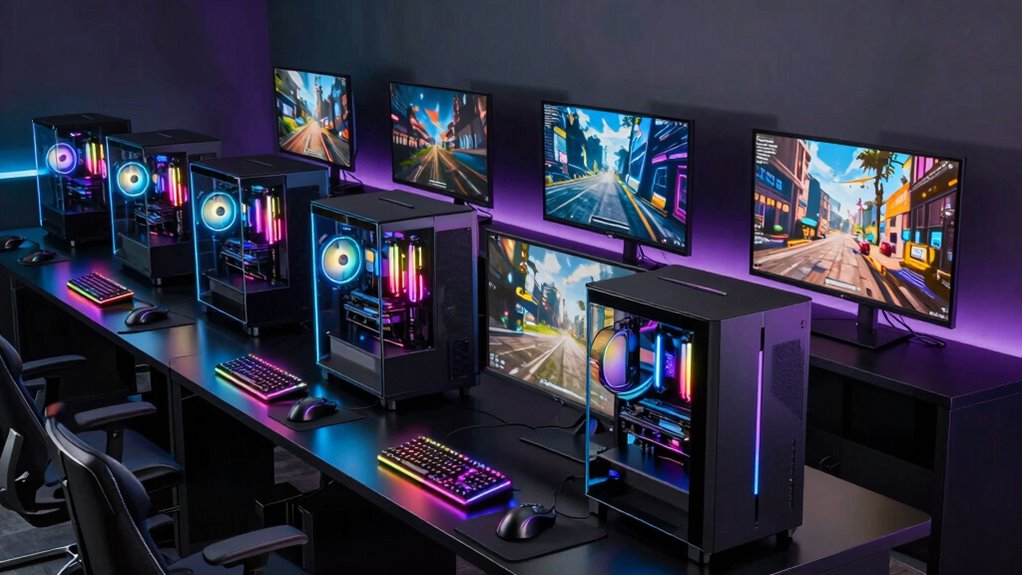

Shopping for high end gaming PCs in 2026 means choosing between raw GPU horsepower, CPU pairing, and cooling quality — and the gap between a good and great build usually comes down to balance rather than the graphics card alone. My top pick, the Skytech Gaming PC Desktop with the Ryzen 7 9850X3D and RTX 5080, delivers the strongest combination of gaming performance and thermal headroom in this lineup. The ORIGIN PC Neuron stands out for its liquid cooling and premium Corsair memory, while the MSI Codex Z2 represents the smart entry point for buyers who want 1440p excellence without paying for 4K overhead. The main tradeoff you will face: RTX 5070 builds save money and dominate 1440p, but RTX 5080 machines future-proof your setup for high-refresh 4K. Read on for the full breakdown of each machine and who each one actually suits.

Get the little things that make your day delivered free with Prime
- Fast, free delivery on millions of items
- Prime Video, Amazon Music and more included
- Member-only deals all year
Key Takeaways
- The Skytech RTX 5080 builds (both the standard desktop and the O11 Vision) separated themselves from the rest through CPU-GPU pairing with the Ryzen 7 9850X3D, which matters more for high-refresh gaming than the GPU alone.
- Every RTX 5070 machine in this lineup is a 1440p champion but a compromise at 4K — buyers chasing 4K ray tracing should not settle below an RTX 5070 Ti.
- Cooling design became the hidden differentiator: the ORIGIN PC Neuron’s liquid cooling and the Skytech O11 Vision’s 360mm AIO justify their premiums over air-cooled rivals like the MSI Codex Z2.
- Storage size varied widely, from 1TB on the Legion Tower 5i and Skytech King 95 to 2TB on most others — a real cost consideration now that modern game installs routinely exceed 100GB.
- The Horizon Autherium offers an i9-and-RGB package that looks impressive on paper but faces stiff competition from better-balanced builds with clearer component transparency.
| MSI Codex Z2 Gaming Desktop (Ryzen 7 8700F, RTX 5070, 32GB DDR5, 2TB SSD) |  | Best Entry Into High-End Gaming | Processor: AMD Ryzen 7 8700F, 8 cores / 16 threads, up to 5.0 GHz | Graphics: NVIDIA GeForce RTX 5070 (Blackwell) | Memory: 32GB DDR5 | VIEW ON AMAZON | See Our Full Breakdown |
| Lenovo Legion Tower 5i (Core Ultra 7 265F, RTX 5070 Ti, 32GB, 1TB) |  | Best Value Flagship GPU | Processor: Intel Core Ultra 7 265F | Graphics: NVIDIA GeForce RTX 5070 Ti | Memory: 32GB 5600MHz DDR5, expandable to 128GB | VIEW ON AMAZON | See Our Full Breakdown |
| ORIGIN PC Neuron (Core Ultra 7 265K, RTX 5070, 32GB Corsair Vengeance, 2TB M.2) |  | Best Premium Build Quality | CPU: Intel Core Ultra 7 265K | GPU: NVIDIA GeForce RTX 5070 | Memory: 32GB Corsair Vengeance RGB DDR5 | VIEW ON AMAZON | See Our Full Breakdown |
| Skytech Gaming PC Desktop (Ryzen 7 9850X3D, RTX 5080 16GB, 32GB DDR5, 2TB NVMe) |  | Best Overall for 4K Gaming | CPU: AMD Ryzen 7 9850X3D, up to 5.6GHz Turbo Boost | GPU: NVIDIA GeForce RTX 5080 16GB GDDR7 (brand may vary) | Memory: 32GB DDR5 6000 RGB | VIEW ON AMAZON | See Our Full Breakdown |
| MSI Aegis R2 AI Gaming Desktop (Core Ultra 9 285, RTX 5070 Ti, 32GB, 2TB NVMe) |  | Best for Gaming Plus Heavy Workloads | Processor: Intel Core Ultra 9 285 | Graphics: NVIDIA GeForce RTX 5070 Ti, 16GB GDDR6 | Memory: 32GB DDR5 | VIEW ON AMAZON | See Our Full Breakdown |
| Skytech Gaming O11 Vision Desktop PC with Ryzen 7 9850X3D and GeForce RTX 5080 |  | Best Premium All-Around Pick | Processor: AMD Ryzen 7 9850X3D, 4.7 GHz (up to 5.6 GHz) | Graphics: NVIDIA GeForce RTX 5080, 16GB GDDR7 (brand may vary) | Memory: 64GB DDR5 6000 RGB | VIEW ON AMAZON | See Our Full Breakdown |
| Corsair Vengeance i5100 Gaming PC with Intel Core i9-14900KF and GeForce RTX 5080 | 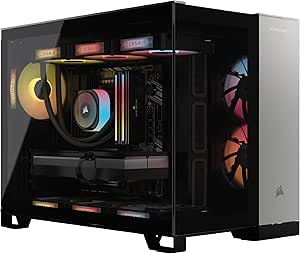 | Best Brand Ecosystem Build | CPU: 14th Gen Intel Core i9-14900KF | GPU: NVIDIA GeForce RTX 5080 | Memory: 32GB Corsair Dominator Titanium RGB DDR5, 6000MT/s | VIEW ON AMAZON | See Our Full Breakdown |
| Skytech Gaming O11 Vision Gaming PC Desktop (White, RTX 5070 Ti) |  | Best Value 1440p Flagship CPU | Processor: AMD Ryzen 7 9850X3D, 4.7GHz (5.6GHz Turbo) | Graphics: NVIDIA GeForce RTX 5070 Ti 16GB GDDR7 (brand may vary) | Memory: 32GB DDR5 5600 | VIEW ON AMAZON | See Our Full Breakdown |
| Skytech Gaming King 95 Gaming PC – Ryzen 7 9800X3D, RTX 5070 Ti (White) |  | Best Esports and High-FPS Pick | Processor: AMD Ryzen 7 9800X3D, 4.7GHz (5.2GHz Turbo) | Graphics: NVIDIA GeForce RTX 5070 Ti 16GB GDDR7 (brand may vary) | Memory: 32GB DDR5 5600 RGB | VIEW ON AMAZON | See Our Full Breakdown |
| Horizon Autherium Dragon RGB i9 RTX Gaming PC Desktop |  | Best for Content Creators and Power Users | CPU: Intel Core i9 Unlocked OC, up to 5.4GHz | GPU: NVIDIA GeForce RTX 5070 OC 12GB | Memory: 64GB | VIEW ON AMAZON | See Our Full Breakdown |
| high end gaming pc | Memory | Storage | Cooling | Processor |
|---|---|---|---|---|
| MSI Codex Z2 Gaming Desktop | 32GB DDR5 | 2TB SSD | ARGB air cooler with four system fans | AMD Ryzen 7 8700F, 8 cores / 16 threads, up to 5.0 GHz |
| Lenovo Legion Tower 5i | 32GB 5600MHz DDR5, expandable to 128GB | 1TB | Up to 180W optimized air cooling | Intel Core Ultra 7 265F |
| ORIGIN PC Neuron | 32GB Corsair Vengeance RGB DDR5 | 2TB M.2 SSD | CORSAIR iCUE LINK H150i TITAN liquid CPU cooler | — |
| Skytech Gaming PC Desktop | 32GB DDR5 6000 RGB | 2TB NVMe M.2 SSD | 360mm AIO liquid cooler with ARGB fans | — |
| MSI Aegis R2 AI Gaming Desktop | 32GB DDR5 | 2TB M.2 NVMe SSD | Air cooling with four system fans | Intel Core Ultra 9 285 |
| Skytech Gaming O11 Vision Desk | 64GB DDR5 6000 RGB | 4TB Gen4 NVMe M.2 SSD | 360mm AIO liquid cooler with ARGB fans | AMD Ryzen 7 9850X3D, 4.7 GHz (up to 5.6 GHz) |
| Corsair Vengeance i5100 Gaming | 32GB Corsair Dominator Titanium RGB DDR5, 6000MT/s | 2TB M.2 NVMe SSD | 240mm liquid CPU cooler plus nine iCUE LINK RX120 RGB fans | — |
| Skytech Gaming O11 Vision Gami | 32GB DDR5 5600 | 2TB Gen4 NVMe M.2 SSD | 360mm AIO liquid cooler with ARGB fans | AMD Ryzen 7 9850X3D, 4.7GHz (5.6GHz Turbo) |
| Skytech Gaming King 95 Gaming | 32GB DDR5 5600 RGB | 1TB Gen4 NVMe M.2 SSD | 360mm AIO liquid cooler with ARGB fans | AMD Ryzen 7 9800X3D, 4.7GHz (5.2GHz Turbo) |
| Horizon Autherium Dragon RGB i | 64GB | 1TB M.2 NVMe SSD (up to 7000MB/s) + 4TB 7200RPM HDD | 360mm AIO liquid cooling with 11 total fans | — |
More Details on Our Top Picks
MSI Codex Z2 Gaming Desktop (Ryzen 7 8700F, RTX 5070, 32GB DDR5, 2TB SSD)
For buyers who want flagship-tier experiences without flagship pricing, this configuration hits a practical sweet spot. The RTX 5070 with Blackwell architecture handles 1440p gaming comfortably, and the 8-core Ryzen 7 8700F keeps streaming and background apps from fighting your game for resources. Compared with the Skytech King 95, you give up the raw 4K headroom of an RTX 5080, but you also skip the premium that chip commands — and unlike the Lenovo Legion Tower 5i, you get 2TB of storage instead of a drive that fills after a handful of modern AAA installs. Four system fans plus an ARGB air cooler keep thermals reasonable, though sustained all-day sessions will run warmer than the liquid-cooled ORIGIN Neuron. The tradeoff is simple: less GPU muscle, more everyday practicality.
Pros:- RTX 5070 with Blackwell architecture for smooth 1440p gaming
- 2TB SSD avoids the storage crunch of smaller-drive rivals
- 8-core, 16-thread CPU handles gaming plus streaming and multitasking
- Four system fans and ARGB air cooler keep airflow consistent
Cons:- Air cooling runs warmer than the liquid-cooled ORIGIN Neuron and Skytech King 95 under sustained loads
- GPU and CPU sit a full tier below the premium picks in this roundup
Best for: 1440p gamers and streamers who want balanced specs and ample storage without paying for 4K-class hardware
Not ideal for: 4K Ultra settings hunters — the RTX 5070 trails the 5070 Ti and 5080 machines in this lineup at high resolutions
- Processor:AMD Ryzen 7 8700F, 8 cores / 16 threads, up to 5.0 GHz
- Graphics:NVIDIA GeForce RTX 5070 (Blackwell)
- Memory:32GB DDR5
- Storage:2TB SSD
- Cooling:ARGB air cooler with four system fans
- Operating system:Windows 11 Home
- Lighting:Customizable RGB via MSI Center
Our verdict“This is the smart pick if you want a genuinely high-end feel at 1440p and would rather spend the savings on games than on GPU prestige.”
Lenovo Legion Tower 5i (Core Ultra 7 265F, RTX 5070 Ti, 32GB, 1TB)
The pitch here is straightforward: an RTX 5070 Ti, the second-strongest GPU in this roundup, at a more accessible position than the RTX 5080 machines like the Skytech King 95. Frame rates at 1440p and entry-level 4K land noticeably ahead of the MSI Codex Z2’s RTX 5070, which matters if a high-refresh monitor is part of your setup. Lenovo also earns points for the tool-less transparent side panel — swapping RAM or storage later is genuinely easy, and memory scales to 128GB, a claim no other system here matches. The compromises are real, though. The 1TB drive fills fast, and the 180W air cooling solution, while capable, can’t match the 360mm AIO in the Skytech for sustained thermal headroom. Bundle in three months of PC Game Pass and this becomes a value story with an upgrade path.
Pros:- RTX 5070 Ti delivers high-FPS AAA gaming close to the RTX 5080 picks
- Tool-less side panel makes future upgrades genuinely easy
- Memory expandable to 128GB DDR5 for long-term flexibility
- Includes 3 months of PC Game Pass with EA Play
Cons:- 1TB storage is the smallest in this lineup
- Air cooling may throttle under extended loads versus liquid-cooled rivals
Best for: Value-focused enthusiasts who want 5070 Ti performance now and plan to upgrade storage or RAM themselves
Not ideal for: Players who install several large AAA games at once — 1TB of storage disappears quickly
- Processor:Intel Core Ultra 7 265F
- Graphics:NVIDIA GeForce RTX 5070 Ti
- Memory:32GB 5600MHz DDR5, expandable to 128GB
- Storage:1TB
- Cooling:Up to 180W optimized air cooling
- Connectivity:2.5G Ethernet, WiFi 6E
- Case:Tool-less transparent side panel with RGB
- Includes:3 months PC Game Pass + EA Play
Our verdict“The strongest raw-GPU value on this list, best for buyers comfortable adding a second drive down the road.”
ORIGIN PC Neuron (Core Ultra 7 265K, RTX 5070, 32GB Corsair Vengeance, 2TB M.2)
This is the pick for buyers who care about what’s inside the case, not just the spec sheet. Every major component is Corsair — Vengeance RGB memory, a 5000D Airflow chassis, and the iCUE LINK H150i TITAN liquid cooler — which means cohesive software control and component quality that mass-market prebuilts rarely match. The liquid cooling gives the 265K sustained clocks the MSI Aegis R2’s four-fan air setup can’t fully replicate. The honest tradeoff: you’re paying boutique-builder money for an RTX 5070, a GPU the cheaper MSI Codex Z2 also carries. You’re buying craftsmanship, thermal headroom, and unified RGB ecosystems rather than maximum frame rates per dollar. For tinkerers who will upgrade the GPU in a few years and want a chassis and cooling platform that outlasts it, that math works. Pure performance shoppers should look at the Skytech instead.
Pros:- Corsair components throughout with unified iCUE software control
- 240mm-class H150i TITAN liquid cooling sustains heavy CPU loads
- Corsair 5000D Airflow case is upgrade-friendly and well-ventilated
- 2TB M.2 SSD matches the best storage offerings in this lineup
Cons:- Premium pricing for the RTX 5070 tier of performance
- Heavy RGB aesthetic won’t suit buyers wanting a subdued build
Best for: Enthusiasts who value premium components, liquid cooling, and a refined iCUE ecosystem over raw GPU-per-dollar
Not ideal for: Performance-per-dollar shoppers — the same RTX 5070 is available elsewhere in this roundup for less
- CPU:Intel Core Ultra 7 265K
- GPU:NVIDIA GeForce RTX 5070
- Memory:32GB Corsair Vengeance RGB DDR5
- Storage:2TB M.2 SSD
- Cooling:CORSAIR iCUE LINK H150i TITAN liquid CPU cooler
- Case:CORSAIR 5000D Airflow, black
- Software:CORSAIR iCUE
Our verdict“A boutique-quality platform built to outlive its GPU — right for long-term tinkerers, wrong for pure value hunters.”
Skytech Gaming PC Desktop (Ryzen 7 9850X3D, RTX 5080 16GB, 32GB DDR5, 2TB NVMe)
This is the machine the rest of the roundup is measured against. The Ryzen 7 9850X3D is arguably the best gaming CPU you can buy thanks to its 3D V-Cache, and pairing it with an RTX 5080 produces 4K Ultra gameplay at 60+ FPS — a combination the Lenovo Legion Tower 5i’s 5070 Ti approaches but doesn’t quite match, and the MSI Codex Z2 can’t touch. The 360mm AIO liquid cooler matters here: this is the only configuration in the batch with full-length radiator cooling, keeping both chips quiet under marathon sessions. Skytech’s clean Windows install with zero bloatware is a genuine quality-of-life advantage over big-brand machines. Two annoyances keep it from a clean sweep: the GPU brand may vary from the listing images, and Wi-Fi 5 is dated next to the Lenovo’s WiFi 6E — plan on Ethernet or an upgrade card.
Pros:- 9850X3D plus RTX 5080 is the strongest CPU/GPU pairing in this roundup
- 360mm AIO liquid cooling provides the best sustained thermal headroom here
- Windows 11 with no bloatware and free keyboard and mouse included
- 1-year parts and labor warranty with US assembly
Cons:- GPU brand may differ from listing images
- Only Wi-Fi 5, lacking the WiFi 6E found on the Lenovo Legion Tower 5i
Best for: 4K and high-refresh 1440p gamers who want maximum performance and clean software out of the box
Not ideal for: Buyers who want exact component certainty or modern wireless — GPU brand varies and Wi-Fi stops at 802.11ac
- CPU:AMD Ryzen 7 9850X3D, up to 5.6GHz Turbo Boost
- GPU:NVIDIA GeForce RTX 5080 16GB GDDR7 (brand may vary)
- Memory:32GB DDR5 6000 RGB
- Storage:2TB NVMe M.2 SSD
- Cooling:360mm AIO liquid cooler with ARGB fans
- Connectivity:Wi-Fi 5 802.11ac
- Case:Skytech King 95, black
- Warranty:1 year parts and labor
Our verdict“The best pure gaming performance in this lineup — buy it if 4K is the goal, just verify the GPU brand on arrival.”
MSI Aegis R2 AI Gaming Desktop (Core Ultra 9 285, RTX 5070 Ti, 32GB, 2TB NVMe)
The Intel Core Ultra 9 285 is the standout here — it’s the most capable productivity processor in this batch, and that changes who this machine is for. Paired with an RTX 5070 Ti, 32GB of DDR5, and a full 2TB NVMe drive, it solves the exact problem the Lenovo Legion Tower 5i creates: same GPU class, double the storage. Compared with the gaming-first Skytech King 95, you trade a step down in GPU for a step up in CPU muscle, which pays off in video editing, code compilation, and AI-assisted workflows alongside your games. VR-ready support and USB Type-C round out a well-connected front panel. The catches: four-fan air cooling is adequate but no match for the 360mm AIO in the Skytech under long render or gaming sessions, and at 26.9 pounds and 19 inches tall, this tower demands real floor or desk space.
Pros:- Core Ultra 9 285 is the strongest CPU for productivity work in this roundup
- 2TB NVMe storage doubles the Lenovo Legion Tower 5i’s capacity at the same GPU tier
- VR-ready with USB Type-C and modern connectivity
- 32GB DDR5 handles gaming alongside demanding background apps
Cons:- Air cooling trails the liquid-cooled Skytech and ORIGIN under sustained loads
- Large, heavy chassis requires substantial space
Best for: Creator-prosumers who split time between AAA gaming, video editing, and heavy multitasking
Not ideal for: Compact-space setups — the large tower and air-only cooling don’t suit tight desks or quiet-room builds
- Processor:Intel Core Ultra 9 285
- Graphics:NVIDIA GeForce RTX 5070 Ti, 16GB GDDR6
- Memory:32GB DDR5
- Storage:2TB M.2 NVMe SSD
- Cooling:Air cooling with four system fans
- Operating system:Windows 11 Home
- Video outputs:HDMI, DisplayPort
- Additional features:VR-ready, RGB lighting, USB Type-C
- Dimensions:19.4 x 9.1 x 19 inches, 26.9 pounds
Our verdict“The best pick when your PC earns money between gaming sessions — power users first, frame-rate maximalists second.”
Skytech Gaming O11 Vision Desktop PC with Ryzen 7 9850X3D and GeForce RTX 5080
This configuration is the most complete Skytech build in the lineup, and it earns the top billing by refusing to cut corners anywhere. The Ryzen 7 9850X3D paired with an RTX 5080 is the same core combo as the earlier Skytech O11 Vision entry, but here it comes with 64GB of DDR5 and 4TB of Gen4 storage — double the memory and capacity of its sibling. That matters for buyers who stream, keep dozens of large games installed, or run heavy background tasks while gaming. Wi-Fi 7 is also a step above the Wi-Fi 5 found on the white O11 Vision model, which feels dated by comparison.
The tradeoffs are real, though. GPU and motherboard brands may vary between units, so buyers attached to a specific card maker should confirm before ordering. The one-year warranty is also shorter than the three-year parts coverage on the Horizon Autherium.
Pros:- Ryzen 7 9850X3D and RTX 5080 deliver elite gaming performance at any resolution
- 64GB DDR5 and 4TB NVMe storage remove the most common early upgrade needs
- 360mm AIO liquid cooler keeps the 9850X3D from thermal throttling
- Wi-Fi 7 and modern X870 platform provide strong connectivity headroom
Cons:- Graphics card and motherboard brands may vary from unit to unit
- Only a one-year parts and labor warranty despite the premium price class
Best for: Enthusiast gamers and streamers who want a no-compromise 4K-capable build with massive memory and storage out of the box
Not ideal for: Buyers who want guaranteed specific component brands or longer warranty coverage than a single year
- Processor:AMD Ryzen 7 9850X3D, 4.7 GHz (up to 5.6 GHz)
- Graphics:NVIDIA GeForce RTX 5080, 16GB GDDR7 (brand may vary)
- Memory:64GB DDR5 6000 RGB
- Storage:4TB Gen4 NVMe M.2 SSD
- Cooling:360mm AIO liquid cooler with ARGB fans
- Wireless:Wi-Fi 7 (802.11be)
- Case:Lian Li PC-O11 Vision, black
- Warranty:1 year parts and labor
Our verdict“If budget allows and you want the fullest-featured Skytech build in this roundup, this is the one to beat.”
Corsair Vengeance i5100 Gaming PC with Intel Core i9-14900KF and GeForce RTX 5080
The Corsair Vengeance i5100 stands apart from the Skytech-heavy field because every internal component comes from a single brand ecosystem. The Dominator Titanium memory, iCUE LINK RX120 fans, and 1000W Gold modular PSU all talk to one software suite, which means lighting, fan curves, and telemetry live in one place. Compare that to the Skytech O11 Vision RTX 5080 build, where the GPU and motherboard brands may vary — here, buyers know exactly what they are getting inside.
Nine RGB fans and a 240mm AIO make this one of the most aggressively cooled machines in the roundup, though the i9-14900KF runs hot and a 240mm radiator is smaller than the 360mm units on both Skytech O11 Vision models. The dual-chamber tempered glass case is a showpiece, but at 18.4 inches deep it will swallow a chunk of desk or floor space. Wi-Fi 6E is solid but trails the Wi-Fi 7 on the top Skytech pick.
Pros:- RTX 5080 paired with an i9-14900KF for high-refresh 1440p and strong 4K performance
- Nine iCUE LINK RGB fans and a dual-chamber case deliver exceptional airflow and aesthetics
- 1000W 80+ Gold fully modular power supply leaves upgrade headroom
- Corsair ecosystem means consistent component quality and unified software
Cons:- Very large footprint requires substantial desk or floor space
- 240mm cooler is modest for a 14900KF compared with 360mm rivals
- Wi-Fi 6E trails the Wi-Fi 7 offered on competing builds
Best for: Buyers who value a fully branded, software-coordinated build and want RTX 5080 power with tidy cable management and unified RGB control
Not ideal for: Anyone with limited space, or buyers who want the latest Wi-Fi 7 wireless and a 360mm cooler on a hot-running CPU
- CPU:14th Gen Intel Core i9-14900KF
- GPU:NVIDIA GeForce RTX 5080
- Memory:32GB Corsair Dominator Titanium RGB DDR5, 6000MT/s
- Storage:2TB M.2 NVMe SSD
- Cooling:240mm liquid CPU cooler plus nine iCUE LINK RX120 RGB fans
- Power Supply:1000W 80+ Gold fully modular
- Networking:2.5G Ethernet, Wi-Fi 6E, Bluetooth 5.3
- Dimensions:18.4 × 12.0 × 14.8 inches
Our verdict“This is the pick for buyers who want showroom looks and a cohesive brand ecosystem without building it themselves.”
Skytech Gaming O11 Vision Gaming PC Desktop (White, RTX 5070 Ti)
This white O11 Vision build makes the list because it delivers the same Ryzen 7 9850X3D processor as the range-topping Skytech RTX 5080 configuration at a lower tier of GPU, which is a smart trade for most gamers. The 9850X3D is arguably the best gaming CPU available, and pairing it with an RTX 5070 Ti produces excellent 1440p Ultra performance in demanding titles like Cyberpunk 2077. Compared with the Skytech King 95, you get double the storage at 2TB in the same basic performance class.
The compromises cluster around connectivity and predictability. Wi-Fi 5 is genuinely dated next to the Wi-Fi 6E on the Corsair i5100 and Wi-Fi 7 on the black O11 Vision, so wired Ethernet is advisable. Only one HDMI and one DisplayPort are guaranteed, and the GPU brand may vary between units — a recurring Skytech caveat in this roundup.
Pros:- Ryzen 7 9850X3D is the strongest gaming CPU in this roundup’s price range
- 2TB Gen4 NVMe SSD offers double the storage of the King 95
- 360mm AIO cooler in the Lian Li O11 Vision case blends thermals with looks
- Clean Windows 11 install with no bloatware plus included keyboard and mouse
Cons:- Only Wi-Fi 5 wireless — well behind Wi-Fi 6E/7 rivals
- GPU brand may vary and just one HDMI plus one DisplayPort are guaranteed
Best for: 1440p gamers who want the best gaming CPU on the market with strong RTX 5070 Ti performance and a showcase white aesthetic
Not ideal for: Buyers who rely on wireless networking or need multiple guaranteed monitor outputs for a multi-display setup
- Processor:AMD Ryzen 7 9850X3D, 4.7GHz (5.6GHz Turbo)
- Graphics:NVIDIA GeForce RTX 5070 Ti 16GB GDDR7 (brand may vary)
- Memory:32GB DDR5 5600
- Storage:2TB Gen4 NVMe M.2 SSD
- Cooling:360mm AIO liquid cooler with ARGB fans
- Power Supply:850W Gold ATX 3.0
- Connectivity:Wi-Fi 5 (802.11ac)
- Warranty:1 year parts and labor
Our verdict“The smart middle path for 1440p players who want flagship CPU horsepower without paying for an RTX 5080.”
Skytech Gaming King 95 Gaming PC – Ryzen 7 9800X3D, RTX 5070 Ti (White)
The King 95 targets a different buyer than its O11 Vision siblings: the competitive high-refresh gamer. The Ryzen 7 9800X3D is the proven esports champion, and while the white O11 Vision’s 9850X3D edges it in some titles, the difference is small — the King 95 trades a sliver of CPU headroom for a leaner overall package. Like the O11 Vision builds, it carries a 360mm AIO, clean Windows install, and USA assembly, so build quality philosophy is consistent across the Skytech range.
The clear weak spot is storage: at 1TB, this is the smallest drive among the Skytech entries here, and the white O11 Vision doubles it for buyers with large game libraries. The same GPU brand lottery applies, and aging 802.11ac Wi-Fi means Ethernet is the better connection. This model makes the most sense when frame rates matter more than library size.
Pros:- Ryzen 7 9800X3D is a proven top-tier CPU for high-refresh gaming
- 360mm AIO liquid cooling sustains boost clocks through long sessions
- Windows 11 with zero bloatware keeps the system clean and fast
- 1-year warranty with free US-based technical support and included peripherals
Cons:- Only 1TB of storage — the smallest capacity in this lineup
- Graphics card brand may vary from what is pictured
- 802.11ac Wi-Fi is dated for a modern high-end build
Best for: Competitive and esports players who prioritize maximum CPU frame rates at 1440p and don’t hoard huge game libraries
Not ideal for: Buyers with large game collections — the 1TB SSD fills quickly and will need replacing or supplementing
- Processor:AMD Ryzen 7 9800X3D, 4.7GHz (5.2GHz Turbo)
- Graphics:NVIDIA GeForce RTX 5070 Ti 16GB GDDR7 (brand may vary)
- Memory:32GB DDR5 5600 RGB
- Storage:1TB Gen4 NVMe M.2 SSD
- Cooling:360mm AIO liquid cooler with ARGB fans
- Case:Skytech King 95, white
- Wireless:802.11 AC Wi-Fi
- Warranty:1 year parts and labor
Our verdict“A focused, frame-rate-first machine for competitive gamers who will happily add storage later.”
Horizon Autherium Dragon RGB i9 RTX Gaming PC Desktop
The Autherium Dragon plays a different game than everything else here. Where the Skytech King 95 and white O11 Vision optimize for pure gaming value, this build leans into workstation-grade capacity: 64GB of RAM and a 5TB split between a fast NVMe SSD and a 4TB spinning drive. That hybrid storage makes sense for creators who need speed for active projects and cheap bulk space for archives, footage, or a sprawling game library. Windows 11 Pro rather than Home also signals its professional orientation.
As a pure gaming machine, though, the factory-overclocked RTX 5070 OC with 12GB of VRAM trails the 16GB RTX 5070 Ti and RTX 5080 builds above it — the extra RAM and fans don’t translate to frames. Eleven fans plus a 360mm AIO should run quietly, but the system will pull serious power under load, and the maximalist RGB tower clashes with understated setups. The standout perk is the 3-year parts and 5-year labor warranty, the longest coverage in this batch.
Pros:- 64GB RAM and 5TB of combined storage handle editing, streaming, and huge libraries
- 360mm AIO plus 11 fans deliver extensive cooling with quiet operation
- Windows 11 Pro suits professional and multi-monitor workflows
- 3-year parts and 5-year labor warranty leads this roundup
Cons:- RTX 5070 OC with 12GB VRAM is the weakest GPU among these high-end builds
- High power draw under load and a loud RGB-heavy design won’t suit minimalist spaces
- Hybrid HDD storage is slower for games installed on the spinning drive
Best for: Content creators and multitaskers who game but also need massive RAM, bulk storage, and long warranty coverage
Not ideal for: Pure gamers chasing maximum frames per dollar — the 12GB RTX 5070 is outclassed by the 5070 Ti and 5080 builds here
- CPU:Intel Core i9 Unlocked OC, up to 5.4GHz
- GPU:NVIDIA GeForce RTX 5070 OC 12GB
- Memory:64GB
- Storage:1TB M.2 NVMe SSD (up to 7000MB/s) + 4TB 7200RPM HDD
- Cooling:360mm AIO liquid cooling with 11 total fans
- Power Supply:850W 80+ Gold
- Operating System:Windows 11 Pro
- Video Outputs:1x HDMI, 3x DisplayPort
- Warranty:3-year parts, 5-year labor
Our verdict“Choose this when gaming is one of several demanding workloads — not when it is the only one.”

How We Picked
I evaluated each system against four criteria that actually decide whether a high end gaming PC is worth the money: GPU class and cooling headroom, CPU pairing balance, memory and storage adequacy for 2026 game libraries, and platform quality — meaning case airflow, upgradability, and brand support. A machine with an RTX 5080 but weak airflow ranked below a well-cooled RTX 5070 Ti build, because sustained performance matters more than peak benchmarks.
The ranking logic is straightforward: machines that pair the Ryzen 7 X3D-series CPUs with RTX 5080 graphics lead the list because that combination delivers the highest frame rates where high end buyers actually play — 1440p at high refresh and 4K. Premium-cooled builds like the ORIGIN PC Neuron earn mid-tier positions for buyers who value refinement, while value-oriented RTX 5070 systems rank as smart entry points rather than flagship contenders. Where component transparency was unclear, I flagged it rather than assuming the best.
| high end gaming pc | Processor | Graphics | Case |
|---|---|---|---|
| MSI Codex Z2 Gaming Desktop | AMD Ryzen 7 8700F, 8 cores / 16 threads, up to 5.0 GHz | NVIDIA GeForce RTX 5070 (Blackwell) | — |
| Lenovo Legion Tower 5i | Intel Core Ultra 7 265F | NVIDIA GeForce RTX 5070 Ti | Tool-less transparent side panel with RGB |
| ORIGIN PC Neuron | — | — | CORSAIR 5000D Airflow, black |
| Skytech Gaming PC Desktop | — | — | Skytech King 95, black |
| MSI Aegis R2 AI Gaming Desktop | Intel Core Ultra 9 285 | NVIDIA GeForce RTX 5070 Ti, 16GB GDDR6 | — |
| Skytech Gaming O11 Vision Desk | AMD Ryzen 7 9850X3D, 4.7 GHz (up to 5.6 GHz) | NVIDIA GeForce RTX 5080, 16GB GDDR7 (brand may vary) | Lian Li PC-O11 Vision, black |
| Corsair Vengeance i5100 Gaming | — | — | — |
| Skytech Gaming O11 Vision Gami | AMD Ryzen 7 9850X3D, 4.7GHz (5.6GHz Turbo) | NVIDIA GeForce RTX 5070 Ti 16GB GDDR7 (brand may vary) | — |
| Skytech Gaming King 95 Gaming | AMD Ryzen 7 9800X3D, 4.7GHz (5.2GHz Turbo) | NVIDIA GeForce RTX 5070 Ti 16GB GDDR7 (brand may vary) | Skytech King 95, white |
| Horizon Autherium Dragon RGB i | — | — | — |
Factors to Consider When Choosing High End Gaming Pcs
Before committing to any of these machines, it helps to understand the broader forces shaping high end PC pricing and performance in 2026. The decisions you make about GPU tier and CPU pairing will affect your experience far longer than RGB lighting or case aesthetics ever will.
GPU Tier Decides Your Resolution, Not Just Your Frame Rate
The single biggest mistake high end buyers make is overpaying for GPU power they will never use, or underbuying for the display they already own. An RTX 5070 is a 1440p card first — excellent at high refresh rates at that resolution, but stretched at 4K with ray tracing enabled. The RTX 5070 Ti sits in a sweet spot for mixed 1440p/4K use, while the RTX 5080 is the honest choice for native 4K gaming. Before choosing, check your monitor: pairing a 1080p display with any of these cards wastes their headroom, and pairing a 4K 144Hz display with a base 5070 will disappoint you within a year. Buy for the display you plan to own for the next three to four years, not the one you have today.
CPU Pairing Matters More at High Refresh Rates
At 4K, most games are GPU-bound and almost any modern CPU keeps up. But at 1440p with high refresh monitors, the CPU becomes the bottleneck — and this is why X3D-series Ryzen chips dominate competitive gaming builds. The 9850X3D and 9800X3D carry extra 3D V-Cache that delivers dramatically higher frame rates in CPU-heavy titles like simulators, strategy games, and competitive shooters. A buyer who plays Counter-Strike, flight sims, or MMOs benefits more from an X3D chip than from a GPU tier upgrade. Conversely, if you mostly play cinematic single-player games at 4K, the CPU difference nearly disappears, and an Intel Core Ultra 7 build serves you just as well for less money.
Cooling and Case Airflow Protect Your Investment
Identical components can perform 10 to 15 percent differently depending on cooling — sustained boost clocks depend on thermals, not just spec sheets. Liquid cooling (240mm or 360mm AIOs) keeps high-wattage CPUs like the Core Ultra 9 and i9-14900KF at peak clocks during long sessions, while cramped air-cooled cases force thermal throttling. Check whether a build includes adequate intake fans, whether the case supports future GPU upgrades, and whether the power supply has headroom above the minimum. A prebuilt with a barely-adequate PSU may run fine today but blocks you from upgrading the GPU in two years. This is the least glamorous spec on the page and one of the most consequential.
Storage Reality: 1TB Is No Longer High End
Modern AAA games routinely consume 100 to 150GB, and a 1TB drive fills after roughly eight to ten installations. Several builds in this category still ship 1TB drives to hit a price point, which means budgeting for a secondary drive within months. 2TB NVMe SSDs have become the practical floor for a machine labeled high end, and I weighted storage accordingly in the rankings. Also check the SSD class: a slower PCIe 4.0 drive versus a PCIe 5.0 drive affects load times in open-world games more than most buyers expect. Fortunately, adding storage later is one of the easiest upgrades, so a 1TB machine is not a dealbreaker — just a known extra cost.
Prebuilt Premium Versus Upgrade Path
High end prebuilts charge a convenience premium over DIY builds, and whether that premium is worth it depends on your warranty expectations and tinkering appetite. Brands like Corsair, MSI, and Lenovo offer structured support and standardized parts, while boutique builders like ORIGIN PC add custom cooling and premium components at a higher markup. Check three things before buying any prebuilt: whether the motherboard uses a standard form factor (so you can swap it later), whether the PSU is a name-brand unit with spare wattage, and whether the RAM is upgradable to 64GB or beyond. Proprietary motherboards and bare-minimum power supplies are the two most common traps in this segment. A machine that looks expensive but locks you out of upgrades costs more over a five-year ownership window.
Frequently Asked Questions
Is an RTX 5070 build still considered high end, or should I stretch to a 5070 Ti or 5080?
An RTX 5070 build absolutely qualifies as high end for 1440p gaming — it will max out virtually any title at that resolution with high refresh rates. The distinction comes at 4K: the 5070 can run 4K with upscaling, but ray tracing and native 4K performance fall off quickly. The 5070 Ti is the honest 4K entry point, while the 5080 handles native 4K with ray tracing and high frame targets comfortably. If your monitor is 1440p, save the money and put it toward a better CPU or more storage. If you own or plan to buy a 4K 120Hz-plus display, stretching to the 5070 Ti or 5080 will keep the machine relevant years longer.
Why do so many of these builds use the Ryzen 9850X3D instead of Intel Core Ultra 9 chips?
The X3D chips carry extra stacked cache that gives them a large advantage in games that are CPU-limited, which is most titles running at 1440p or lower with a powerful GPU. Intel’s Core Ultra 9 and i9 chips win in multi-threaded productivity work like video rendering and code compilation, but that advantage rarely shows up in games. For a pure gaming machine, the 9850X3D delivers higher average and 1% low frame rates, which is what makes gameplay feel smooth. If you split your time between gaming and heavy creative work, an Intel build like the Corsair Vengeance i5100 or MSI Aegis R2 makes more sense. Gaming-only buyers should lean X3D.
Are white prebuilt PCs like the Skytech O11 Vision builds harder to maintain?
White cases show dust accumulation more visibly than black ones, so they need cleaning slightly more often — typically a quick dusting every couple of months versus a more relaxed schedule for dark builds. The tradeoff is largely cosmetic beyond that: internal components are identical, and the O11 Vision’s glass-panel dual-chamber design actually makes cleaning and cable management easier than traditional tower layouts. The 360mm AIO cooler in the white O11 Vision also provides better CPU thermals than standard air cooling. Buyers who want a showpiece build for a visible desk setup will find the aesthetic worth the minor upkeep. If your PC lives under a desk, black builds like the ORIGIN Neuron are the lower-maintenance choice.
Should I worry about buying a prebuilt with a 1TB SSD in 2026?
You should not skip a machine over it, but you should budget for it. With modern games installing at 100 to 150GB each, a 1TB drive holds roughly eight to ten major titles before you start uninstalling to make room. The good news is that adding a second NVMe drive is one of the cheapest and easiest upgrades on any of these machines, often requiring only a screwdriver and ten minutes. Check that the motherboard has a spare M.2 slot — most B650 and Z890 boards in these builds do. If two machines are otherwise equal, the 2TB version is the better long-term value, but a superior GPU or CPU pairing with 1TB beats a weaker machine with 2TB every time.
Is 32GB of RAM enough for high end gaming, or should I insist on 64GB?
For gaming alone, 32GB remains the sweet spot in 2026 — virtually no game uses more, and every machine in this roundup ships with it. The case for 64GB comes from multitasking: streaming while gaming, running heavy background apps, or doing video editing and 3D work alongside play. DDR5 kits are inexpensive enough now that upgrading later is painless, provided the prebuilt uses standard DIMMs and has open slots. Boutique builds like the ORIGIN Neuron with Corsair Vengeance RGB make it easy to match and expand the existing kit later. My advice: take the 32GB now and put the savings into GPU tier, which affects gaming far more than RAM capacity does.
Conclusion
For the best overall high end gaming PC, my recommendation is the Skytech Gaming PC Desktop with the Ryzen 7 9850X3D and RTX 5080 — it pairs the strongest gaming CPU in this lineup with a true 4K-class GPU and 2TB of storage, and nothing else here matches that balance. Buyers who want the same performance in a showcase design should pick the Skytech O11 Vision RTX 5080 as the best premium option, thanks to its dual-chamber glass case and 360mm AIO cooling. For best value, the MSI Codex Z2 delivers RTX 5070 performance and a 2TB SSD at the accessible end of the high end segment, while the Skytech King 95 with the 9800X3D is the smartest pick for competitive players who prioritize CPU speed over storage capacity. The best choice for beginners is the Lenovo Legion Tower 5i, which offers mainstream brand support and balanced Core Ultra 7 performance — just plan for extra storage. Finally, the ORIGIN PC Neuron earns the best boutique pick for buyers who value liquid cooling, premium memory, and a refined build, and the Corsair Vengeance i5100 suits hybrid gamers-creators who need the i9’s multi-core muscle. Whatever your priority, match the GPU to your monitor and the CPU to your game library — those two decisions matter more than anything else on the spec sheet.
Columbus Day / Indigenous Peoples' Day Picks
long weekend sales
As an affiliate, we earn on qualifying purchases.