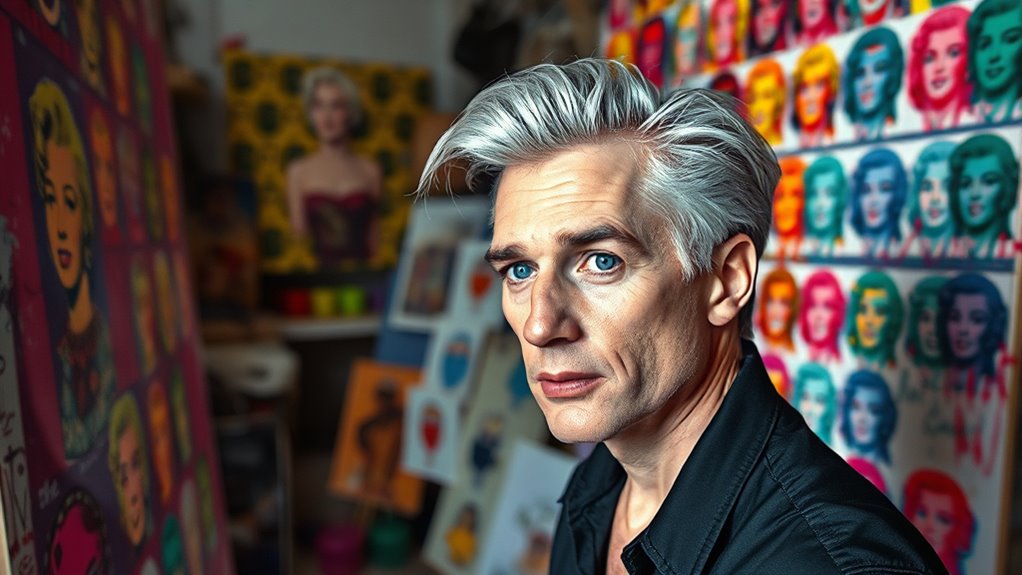

Andy Warhol’s famous quote, “Everyone will be world-famous for 15 minutes,” highlights how society is obsessed with celebrity and fleeting fame. He revolutionized art by transforming everyday images into iconic symbols through repetition and bold colors, blurring the lines between high art and consumer culture. His work critiques media, advertising, and society’s fixation on celebrity status. To understand how Warhol’s ideas reflect our culture today, keep exploring his innovative approach and influence.

Get the little things that make your day delivered free with Prime
- Fast, free delivery on millions of items
- Prime Video, Amazon Music and more included
- Member-only deals all year
Key Takeaways
- Warhol predicted that in a media-saturated society, fame would be fleeting and accessible to all.
- His art blurred the lines between celebrity culture and everyday consumer images.
- The phrase highlights the transient nature of fame in a media-driven world.
- Warhol’s work emphasizes mass production and repetition to reflect societal obsession with celebrity.
- His critique reveals how media elevates ordinary images and reduces celebrities to commodities.
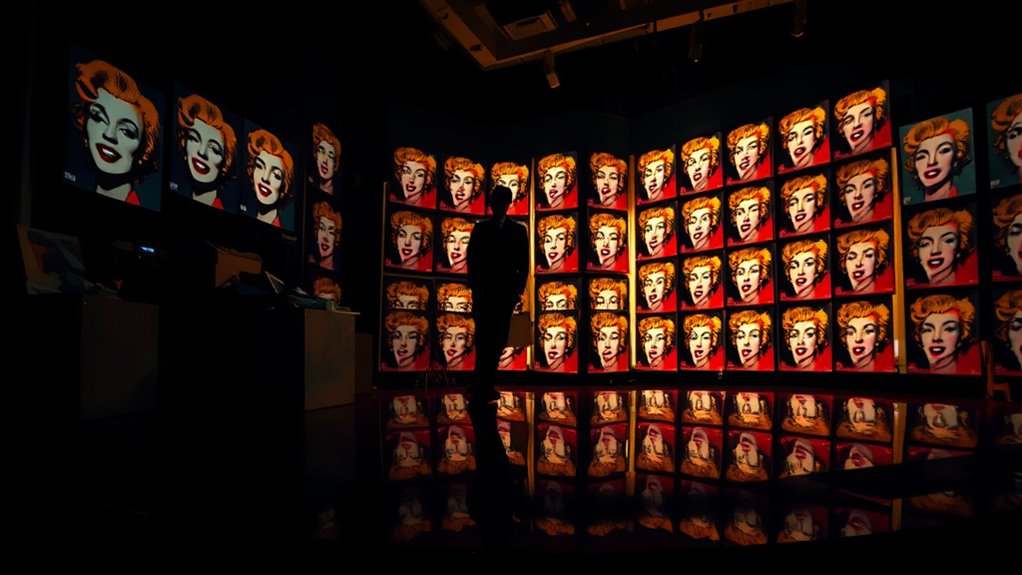
Andy Warhol revolutionized the art world with his bold idea that “everyone will be world-famous for 15 minutes.” His work blurred the lines between high art and popular culture, making fame and consumerism central themes. As you explore his art, you’ll see how he transformed everyday images into iconic symbols, reflecting a society obsessed with celebrity culture. Warhol’s mastery of pop art isn’t just about bright colors and bold designs; it’s about capturing the essence of a media-driven era where fame is fleeting but endlessly recycled.
Andy Warhol blurred high art and pop culture, transforming everyday images into icons of fleeting fame and consumerism.
In the sphere of pop art, Warhol’s work stands out because he elevated mundane commercial images—like Campbell’s soup cans, Marilyn Monroe, and Elvis Presley—into fine art. You might notice how he took familiar objects and celebrities and repeated them across canvases, emphasizing their ubiquity. This repetition mirrors the mass production and consumption that define the consumerist culture of his time. It’s as if Warhol wanted you to see how consumer products and celebrity icons are woven into the fabric of everyday life, blurring the boundary between art and advertising.
By doing so, Warhol made a statement about celebrity culture’s power to shape identity and influence society. His portraits of stars like Monroe and Jackie Kennedy aren’t just images; they become symbols of fame’s fleeting nature and its obsession with image. You might think about how these images, mass-produced and widely circulated, reflect the way society idolizes celebrities while simultaneously reducing them to commodities. Warhol’s art invites you to question what fame really means in a world where everyone can be famous for 15 minutes, thanks to the media’s relentless coverage.
Moreover, Warhol’s approach to pop art challenged traditional notions of artistic originality. Instead of creating something entirely new, he took existing images and transformed them into art through screen printing and vibrant colors. This process highlighted the commercialization of art itself, making you consider how consumer culture influences what we value aesthetically. His work captures the essence of celebrity culture’s rise, where image and perception often outweigh substance. You start to realize how Warhol’s art comments on society’s obsession with fame, consumer goods, and the way media elevates ordinary people to extraordinary status—if only for a moment.
In the end, Warhol’s pop art doesn’t just celebrate celebrity culture; it critiques it. His work prompts you to reflect on the fleeting nature of fame and how consumerism shapes your perceptions of identity and success. By transforming everyday objects and icons into art, Warhol invites you to see the world through the lens of commercialism, where everyone, in some way, is chasing their 15 minutes of fame. Recognizing the costs of consumerism can deepen your understanding of how societal values are reflected in art and popular culture.
Popular right now

TCL 85 Designer Series QD-Mini LED TV (Model 85A400U) with Google Smart TV

Philips 4400 Series Fully Automatic Espresso Machine with LatteGo Milk System

Vitamix Propel Series 750 Professional-Grade Blender, 4 Programs, Black
As an affiliate, we earn on qualifying purchases.
Frequently Asked Questions
How Did Warhol’s Background Influence His Art Style?
Your socioeconomic background and artistic influences shape Warhol’s unique style. Growing up in Pittsburgh, he faced economic challenges, inspiring his focus on consumer culture and mass production. His exposure to commercial art and advertising influenced his use of bold colors, repetition, and imagery from popular culture. This background encouraged him to blur the lines between fine art and commercialism, creating a distinctive style that reflects his environment and artistic influences.
What Was Warhol’s Impact on Modern Digital Art?
You might be surprised, but Warhol’s influence on modern digital art is profound. His embrace of digital aesthetics and interactive media set the stage for today’s artists who blend technology with creativity. Warhol’s focus on mass production and celebrity culture foreshadowed how digital platforms now allow for instant, widespread sharing. His innovative approach encourages you to explore new tools and techniques, pushing the boundaries of what digital art can become.
Did Warhol’s Celebrity Culture Promote Inclusivity or Exclusivity?
You see, Warhol’s celebrity culture mainly promotes exclusivity through celebrity obsession and social stratification. It elevates a select few, making fame seem like an exclusive club, which can leave others feeling left out. While it celebrates fame, it also reinforces societal divides, emphasizing status over inclusivity. So, his focus on celebrity obsession tends to deepen social stratification rather than promote true inclusivity.
How Did Warhol View the Commercialization of Art?
You see, Warhol viewed the commercialization of art as a natural extension of pop art and consumerism. He blurred the lines between high and low culture, turning everyday objects into art. By embracing mass production and branding, he challenged traditional notions of artistic uniqueness. To him, art became a reflection of consumer society, where commercialization didn’t diminish value but transformed it into a commentary on modern life.
What Techniques Did Warhol Develop for Mass Production?
You should know that Warhol developed techniques like screen printing and silk screening to produce art efficiently. He used these methods to create multiple copies of images quickly, making art more accessible and commercial. By mastering these techniques, you can mass-produce artwork while maintaining quality, blurring the lines between fine art and commercial design. Warhol’s innovations revolutionized art production, emphasizing reproducibility and the impact of mass media.
Conclusion
So, even if you think fame isn’t for you, Warhol’s idea reminds you that everyone has a moment to shine. You don’t need to be a celebrity to leave a mark; today’s digital world makes it easier than ever to stand out. Embrace your unique voice and share your passions. Remember, your 15 minutes could be just a post, a photo, or a story—so go ahead and make your moment count.