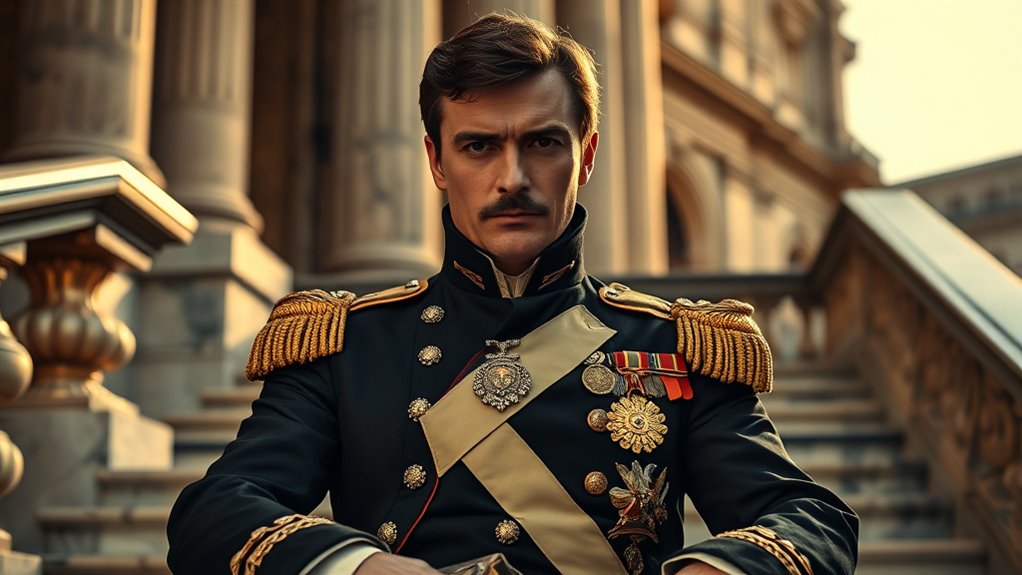

Napoleon Bonaparte showed that a true leader inspires hope to unite and motivate people. He combined military brilliance with bold political reforms, transforming France into a stable and modern nation. His strategic innovations and reforms in law, education, and governance created loyalty and pride among his followers. Napoleon proved that leadership is about instilling confidence and resilience. To understand how he turned hope into powerful change, discover more about his remarkable strategies and legacy.
Key Takeaways
- Napoleon inspired hope through his military brilliance and strategic innovation, turning victories into national pride.
- His political reforms, like the Napoleonic Code, promoted equality, stability, and societal progress, fostering confidence.
- By modernizing France’s institutions, he demonstrated that effective leadership builds lasting resilience and hope.
- Napoleon’s ability to motivate followers with a vision of a stronger, unified France exemplifies leadership rooted in hope.
- His legacy of reform and resilience showed that true power lies in inspiring hope for future progress.
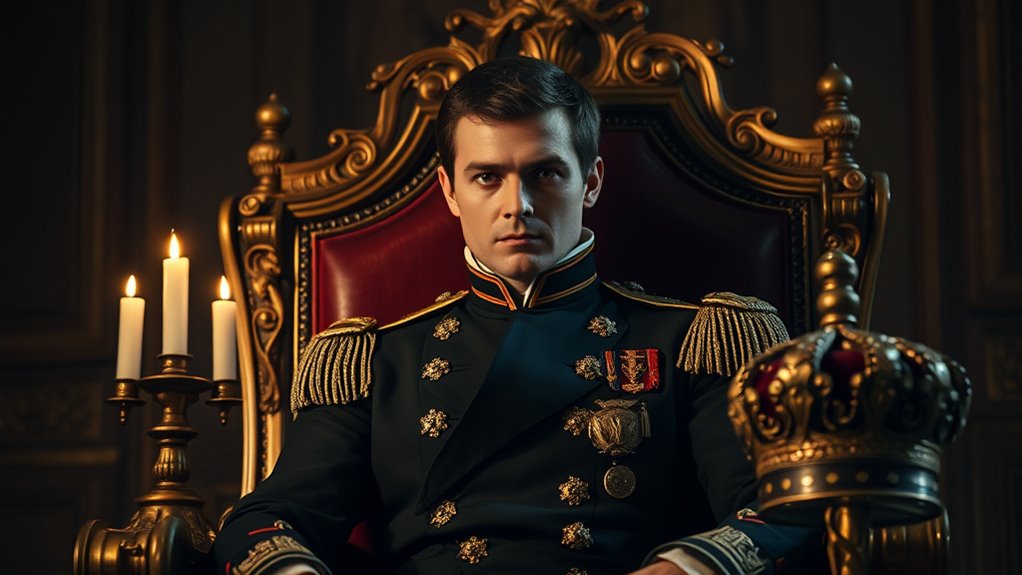
Napoleon Bonaparte was a towering figure in world history, known for his military genius and political ambition. As you explore his leadership, you’ll see how he mastered military strategies that revolutionized warfare. He understood that success on the battlefield wasn’t just about brute force but about innovative tactics, rapid maneuvers, and psychological warfare. He often surprised enemies with bold flanking moves, rapid marches, and meticulously planned battles that outflanked opposition and maximized his forces’ strengths. His strategic brilliance allowed him to win battles against larger armies and expand his empire across Europe. But Napoleon’s influence extended beyond the battlefield; he was equally committed to shaping France’s political landscape through extensive reforms.
You might notice that Napoleon’s political reforms aimed to stabilize and modernize France, transforming it from a chaotic revolutionary state into a centralized, efficient government. He established the Napoleonic Code, which standardized laws across the country, abolished feudal privileges, and promoted equality before the law—an innovative move that laid the groundwork for modern legal systems. His reforms also touched education, infrastructure, and administration, creating a more streamlined bureaucracy. You could say he was a dealer in hope, offering new opportunities and a sense of order amid chaos. His reforms weren’t just about consolidating power; they also aimed to build a stronger nation capable of competing with other European powers.
By implementing these political reforms, Napoleon set the stage for stability, economic growth, and national pride. He understood that to maintain power, he needed to foster loyalty and trust among his people. That’s why he promoted meritocracy, encouraging talented individuals to rise based on ability rather than birthright. This helped solidify his authority, as people saw tangible benefits from his leadership. Simultaneously, his military strategies kept his armies effective and adaptable, ensuring they could respond quickly to threats and seize opportunities. This combination of innovative tactics and reformist policies made him a leader who not only fought wars but also reshaped society. Additionally, embracing modernization allowed him to implement reforms that had long-lasting impacts on the structure of French society and government.
In essence, Napoleon’s leadership was about turning hope into reality—through bold military strategies and sweeping political reforms. His vision of a stronger, more organized France motivated his followers and frightened his enemies. You can see that his legacy isn’t just in his battlefield victories but also in how he transformed France into a nation that believed in progress and resilience. Napoleon knew that true power came from inspiring hope, making him truly a dealer in it.
Napoleon Bonaparte leadership books
As an affiliate, we earn on qualifying purchases.
As an affiliate, we earn on qualifying purchases.
Frequently Asked Questions
What Was Napoleon’s Childhood Like?
Your childhood was marked by hardships and a strong early education. You grew up on Corsica, facing financial struggles and limited resources, which shaped your resilience. Despite these challenges, you received a good education, learning from tutors and studying military tactics. These childhood hardships motivated you to rise above your circumstances and pursue greatness, laying the foundation for your future leadership and ambition.
How Did Napoleon Rise to Power so Quickly?
You see, Napoleon rose quickly thanks to his strong leadership qualities and exceptional military skill. He skillfully used political maneuvering to gain influence, capitalizing on France’s instability after the revolution. His strategic thinking, charisma, and ability to inspire troops made him a compelling leader. By exploiting opportunities and steering through complex political landscapes, you can understand how he ascended rapidly to power, becoming a dominant force in France and Europe.
What Were Napoleon’s Key Military Strategies?
You might think Napoleon’s key military strategies were all about direct assaults, but he expertly used guerrilla tactics to outsmart opponents and siege warfare to weaken fortresses. Ironically, he thrived on blending conventional and unconventional methods, turning enemy strengths into weaknesses. His agility and strategic ingenuity kept enemies guessing, ensuring swift victories. So, instead of brute force alone, Napoleon’s true skill lay in adaptable tactics that revolutionized warfare.
How Did Napoleon Influence Modern European Borders?
You see, Napoleon influenced modern European borders through his bold territorial reorganization and skillful European diplomacy. He redrew borders, merging and dividing territories to strengthen France and weaken enemies. By establishing new states and alliances, he shifted power balances. His reforms in governance and territorial control left a lasting impact, shaping the map of Europe and influencing diplomatic practices that continue today.
What Was Napoleon’s Personal Life Like?
Imagine a chessboard where Napoleon’s personal life reflects his strategic moves. His marriage to Josephine symbolized both passion and political alliance, shaping his personal beliefs about love and power. He valued family deeply, often drawing strength from his children’s futures. Despite his relentless ambition, he navigated personal relationships with a mix of devotion and pragmatism, revealing a man whose personal life was a delicate balance of love, loyalty, and ambition.
Napoleonic Code legal reference books
As an affiliate, we earn on qualifying purchases.
As an affiliate, we earn on qualifying purchases.
Conclusion
You see, Napoleon’s true power lies in his ability to inspire hope and rally others behind a vision. Imagine leading a team facing formidable challenges—by instilling confidence and sharing a bold plan, you could turn doubt into determination. Just like Napoleon, who transformed setbacks into victories, you too can become a dealer in hope, inspiring those around you to believe in what’s possible. Remember, leadership is about giving people the belief they can succeed.
military strategy training courses
As an affiliate, we earn on qualifying purchases.
As an affiliate, we earn on qualifying purchases.
As an affiliate, we earn on qualifying purchases.