
Gary Becker applies economic principles to human behavior, showing that people make rational choices by weighing costs and benefits to maximize their well-being. He views decisions about education, health, and family as strategic investments driven by expected returns and incentives. His approach explains how individual actions are interconnected and influenced by economic incentives, often subconscious. Understanding this perspective helps you see how economic reasoning shapes many aspects of life, and if you keep exploring, you’ll uncover even more insights.
Key Takeaways
- Gary Becker applied economic principles to analyze human behavior beyond markets, emphasizing strategic decision-making.
- He introduced the concept of human capital, viewing skills and knowledge as investments that enhance productivity and earnings.
- Becker’s approach explains decisions about education, health, and family through expected returns and incentives.
- He highlighted that human actions are motivated by economic incentives, often subconscious, guiding choices in various life aspects.
- His broader perspective connects individual decision-making with societal trends, integrating economics with social sciences.

Have you ever wondered how economic principles can explain human behavior beyond markets? Gary Becker’s groundbreaking work invites you to see human actions through the lens of rational choice. Instead of viewing people as driven solely by emotional impulses or social norms, Becker suggests that individuals make decisions by weighing costs and benefits, aiming to maximize their well-being. This perspective transforms everyday choices—like investing in education, choosing a career, or even raising children—into logical, strategic moves grounded in economic reasoning.
Economic principles reveal how rational choices shape human behavior beyond markets.
At the heart of Becker’s approach is the concept of human capital. You might think of it as the skills, knowledge, and experience you accumulate over time, which enhance your productivity and earning potential. Becker argued that investing in human capital is similar to investing in physical assets; it requires resources like time and money, but the payoff can be substantial. When you decide to pursue higher education or additional training, you’re making a rational choice to improve your future prospects. These investments influence not just your income but also your overall life satisfaction, aligning with the idea that human behavior is often goal-oriented and strategic.
By applying rational choice theory to human capital, Becker showed that people make deliberate decisions about education, health, and even marriage, based on expected returns. For example, if you believe that acquiring new skills will lead to better job opportunities and higher income, you’re more likely to invest in learning. Conversely, if the costs outweigh the benefits—perhaps due to high tuition fees or uncertain job markets—you might decide against further education. This rational calculus isn’t limited to individual choices; it also explains societal trends, such as declining birthrates or changing family structures, as rational responses to economic incentives.
Becker’s approach encourages you to see human behavior as a series of calculated decisions, driven by the desire to improve your circumstances. It’s not about reducing people to mere calculators but recognizing that economic incentives shape your actions, often in ways you might not consciously realize. When you weigh the costs of a decision against its expected benefits, you’re engaging in rational choice, which Becker emphasized as fundamental to understanding human behavior. His work bridges economics and social sciences, revealing that the same principles guiding markets also apply to personal choices, social interactions, and even crime and family life.
In essence, Becker’s economic approach invites you to see yourself as an active participant in a complex web of rational decisions, all influenced by incentives and the pursuit of better human capital. This perspective helps you understand why people act the way they do, not just in markets but in every aspect of life. Recognizing the importance of decision-making processes can deepen your understanding of how individual and societal behaviors are shaped by economic incentives.

Developing Human Capital: Using Analytics to Plan and Optimize Your Learning and Development Investments (Wiley and SAS Business Series)
As an affiliate, we earn on qualifying purchases.
As an affiliate, we earn on qualifying purchases.
Frequently Asked Questions
How Did Becker’s Ideas Influence Public Policy?
Becker’s ideas influence public policy by encouraging you to use cost-benefit analysis to evaluate programs and initiatives. His focus on incentive structures helps you design policies that motivate desired behaviors, such as reducing crime or improving education. By understanding how people respond to incentives, policymakers can craft more effective solutions that align individual choices with societal goals, making policies more efficient and impactful.
What Criticisms Has Becker’s Economic Approach Faced?
They say, “Don’t throw the baby out with the bathwater,” but critics argue Becker’s rational choice model oversimplifies human motives. They believe it neglects moral considerations, emotional factors, and social influences that shape behavior. This economic approach faces criticism for reducing complex human actions to calculations, potentially ignoring the richness of human experience. While it offers insight, it isn’t a one-size-fits-all explanation for why people do what they do.
How Does Becker’s Theory Apply to Modern Behavioral Economics?
You see that Becker’s theory influences modern behavioral economics by emphasizing rational choice in decision-making models. It challenges the idea that humans always act logically, highlighting how emotions and biases affect choices. By applying Becker’s framework, behavioral economics explores why people sometimes deviate from purely rational decisions, integrating psychological insights. This approach helps create more accurate models of human behavior, improving predictions and policies.
What Are Becker’s Most Influential Publications?
You should know that Becker’s most influential publications include “Human Capital” (1964), where he applies rational choice theory to education and skills development, and “A Theory of Marriage” (1973), which analyzes family decisions through economic principles. These works emphasize the importance of human capital and rational choice, shaping modern economic thought on human behavior and decision-making. His publications continue to influence behavioral economics today.
How Did Becker’s Background Shape His Economic Theories?
Your personal background and academic influences shaped Becker’s economic theories like a sculptor chiseling a masterpiece. Growing up in a working-class family and studying at Chicago’s rigorous institutions, he adopted a pragmatic view of human behavior. These experiences and mentors propelled him to see economic principles in everyday life, turning complex human actions into measurable, rational choices, making his theories both grounded and revolutionary.
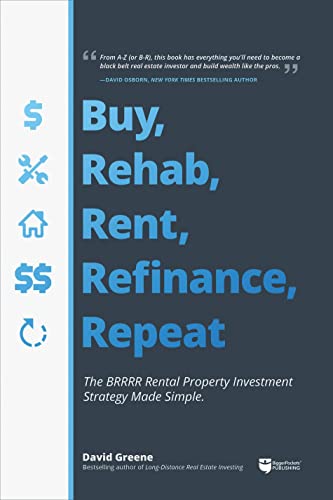
Buy, Rehab, Rent, Refinance, Repeat: The BRRRR Rental Property Investment Strategy Made Simple
As an affiliate, we earn on qualifying purchases.
As an affiliate, we earn on qualifying purchases.
Conclusion
You might be surprised to learn that Gary Becker’s economic approach revolutionized how we comprehend human behavior, applying market logic to areas like family, crime, and education. For instance, studies show that reducing the cost of college can increase attendance by up to 20%. By viewing choices through an economic lens, you see how incentives shape actions. This perspective opens new ways to think about human motivations—making Becker’s work both fascinating and incredibly relevant today.

Online Courses: A Business Parable About How to Create Freedom by Teaching Your Gift (The Online Course Business Success Series)
As an affiliate, we earn on qualifying purchases.
As an affiliate, we earn on qualifying purchases.

Introduction to Career Development & Leadership Experience (ICDLE™): A Foundational Professional Development Program for Career Growth, Leadership … Career Development Program™ (ICDP™ Series))
As an affiliate, we earn on qualifying purchases.
As an affiliate, we earn on qualifying purchases.