
Guided mindfulness journals make reflection easier by offering prompts or short exercises, but the right format depends on how much structure you want. My best overall pick is The Mindfulness Journal, which centers daily practices and present-moment reflection. For a quick routine, The Five Minute Journal is a standout; for a more focused approach to worry, the Guided Anxiety Journal pairs mindfulness prompts with CBT techniques. The main tradeoffs are daily versus flexible use, broad reflection versus a specific goal, and short entries versus deeper writing. Read on for the full breakdown and guidance on matching a journal to your routine.

Get the little things that make your day delivered free with Prime
- Fast, free delivery on millions of items
- Prime Video, Amazon Music and more included
- Member-only deals all year
Key Takeaways
- The Mindfulness Journal earns the overall lead because its daily practices, writing prompts, and reflections directly center present-moment awareness rather than gratitude or goal-setting alone.
- The Five Minute Journal and The 5-Minute Gratitude Journal suit brief routines, but their gratitude emphasis is narrower than a journal built around varied mindfulness exercises.
- The 365 pre-dated prompts in Inside Then Out Better Every Day Journal offer a clear daily path; undated options such as Inside Then Out Dig Deeper Journal leave more room for missed days and changing schedules.
- Anxiety-focused journals serve a different need from general reflection: Guided Anxiety Journal and Worry for Nothing foreground CBT and worry-management, so they may fit better when anxiety is the main writing goal.
- The lineup ranges from brief prompts to creative and longer-term formats, so matching the journal’s pace and focus to an existing habit matters more than choosing the one with the most prompts.






| guided mindfulness journal | Dimensions | Format | Page count |
|---|---|---|---|
| Inside Then Out Better Every D | — | — | — |
| 5 Minutes a Day Mental Health | — | A5 linen hardcover | — |
| Self-Mastery Journal for Men & | 8.5 × 5.25 × 0.8 inches | Undated guided prompts | — |
| The Mindfulness Journal: Daily | — | — | Not specified in the available product data |
| TREES Gratitude Journal | — | — | — |
| Guided Anxiety Journal for Wom | Not specified | — | 91 pages |
| I Am Here Now: A Creative Mind | Not specified | Mindfulness guide and journal | Not specified |
| Inside Then Out Dig Deeper Jou | — | — | 187 pages |
| Self-Mastery Journal for Men & | 8.42 × 5.27 × 0.75 inches | Hardcover, ruled with columns | 185 pages |
| Mindfulness Journal | Not specified | Mindfulness journal | Not specified |
| Worry for Nothing: Guided Anxi | 5-7/8 x 8-1/4 inches | — | — |
| The Five Minute Journal | 8.7 x 5.1 x 0.8 inches | Undated daily journal | — |
| Finding Balance Mental Health | 8.6 x 6.5 inches | Notebook | — |
| The 5-Minute Gratitude Journal | — | — | Not provided |
More Details on Our Top Picks
Inside Then Out Better Every Day Journal – Guided Daily Journal with 365 Pre-Dated Prompts for Self-Love, Reflection, Growth, Gratitude, Wellness, and Healing
The 365 pre-dated prompts make this the clearest choice for someone who wants a full year of daily direction rather than a short-term reset. Its themes span self-love, gratitude, relationships, and self-care, giving the practice more variety than the focused 13-week structure of the 5 Minutes a Day Mental Health Journal. The prompts can help turn reflection into a regular habit, while lay-flat binding and bleed-proof paper make writing more comfortable. The tradeoff is that dated pages offer less freedom to skip around, and some prompts leave limited room for longer entries. Its hardcover and gift-ready vegan leather feel polished, but make it less flexible to carry than a lightweight notebook. I’d choose it for consistency and breadth, not free-form journaling.
Pros:- 365 pre-dated prompts provide a clear daily path through a full year
- Themes cover mindfulness, self-care, gratitude, relationships, and growth
- Lay-flat binding and bleed-proof paper support comfortable writing
- Textured vegan leather hardcover gives it a polished, giftable finish
Cons:- Some prompts leave limited space for extensive responses
- Hardcover construction is less flexible for travel than a compact journal
- Pre-dated pages may feel restrictive for people who do not journal daily
Best for: People who want a year of daily prompts across self-love, gratitude, relationships, and personal growth
Not ideal for: Writers who prefer long, open-ended entries or want a soft, highly portable journal
- Pages:383
- Size:5.8 × 8.5 inches
- Cover:Textured vegan leather hardcover
- Paper:Bleed-proof paper
- Binding:Lay-flat
- Bookmark:Ribbon bookmark included
- Prompt schedule:365 pre-dated daily prompts
Our verdict“Choose this for a varied, year-long guided practice, but pick the 13-week 5 Minutes a Day journal if you want a shorter commitment.”
5 Minutes a Day Mental Health Journal for Women & Men: Guided Mindfulness & Goal-Setting Workbook with Linen Hardcover
This journal is built around a manageable 13-week routine, pairing daily mood tracking with gratitude, goal-setting, and self-reflection. That shorter runway makes it a more contained commitment than the Inside Then Out Better Every Day Journal, which supplies prompts for a full year. I’d favor this one for someone who wants to practice regularly without deciding what to write each day; mood tracking also gives the routine a practical check-in beyond open-ended reflection. The pen loop, elastic strap, and envelope pocket make it easier to keep the journal and a few essentials together. Its A5 format is portable, though the structured program may feel limiting after 13 weeks, and the simple layout may not satisfy readers seeking more varied exercises. There’s no digital companion or app integration.
Pros:- 13-week program gives daily practice a clear beginning and endpoint
- Combines mood tracking with mindfulness, gratitude, and goal-setting
- Pen loop, elastic strap, and envelope pocket help keep essentials together
- Compact A5 linen hardcover suits regular use at home or on the go
Cons:- The guided program ends after 13 weeks
- Simple structure may not offer enough variety for advanced journaling routines
- No digital prompts or app integration
Best for: People starting a time-limited mindfulness and self-care routine who want daily prompts, mood tracking, and goal-setting in one place
Not ideal for: Long-term journalers who want a year of prompts, app features, or a highly varied workbook layout
- Format:A5 linen hardcover
- Size:5.8 × 8.3 inches
- Duration:13 weeks
- Tracking:Daily mood tracking
- Guided features:Goal-setting, motivational prompts, and self-reflection
- Organization:Pen loop, elastic strap, and envelope pocket
Our verdict“Pick this for a compact, feature-organized 13-week reset; choose the year-long Inside Then Out journal for a longer prompt sequence.”
Self-Mastery Journal for Men & Women with Prompts – 13 Week Guided Gratitude Journal
The key advantage here is the undated 13-week format: you can start when you’re ready, pause when life gets busy, and return without confronting missed dates. Its prompts center on gratitude, daily reflection, and goal-setting, giving it a more personal-development focus than the 5 Minutes a Day Mental Health Journal, which adds mood tracking and built-in organizational features. That makes this a straightforward choice for people who want guided reflection without extra tracking tools. The A5 linen hardcover and 220 pages provide a substantial physical notebook, though the program still covers only 13 weeks. Its classic layout may also feel plain beside the broader themes and year-long sequence of the Inside Then Out Better Every Day Journal. I’d choose it for flexible timing, not an elaborate or long-duration workbook.
Pros:- Undated pages allow users to begin, pause, and resume on their own schedule
- Prompts guide gratitude, reflection, and goal-setting
- Linen hardcover provides a durable cover
- A5 paper size offers a familiar balance of writing space and portability
Cons:- The guided program is limited to 13 weeks
- No digital features or companion prompts are included
- Classic, simple layout may not suit readers seeking varied exercises
Best for: People who want a flexible-start, 13-week journal focused on gratitude, reflection, and personal goals
Not ideal for: Buyers who want mood tracking, varied workbook activities, or a prompt plan that lasts longer than 13 weeks
- Brand:Realizations
- Pages:220
- Paper size:A5
- Dimensions:8.5 × 5.25 × 0.8 inches
- Cover:Linen hardcover
- Color:Black
- Duration:13 weeks
- Format:Undated guided prompts
Our verdict“Choose this for flexible-start guided reflection; the 5 Minutes a Day journal is a better fit if mood tracking and organization features matter more.”
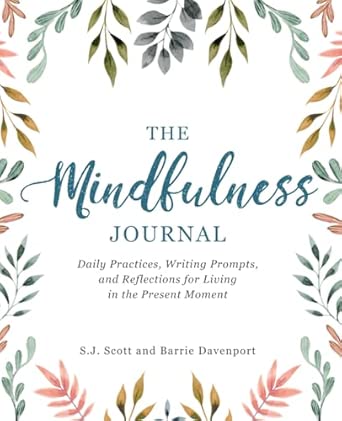
The Mindfulness Journal: Daily Practices, Writing Prompts, and Reflections for Living in the Present Moment
This option puts mindfulness practice itself at the center, combining daily practices with writing prompts and reflections intended to support present-moment awareness. That makes its stated focus more specific than the Self-Mastery Journal, which emphasizes gratitude and goal-setting, and different from the TREES Gratitude Journal, which is organized around a 180-day guided routine. I’d consider it when the main aim is to pause and reflect rather than track progress or work through a self-improvement plan. The available product details do not specify its size, page count, paper, or binding, so buyers have less information about writing space and portability than they do for the other journals in this group. Its appeal rests on the practice-led approach, but the lack of physical specifications makes it harder to judge fit before buying.
Pros:- Daily mindfulness practices give the journal a clear present-moment focus
- Writing prompts offer direction for reflection
- Structured exercises support a regular mindfulness routine
Cons:- Product information does not specify size, page count, paper, or binding
- The available details do not state a program duration
- Less clearly focused on gratitude tracking or goal-setting than other options in this lineup
Best for: Readers seeking daily present-moment exercises and reflections rather than a goal-tracking or gratitude-centered program
Not ideal for: Buyers who need confirmed dimensions, page count, paper details, or a defined program length before choosing a journal
- Title:The Mindfulness Journal: Daily Practices, Writing Prompts, and Reflections for Living in the Present Moment
- Practice focus:Mindfulness and present-moment awareness
- Content:Daily practices, writing prompts, and reflections
- Intended use:Mental well-being and personal growth
- Size:Not specified in the available product data
- Page count:Not specified in the available product data
Our verdict“Choose this if present-moment exercises are your priority, but opt for the TREES journal if you want a specified 180-day format and physical details.”
TREES Gratitude Journal, 180-Day Guided Prompts & Mindfulness, 5.8″ x 8.5″
The 180-day format offers a middle ground between the year-long Inside Then Out journal and the two 13-week options: long enough to build a sustained gratitude habit without committing to 365 dated prompts. Guided reflections and monthly review sections also give the routine a checkpoint for noticing patterns, rather than asking you to write day after day without looking back. Its 5.8 × 8.5-inch hardcover is a practical size for home or bag use, and 100 GSM paper is specified as a thicker writing surface. Compared with The Mindfulness Journal, this option gives clearer information about its materials and schedule, but its emphasis is more structured around gratitude and personal growth. Readers who prefer unrestricted writing may find the prompts confining, and the guided sequence ends after six months.
Pros:- 180-day prompt sequence offers a defined six-month practice
- Monthly review sections provide regular points for reflection
- 100 GSM paper is specified as a thicker writing surface
- Hardcover, ribbon bookmark, and portable dimensions support regular use
Cons:- Prompt-led structure may feel restrictive to free-form writers
- Guided content covers 180 days rather than a full year
- The gratitude-centered approach may be less suited to buyers seeking broader therapeutic exercises
Best for: People who want a structured six-month gratitude and mindfulness habit with monthly reflection points
Not ideal for: Free-form journalers who dislike daily prompts or anyone seeking a year-long guided program
- Duration:180 days
- Size:5.8 × 8.5 inches
- Pages:180
- Paper:100 GSM
- Cover:Hardcover
- Prompts:Guided gratitude and mindfulness prompts
- Bookmark:Ribbon bookmark included
Our verdict“Choose this for a structured six-month gratitude routine with monthly reviews; the Inside Then Out journal is better for year-long prompt coverage.”
Guided Anxiety Journal for Women & Men – CBT with Mindfulness Prompts and Anti-Anxiety Techniques
I’d choose this journal when mindfulness needs to work alongside practical tools for anxious thought patterns. Its CBT techniques and mindfulness prompts point readers toward noticing and examining negative thoughts, rather than relying only on open-ended reflection. Compared with Worry for Nothing, another anxiety-focused option in this roundup, the supplied details here highlight a discreet linen cover and portable design, but provide less information about the actual exercises. The 91-page length gives it a focused format, though frequent journalers may finish it quickly and want a separate notebook for ongoing notes. Its adult, teacher, and teen audience is broad, but the description does not specify age-adjusted guidance. I’d favor it over general gratitude journals for targeted anxiety reflection, while readers seeking a detailed, long-term program may want more content information before choosing.
Pros:- Pairs CBT techniques with mindfulness prompts for structured reflection on anxious thoughts
- Discreet black linen cover suits use at home or while traveling
- Focused format may feel more manageable than a broad, open-ended journal
Cons:- At 91 pages, it may not last for frequent daily journaling
- Dimensions are not supplied, making portability harder to judge
- The available description does not detail the prompt sequence or depth of its exercises
Best for: Adults or older teens seeking a portable journal that pairs mindfulness prompts with CBT-oriented reflection on anxiety and overthinking
Not ideal for: Readers who want a long, highly detailed course or need confirmed dimensions before choosing a travel journal
- Brand:KUMEER
- Model year:2025
- Target audience:Adults, teachers, and teens
- Recommended uses:Anxiety relief, mental health, and overthinking
- Page count:91 pages
- Cover material:Linen fabric
- Color:Black
- Dimensions:Not specified
Our verdict“Choose this for portable, anxiety-specific journaling that combines mindfulness with CBT-style prompts, not for a long or fully detailed program.”
I Am Here Now: A Creative Mindfulness Guide and Journal
I Am Here Now suits readers who want mindfulness to feel active and exploratory, rather than limited to written check-ins. Its combination of creative activities, guidance, and journal prompts gives it a different emphasis from the more structured Inside Then Out Dig Deeper Journal, which centers on 180 written prompts for self-care and growth. That creative approach may appeal to beginners looking for varied ways to practice awareness, while experienced practitioners can use the activities to add variety to an existing routine. The tradeoff is that the supplied product information does not identify specific exercises, layout, or physical details, so it is difficult to judge how much writing space or instruction the book offers. I’d pick it for variety and present-moment exploration, not when a clearly mapped daily program or detailed specifications are a priority.
Pros:- Combines mindfulness guidance with journal prompts
- Creative activities offer alternatives to writing-only reflection
- Described as suitable for beginners and experienced mindfulness practitioners
Cons:- Available details do not explain the specific exercises or prompt structure
- No page count, dimensions, or physical format information is provided
- May be less suitable than a structured prompt journal for readers who want a predictable daily routine
Best for: Readers who learn through creative activities and want mindfulness prompts alongside practical guidance rather than a writing-only routine
Not ideal for: Buyers who need a defined daily schedule, a known page count, or detailed information about the exercises before purchasing
- Format:Mindfulness guide and journal
- Content:Mindfulness exercises, creative activities, and journal prompts
- Focus:Present-moment awareness and self-awareness
- Intended experience level:Beginners and experienced practitioners
- Page count:Not specified
- Dimensions:Not specified
Our verdict“Pick this for a creative, varied approach to mindfulness, but choose a more fully specified prompt journal if structure and format details matter most.”
Inside Then Out Dig Deeper Journal – Guided Daily Undated Prompts for Self-Care, Growth, and Healing
The Dig Deeper Journal is the strongest fit here for readers who want a generous bank of prompts without having to start on a particular date. Its 180 undated prompts cover intention, healing, gratitude, and growth, making it broader in theme than the anxiety-specific KUMEER journal and less tied to a short program than the 13-week Self-Mastery Journal. Undated pages let readers pause and resume on their own schedule, while the lay-flat binding and bleed-resistant paper support longer writing sessions. The compromise is its guided approach: people who prefer a blank notebook or want to shape every entry themselves may find the prompts restrictive. At A5 size with a hardcover, it offers a substantial writing setup but may be less convenient to carry than a slim journal. I’d rank it for flexible, prompt-led reflection rather than quick daily check-ins.
Pros:- 180 undated prompts allow readers to set their own pace
- Themes span intention, healing, gratitude, and growth
- Lay-flat binding supports comfortable writing across the page
- 100gsm bleed-proof paper and vegan leather cover give it a durable, substantial feel
Cons:- Prompt-led pages leave less room for readers who prefer completely freeform journaling
- Hardcover A5 format may be less convenient to carry than a compact journal
- Only one size and style are specified
Best for: Readers who want a durable, undated journal with a wide range of self-care and personal-growth prompts for use at home
Not ideal for: Freeform journalers who dislike guided questions, or commuters prioritizing the lightest and most compact notebook
- Page count:187 pages
- Prompt count:180 undated prompts
- Size:5.8 × 8.5 inches (A5)
- Cover material:Textured vegan leather
- Paper:100gsm bleed-proof
- Binding:Lay-flat
- Ruling:Ruled
- Prompt themes:Intention, healing, gratitude, and growth
Our verdict“Choose this for flexible, substantial prompt-led reflection across several wellness themes, rather than a compact or freeform journal.”
Self-Mastery Journal for Men & Women – Gratitude and Productivity Journal
I’d recommend this journal to readers who want mindfulness connected to goals and daily habits, rather than reflection as an end in itself. Its 13-week format brings gratitude, productivity, and personal growth into one routine, giving it a more defined horizon than the open-ended Dig Deeper Journal. At 185 pages, it has room for repeated entries across that program, and the linen hardcover adds protection for regular use. The structure can help readers build consistency, but it also sets a limit: anyone seeking a year-long journal or a date-stamped calendar may prefer another format. Its simple black design and ruled columns favor function over decorative presentation. Compared with the anxiety-focused KUMEER journal, this is less tailored to managing anxious thoughts and better suited to broad self-improvement through gratitude, planning, and reflection.
Pros:- 13-week structure gives reflection a clear timeframe
- Combines gratitude, productivity, mindfulness, and personal-growth prompts
- Linen hardcover is suited to repeated use
- Ruled columns provide a more organized format for written check-ins
Cons:- The 13-week program may be too short for buyers wanting a longer journal
- Undated format requires the user to choose when to begin and keep track of progress
- Simple black styling may not appeal to readers who prefer decorative pages
Best for: People who want a structured 13-week routine linking gratitude and mindfulness with productivity and personal goals
Not ideal for: Readers seeking year-round prompts, anxiety-specific CBT exercises, or an especially decorative journal
- Brand:Draphy
- Program length:13 weeks
- Page count:185 pages
- Dimensions:8.42 × 5.27 × 0.75 inches
- Paper size:5.27 × 8.42 inches
- Cover material:Linen
- Format:Hardcover, ruled with columns
- Style:Black
Our verdict“Choose this for a focused three-month routine that connects mindfulness with gratitude and productivity, not for open-ended or anxiety-specific journaling.”
Mindfulness Journal
This is the most straightforward choice for readers seeking daily mindfulness reflections and exercises without a more specific focus on anxiety management or productivity. The description points to prompts and space for personal insights, a simpler proposition than I Am Here Now, which also includes creative activities, or the 13-week Self-Mastery Journal, which links reflection to goals and gratitude. That simplicity may suit a reader who wants a regular pause to notice thoughts and reduce stress, without committing to a detailed themed program. The drawback is how little is specified: there is no supplied page count, size, binding, or explanation of the prompt sequence. Although the description calls it compact and portable, the missing dimensions make that difficult to confirm. I’d consider it for uncomplicated daily reflection, but not when physical format or prompt depth needs to be clear in advance.
Pros:- Daily reflections and exercises support a regular mindfulness routine
- Guided prompts offer more direction than a blank notebook
- Space for personal insights leaves room to record individual observations
Cons:- Page count, dimensions, and binding are not specified
- The prompt themes and sequence are not described in detail
- Its general mindfulness focus may be less useful than a specialized journal for anxiety or goal setting
Best for: Readers who want a basic daily mindfulness habit built around reflection prompts and space for personal observations
Not ideal for: Buyers who need a known page count, confirmed dimensions, a detailed program, or a specialized anxiety-focused approach
- Format:Mindfulness journal
- Intended use:Daily reflection and stress reduction
- Content:Prompts, exercises, and space for personal insights
- Portability:Described as compact and portable
- Page count:Not specified
- Dimensions:Not specified
Our verdict“Pick this for a simple daily mindfulness check-in, but choose a more fully described journal if format or program structure is a deciding factor.”
Worry for Nothing: Guided Anxiety Journal, Cognitive Behavioral Therapy Mental Health Journal, Anxiety Relief & Self Care, Journal for Men & Women, Mental Health Gifts
I’d choose Worry for Nothing for readers who want guided mindfulness tied to a specific goal: examining anxious thoughts and building coping habits. Its CBT-based worksheets offer more targeted structure than the gratitude-focused prompts in The Five Minute Journal, making it a better fit for someone who wants to work through thought patterns rather than simply record positives. The discreet black linen cover and portable size make private, on-the-go writing more practical. The tradeoff is its focused, finite format: 60 worksheets may not support a long-term daily practice, and its plain design may feel less inviting than a journal built around broad daily reflection. It’s a journaling aid, not a substitute for professional mental health care.
Pros:- CBT-based worksheets direct attention to thoughts, habits, and coping strategies.
- Compact size suits writing at home or while away.
- Discreet black linen hardcover keeps the design understated.
- 100 gsm paper provides a substantial writing surface.
Cons:- The 60 worksheets offer less ongoing material than a longer daily journal.
- Its plain design may not appeal to readers who prefer a more expressive or decorative format.
- No digital or app integration is listed.
Best for: People seeking portable, structured CBT-style prompts for reflecting on anxiety and practicing self-care.
Not ideal for: Readers who want an open-ended or year-round journal, digital tracking, or support in place of professional care.
- Cover:Black linen hardcover
- Dimensions:5-7/8 x 8-1/4 inches
- Worksheets:60
- Paper weight:100 gsm
- Product weight:9.9 ounces
- Approach:Cognitive Behavioral Therapy-based mindfulness, thought evaluation, and habit-building exercises
Our verdict“Choose this journal for compact, CBT-oriented anxiety reflection; skip it if you want broad, ongoing gratitude prompts.”
The Five Minute Journal – Undated Daily Gratitude and Mindfulness Journal for Women & Men
The Five Minute Journal makes guided mindfulness approachable by keeping the daily commitment short and centering it on gratitude and positive reflection. I’d rank it ahead of a more specialized workbook for someone who wants a repeatable everyday ritual, not focused anxiety exercises like those in Worry for Nothing. Its undated format allows readers to pause and resume without leaving gaps in a calendar, while the linen hardcover is suited to regular handling. The tradeoff is a narrow prompt style: people who want extensive self-inquiry, freewriting space, or CBT worksheets may find the guidance too limited. The five-minute framing can help keep the habit manageable, but it won’t serve readers looking for a deeper, longer writing session.
Pros:- Short daily prompts make a regular mindfulness habit easier to maintain.
- Undated pages allow flexible start dates and breaks.
- Gratitude-focused structure offers a clear alternative to anxiety-specific worksheets.
- Linen hardcover and minimalist design suit everyday use.
Cons:- Guided prompts may feel restrictive to readers who prefer free journaling.
- Gratitude-led reflection is less suited to working through specific anxiety patterns.
- Undated pages may not suit readers who want a calendar-based schedule.
Best for: Readers who want a low-pressure, flexible gratitude and mindfulness routine that takes only a few minutes each day.
Not ideal for: People seeking detailed anxiety tools, extensive freewriting space, or a dated journal with a fixed schedule.
- Format:Undated daily journal
- Pages:264
- Dimensions:8.7 x 5.1 x 0.8 inches
- Paper size:8.7 x 5.1 inches
- Cover material:Linen
- Materials:Paper, linen, and fabric
- Product weight:309 g
Our verdict“Pick it for a flexible, brief gratitude ritual, but choose a CBT-focused journal if you need targeted anxiety prompts.”
Finding Balance Mental Health Journal – 6-Month Daily Prompts for Mindfulness, Self-Care & Healing
Finding Balance suits readers who want more than a quick gratitude check-in: its daily and weekly prompts, habit tracking, and reflection sections create several ways to notice patterns over time. Compared with The Five Minute Journal, it offers a broader mental-health routine, including mood and habit tracking rather than a compact gratitude-led practice. The six-month structure gives the journal a defined scope, while the included guided audio meditation adds a listening component to written reflection. Its size and 287 pages support a substantial routine, but the structured format may feel like too much for someone who wants only a few minutes of writing. The prompts also have limits: they may not meet the needs of someone seeking intensive therapeutic guidance.
Pros:- Daily and weekly prompts provide more varied structure than a brief gratitude-only format.
- Habit and mood tracking can help readers observe recurring patterns.
- Includes a guided audio meditation alongside written exercises.
- Elastic closure and faux leather cover support carrying and keeping the journal closed.
Cons:- The six-month format has a defined endpoint rather than an ongoing undated structure.
- The amount of guided content may feel demanding for readers seeking a very short daily practice.
- Prompts may not provide the depth or individualized support needed for therapy.
Best for: Journalers who want a multi-part daily and weekly routine with mood tracking, habit reflection, and an accompanying audio meditation.
Not ideal for: Readers who prefer a minimal gratitude journal, need an open-ended duration, or expect prompts to replace therapy.
- Format:Notebook
- Duration:Six months
- Pages:287
- Dimensions:8.6 x 6.5 inches
- Binding:Spiral-bound
- Cover:Faux leather
- Closure:Elastic closure
- Ruling:Full-lined
- Product weight:0.57 kg
Our verdict“Choose this for a varied six-month mental-health journaling routine, not for a minimalist gratitude habit or clinical support.”
The 5-Minute Gratitude Journal: Give Thanks, Practice Positivity, Find Joy
The 5-Minute Gratitude Journal is the simplest choice here for readers who want a brief daily pause focused on thanks, positivity, and joy. Compared with Finding Balance, it asks for less commitment and does not emphasize habit or mood tracking; compared with The Five Minute Journal, the supplied details describe the same broad quick-gratitude aim but provide fewer specifics about its format. That makes it a straightforward entry point for a small daily mindfulness practice, especially for people who do not want a complex workbook. The tradeoff is limited depth: its prompts are described as simple, so readers seeking detailed reflection or structured anxiety exercises may want Worry for Nothing instead. Product dimensions and page details are not provided, so portability claims cannot be checked against listed measurements.
Pros:- A five-minute format supports a short, repeatable mindfulness pause.
- Gratitude prompts keep the practice focused and easy to understand.
- The stated portable design can suit journaling away from home.
- Simple daily reflection offers a lighter alternative to multi-section journals.
Cons:- Brief prompts may not support deeper self-exploration.
- No page count, dimensions, or material details are supplied.
- It lacks the tracking and broader reflection structure described for Finding Balance.
Best for: Beginners who want a brief, gratitude-centered daily reflection without tracking tools or a complex prompt system.
Not ideal for: Readers who want detailed therapeutic prompts, extensive writing space, or confirmed size and page specifications before buying.
- Journal focus:Gratitude, positivity, and joy
- Practice length:Five minutes a day
- Prompt style:Simple daily reflections
- Portability:Described as portable; dimensions not provided
- Page count:Not provided
- Materials:Not provided
Our verdict“Choose it for quick gratitude reflections, but look elsewhere if you need detailed prompts or substantial journaling structure.”

How We Picked
I compared these journals as guided mindfulness tools, giving priority to how directly each product supports present-moment attention, reflection, and a repeatable writing habit. I also weighed prompt clarity, the time and effort implied by the format, schedule flexibility, and whether the journal’s focus is broad or aimed at a particular goal such as gratitude, productivity, self-care, or anxiety support.
The order favors options with a clear mindfulness purpose and useful guidance for regular practice. A focused gratitude or anxiety journal can be a stronger match for a specific reader, but it ranks below a broader mindfulness option when its subject matter is narrower. Undated formats gain credit for flexibility; pre-dated and structured programs can help maintain momentum but may feel less forgiving when routines change. Product titles and stated formats guide this comparison, and no therapeutic outcome is assumed.
Factors to Consider When Choosing Guided Mindfulness Journals
Before choosing, look beyond the word mindfulness on the cover. A journal can use that label while placing most of its attention on gratitude, productivity, self-care, or anxiety. I’d match the prompts to the kind of reflection you actually want to do, then check whether the schedule and writing load are realistic for your ordinary week.
Match the journal’s main purpose to your reason for writing
Start by naming the outcome you want from journaling: noticing the present, expressing gratitude, organizing goals, or working through anxious thoughts. These aims overlap, but they are not interchangeable, and a highly focused journal may leave other needs unmet. A common mistake is choosing by a broad label and only later finding that most prompts target productivity or positivity. If your needs vary, a general reflection journal may give you more range than a specialized one. If one concern is clearly your priority, a focused format can make it easier to start each entry. Treat anxiety-focused prompts as a writing aid, not a substitute for professional mental health care.
Choose a schedule you can resume after a missed day
Pre-dated pages can create a helpful sense of sequence, especially when seeing a prompt ready for each day lowers the effort of beginning. The tradeoff is that blank or skipped dates may feel like unfinished work. Undated journals are more forgiving and can suit shift work, travel, or an irregular routine, though they ask you to create your own cadence. Before buying, ask whether a daily streak motivates you or adds pressure. A useful journal should remain inviting after a break rather than make you feel behind. If consistency is uncertain, flexibility often matters more than a long calendar.
Be realistic about writing time and depth
Short-form journals can fit a busy morning or evening, but a brief prompt may not leave space for complex reflection. Longer exercises can support more thoughtful writing, yet they require time and attention that may be hard to protect every day. Think about the moment you plan to write and how much energy you usually have then. A frequent mistake is buying for an ideal routine instead of the routine you can sustain. You can also decide whether you want a prompt that can be answered in a few lines or one that invites a longer entry. The best amount of structure is enough to get you started without turning reflection into another task.
Check whether prompts guide reflection or just record it
Some journals mainly ask you to record thoughts, while others include practices, exercises, or a sequence of questions. Recording can be satisfying if you already know what you want to write about; added guidance may help when a blank page feels difficult. More prompts do not automatically mean better guidance, since repetition can make entries feel mechanical. Look for a format that gives you a useful starting point while leaving room for your own answers. If you prefer a creative approach, a conventional question-and-answer layout may feel restrictive. If you prefer clear direction, an open-ended journal may leave too much work to you.
Separate mindfulness from gratitude and productivity
Gratitude exercises can support attention to daily experience, but a gratitude journal may not offer the variety of practices found in a mindfulness-centered guide. Productivity prompts can help connect reflection to goals, yet they may shift attention toward achievement rather than observing thoughts and feelings. Consider whether you want one journal to serve several purposes or a focused tool for a single habit. Trying to cover every goal in one book can make the routine feel unfocused. On the other hand, keeping multiple journals may create extra upkeep. Choose the scope that fits the way you already reflect, rather than assuming broader coverage is always better.
Treat therapeutic language with care
Journals that mention CBT or anxiety techniques may offer structured prompts for noticing thoughts and responses, which differs from general gratitude writing. Check the stated approach and decide whether you want that kind of focused self-reflection before choosing. A journal cannot diagnose a condition or replace care from a qualified professional. It may also bring difficult thoughts to the surface, so consider whether you have support if writing feels emotionally intense. A broad mindfulness journal can be a gentler fit for readers who want everyday reflection rather than targeted mental health exercises. Let the intended use, not a promise of relief, guide your choice.
Frequently Asked Questions
Should I choose a pre-dated or undated mindfulness journal?
Choose pre-dated pages if a ready-made daily sequence helps you remember to write and you are comfortable seeing missed dates. An undated journal is more forgiving when your schedule changes or you prefer to write only when you have time. Neither format makes a habit by itself; the better fit is the one you will reopen after an interruption. If you are unsure, flexibility can reduce pressure while you build a routine. If you already write consistently, dated prompts may offer a useful sense of structure.
Can a gratitude journal count as a mindfulness journal?
It can support mindful attention by inviting you to notice what is happening in daily life, but gratitude is a narrower focus than mindfulness as a whole. A gratitude format may not include exercises for observing thoughts, grounding attention, or reflecting on difficult experiences. Decide whether you specifically want a gratitude ritual or a broader set of present-moment practices. If you want varied reflection, look for prompts that extend beyond listing positive moments. The journal’s stated focus is a better guide than the word mindfulness alone.
Is an anxiety journal a suitable replacement for therapy?
No. A guided anxiety journal can offer prompts or CBT-oriented exercises for personal reflection, but it is not a diagnosis or a substitute for professional support. Its focused approach may be useful for someone who wants to write about worry, while a general mindfulness journal may feel more appropriate for everyday reflection. If journaling increases distress or anxiety affects daily functioning, consider speaking with a qualified mental health professional. Choose a journal for the kind of writing support it provides, not as a promise of treatment.
How much time should I set aside for a guided journal?
There is no required duration; the right amount depends on whether short check-ins or longer reflection feel sustainable. Brief formats can lower the barrier to starting, while more open-ended prompts may call for extra writing time. A common mistake is planning around an ideal schedule that rarely happens. Try setting a small, repeatable window at a time of day when you have some privacy and attention. If the entries consistently feel rushed or burdensome, a shorter or more flexible format may suit you better.
Should I buy one broad journal or separate journals for different goals?
A broad journal can keep your routine simple and give you space to reflect on changing priorities. Separate journals may work better when you want distinct practices, such as gratitude writing alongside focused anxiety prompts, but maintaining several can become a chore. Start with the purpose you care about most and see whether the journal leaves enough room for other kinds of reflection. If its prompts repeatedly miss your needs, adding a specialized journal may make sense. You do not need to cover every goal in one purchase.
Conclusion
For the best overall fit, I’d start with The Mindfulness Journal because its stated daily practices and reflections focus directly on living in the present. For a brief routine or a value-minded choice, The Five Minute Journal offers an approachable gratitude-and-mindfulness format, while The 5-Minute Gratitude Journal is a more specifically gratitude-led alternative. For beginners, a short guided format can make the first entries less intimidating; choose an undated option if missed days tend to derail your habits. For a premium-feeling format, the linen hardcover 5 Minutes a Day Mental Health Journal is the standout on the details provided, though its goal-setting and mental-health framing may not suit readers seeking a broad mindfulness practice. For specific needs, consider Guided Anxiety Journal or Worry for Nothing for anxiety-focused writing, and choose a pre-dated daily option when a fixed prompt sequence helps you stay engaged. Match the journal’s focus and schedule to the routine you can maintain, rather than buying for a habit you hope to have.