
Vincent van Gogh believed that true art starts with your dreams and inner visions, inspiring you to transform those feelings into vivid images. His fearless approach involves bold brushstrokes, vibrant colors, and emotional honesty, pushing boundaries beyond traditional art. If you continue exploring, you’ll see how his relentless pursuit of authentic expression changed modern art forever, showing that art should be felt deeply and born from personal dreams.
Key Takeaways
- Van Gogh believed that art begins with a vivid dream or inner vision that guides the creative process.
- His quote emphasizes transforming emotional and imaginative dreams into tangible painted images.
- Van Gogh’s bold techniques and expressive brushwork reflect his pursuit of capturing inner truths and feelings.
- His artistic evolution was driven by experimenting with colors and textures to express personal visions.
- The philosophy of painting one’s dreams inspires artists to prioritize emotional authenticity and continuous technique growth.
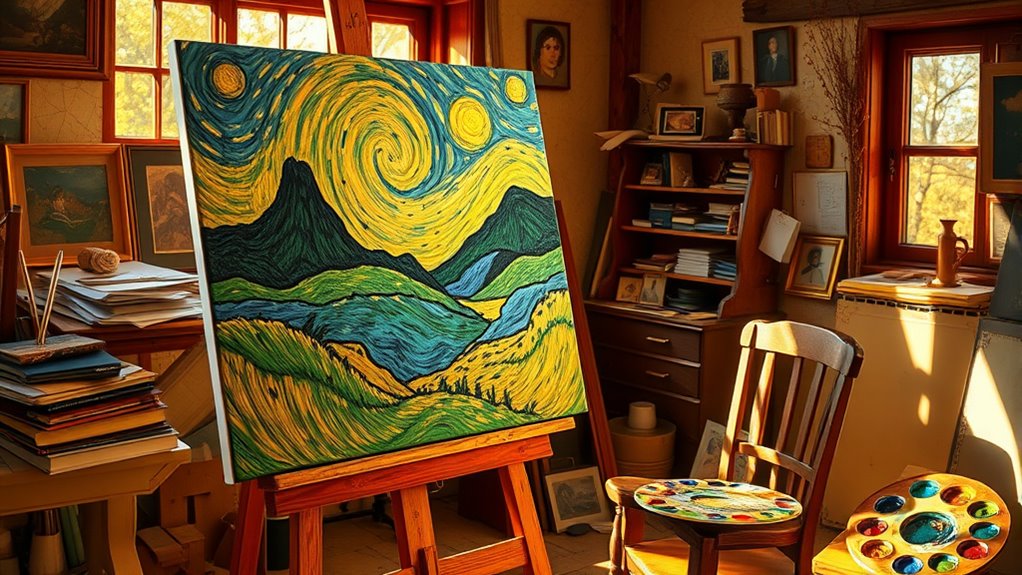
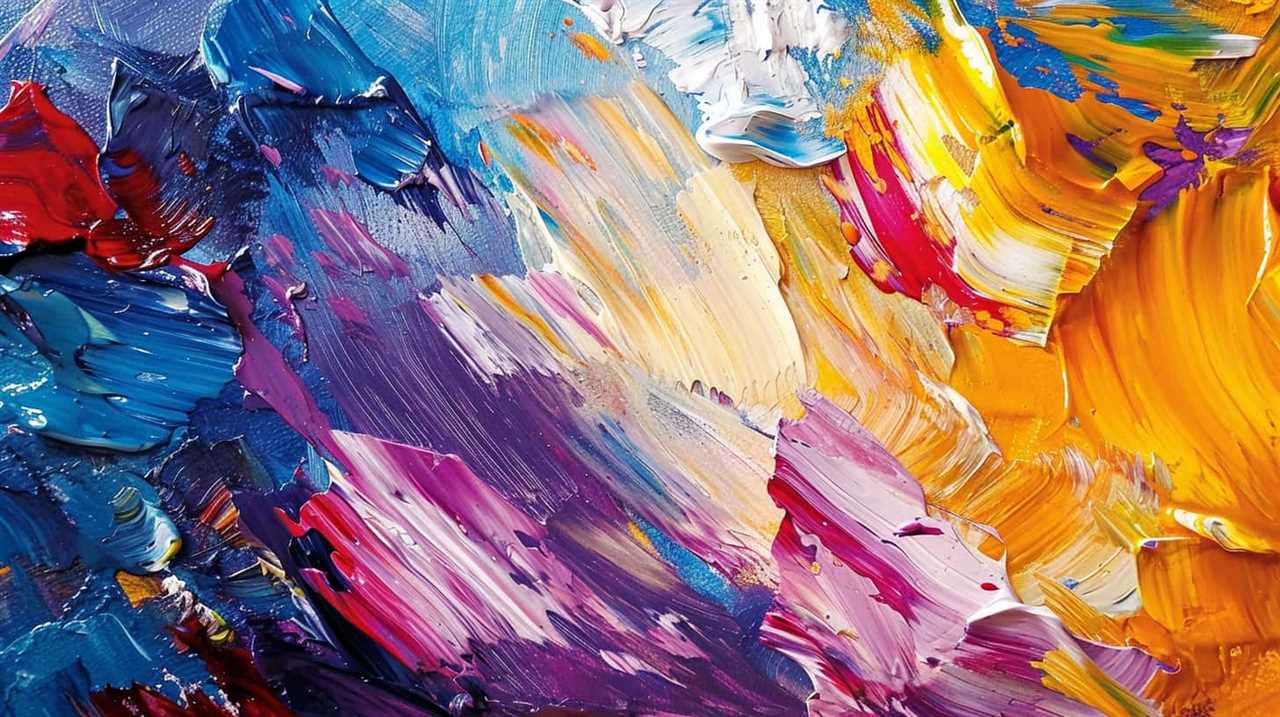
Have you ever wondered what drives an artist to create some of the most iconic and emotionally resonant paintings in history? Vincent van Gogh’s life and work reveal a relentless pursuit of expression that stemmed from a deeply personal vision. His journey as an artist was marked by constant experimentation and growth, showcasing a fascinating evolution of techniques that set him apart from his contemporaries. Van Gogh didn’t stick to traditional methods; instead, he pushed boundaries, embracing bold brushstrokes, vibrant colors, and impassioned textures. His techniques evolved as he sought to convey raw emotion and inner turmoil, often painting with thick, expressive strokes that seem to pulse with life. This evolution wasn’t merely technical—it was a reflection of his desire to connect emotionally with viewers. His artistic influence, though initially overlooked during his lifetime, grew exponentially after his death, inspiring generations of artists to prioritize personal expression over realism. Van Gogh believed art should be felt, not just seen, and his innovative approach changed the course of modern art. His use of layering and blending techniques exemplifies how he built depth and emotion into his work.
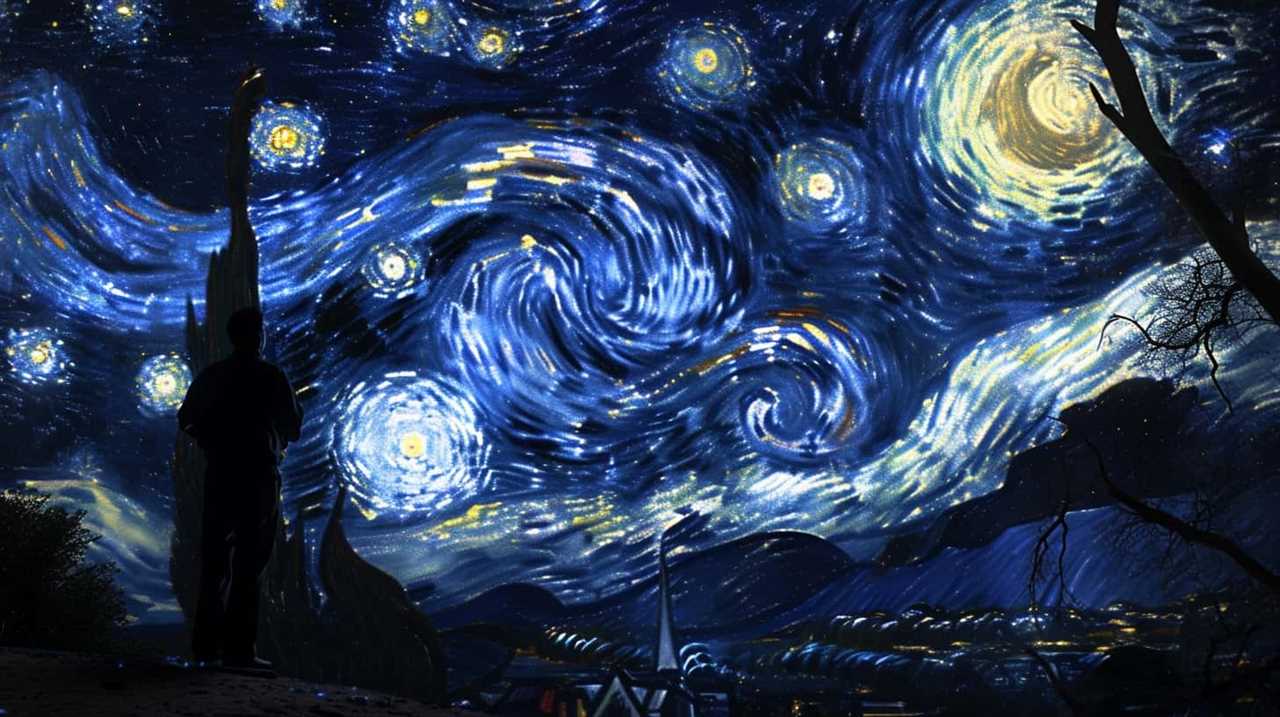
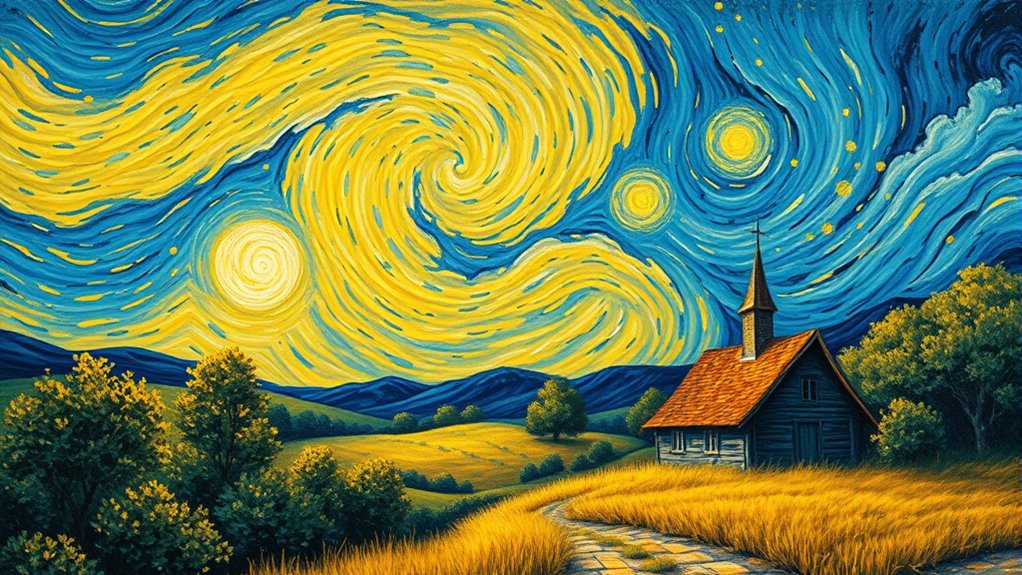
You can see this influence in the works of countless painters who followed, inspired by his fearless use of color and texture. His paintings, like “Starry Night” or “Sunflowers,” aren’t just visually striking; they evoke a profound sense of mood and atmosphere. You might notice how his brushwork seems to dance across the canvas, capturing movement and emotion in every stroke. Van Gogh’s techniques, which evolved through a combination of experimentation and emotional necessity, serve as a testament to his unwavering commitment to authentic expression. His style was not static but a living, breathing process that grew more intense and refined over time. This evolution of techniques, driven by his personal struggles and relentless passion, helped cement his legacy as a pioneer of modern art.
Van Gogh’s artistic influence extends beyond technique; it’s about the spirit of daring to dream and to translate those dreams into paint. He once said, “I dream my painting, and then I paint my dream,” emphasizing how his creative process was rooted in visualization and emotional truth. His ability to transform inner visions into vivid, unforgettable images inspires artists to this day. You’re encouraged to view his work not merely as art but as a powerful act of emotional honesty. Van Gogh’s legacy reminds you that true artistry involves a continuous evolution of technique and an unshakable belief in the power of your own dreams.
Frequently Asked Questions
What Inspired Van Gogh’s Most Famous Paintings?
You find that Van Gogh’s most famous paintings are inspired by his deep symbolism and personal inspiration. He often drew from his emotional experiences, nature, and his struggles with mental health, channeling these into vivid, symbolic imagery. His passion for capturing the human condition and the beauty of the natural world fuels his creativity, making his art resonate on a profound level with viewers. You can see how inspiration and symbolism intertwine in his masterpieces.
How Did Van Gogh’s Mental Health Affect His Art?
Your mental health dramatically shaped Van Gogh’s art, turning his psychiatric struggles into bursts of raw, intense creative expression. When his mind teetered on the edge, his paintings exploded with swirling skies, vivid colors, and emotional depth that seemed to pulse with his inner turmoil. His emotional chaos fueled his paintings, making his art a vivid testament to his psychological battles, transforming suffering into timeless masterpieces of passionate, unfiltered expression.
What Materials and Techniques Did Van Gogh Prefer?
You’ll notice Van Gogh preferred oil paints with thick, expressive brushstroke textures that add depth and emotion to his work. He often used bold, vibrant color palette choices to evoke mood and atmosphere, applying paint directly onto the canvas with energetic strokes. His techniques emphasize movement and intensity, making each piece feel alive. Van Gogh’s mastery of brushwork and color helps you feel his inner passion through every vibrant, textured detail.
Where Can I See Van Gogh’s Original Artworks Today?
Imagine walking through a modern museum, like the Van Gogh Museum in Amsterdam, where you can see his original artworks. You’ll find highlights like “Starry Night” and “Sunflowers” on display, showcasing his unique style. Van Gogh’s paintings are also in the Museum of Modern Art in New York and the Musée d’Orsay in Paris. These museums offer a remarkable glimpse into his life and artistic genius.
How Has Van Gogh Influenced Modern Art Movements?
Van Gogh’s bold brushwork and vivid colors notably influence modern art movements like Abstract Expressionism and Color Theory. You can see his impact in how artists use intense emotion and innovative techniques to express themselves. His experimentation with color and texture inspires you to explore new ways of painting, pushing boundaries and emphasizing personal expression. Van Gogh’s legacy encourages you to embrace raw emotion and vibrant color in your own artistic journey.
Conclusion
As you step back from Van Gogh’s world, you realize his paintings are windows into his soul—each brushstroke a heartbeat, each color a whisper of dreams. His art isn’t just seen; it’s felt, like a song that lingers long after the music stops. You’re reminded that dreams are the seeds of our reality, and through your own creativity, you can turn your visions into vivid life, just like Van Gogh’s timeless masterpiece of the soul.

Joy, as our Editor in Chief, ensures the highest standard of content. Her talent in writing is complemented by her attention to detail and passion for literature and culture. Joy’s expertise and love for the English language shine through in her editorial work, making each piece a testament to quality and clarity.