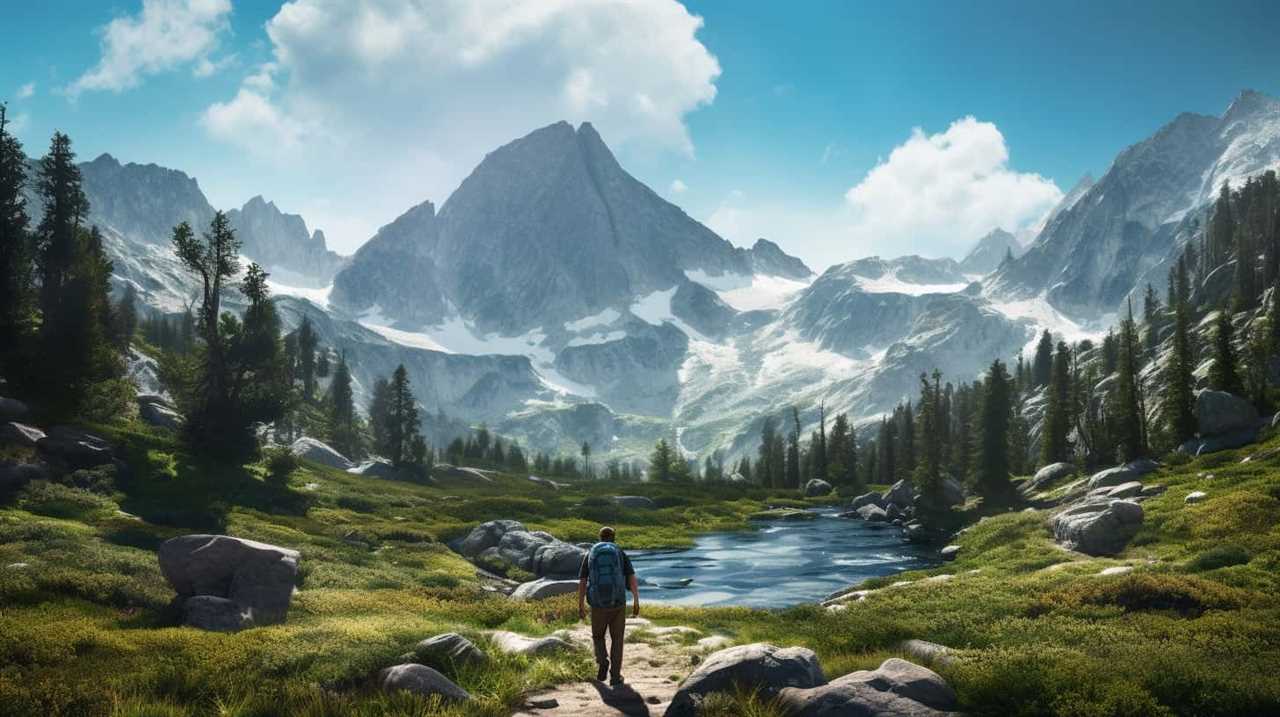

When exploring nature, remember to take only memories and leave only footprints by respecting the environment. Keep your impact minimal by staying on established trails, avoiding wildlife disturbances, and carrying out all trash. Use eco-friendly gear and natural framing for photos, ensuring you preserve the landscape’s beauty. Practicing responsible exploration helps protect our natural world for others to enjoy. Continue to discover how you can make your adventures truly sustainable and respectful.
Key Takeaways
- Respect natural environments by minimizing disturbance and avoiding removal of natural objects.
- Follow Leave No Trace principles: pack out trash and fully extinguish fires.
- Capture photos thoughtfully, respecting wildlife and landscape integrity.
- Use lightweight gear and stay on established trails to reduce environmental impact.
- Promote awareness and stewardship to preserve natural beauty for future explorers.
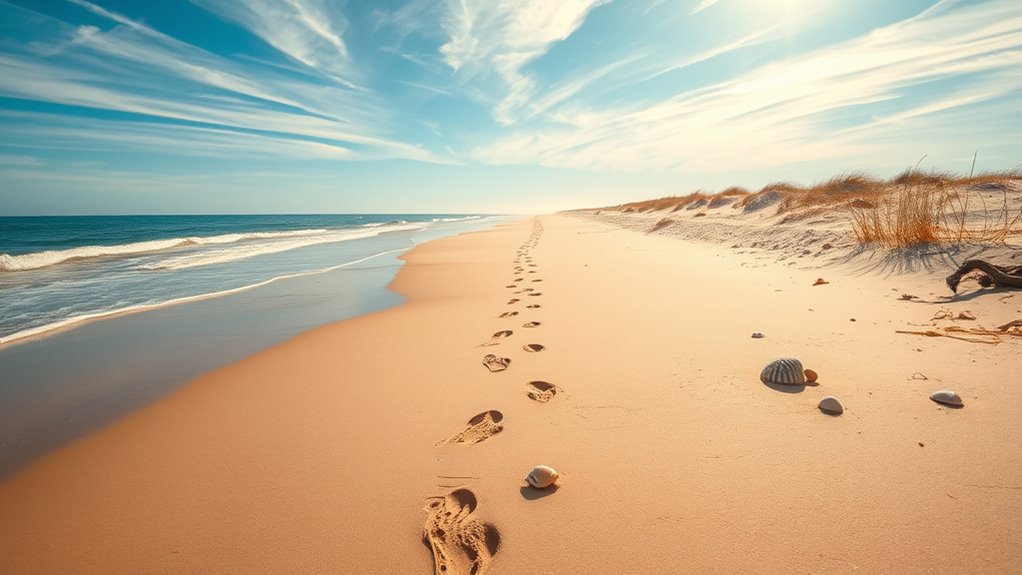
When exploring natural landscapes, it’s tempting to leave behind souvenirs or disturb the environment, but embracing the philosophy of “Take Only Memories, Leave Only Footprints” encourages you to enjoy nature responsibly. This mindset reminds you to appreciate the beauty around you without causing harm. As you set out on backpacking adventures, it’s easy to get caught up in capturing stunning scenes through nature photography. While snapping photos is a wonderful way to preserve memories, it’s crucial to do so thoughtfully. Use your camera without disturbing the landscape or wildlife, making sure your pictures don’t contribute to environmental degradation. Respect the surroundings by sticking to established trails and avoiding the temptation to venture off-path for a perfect shot. Remember, the true beauty of nature is in its untouched state, and your photos should reflect that respect.
During your backpacking adventures, you’ll likely encounter breathtaking vistas, diverse flora, and fauna that beg to be documented. Instead of picking flowers or collecting stones, focus on capturing the scene through your lens. This way, you preserve the landscape in its natural form for others to enjoy. When you’re immersed in nature photography, try to minimize your impact by carrying a lightweight camera setup, which reduces the need to trample sensitive plants or disturb wildlife. Stay mindful of your environment—avoid loud noises or sudden movements that could scare animals away. Your goal is to observe and photograph, not alter or damage the habitat.
Capture nature’s beauty with a lightweight camera, respecting wildlife and preserving the landscape.
Practicing Leave No Trace principles during your backpacking excursions helps you leave the environment as pristine as you found it. Pack out everything you bring in, including trash, food scraps, and even biodegradable waste if possible. Be cautious with campfires, and make sure they’re fully extinguished to prevent wildfires. When taking photos, aim to capture the moment without leaving a mark—use natural features for framing your shots instead of creating artificial setups. By doing so, you guarantee the landscape remains vibrant and alive for future explorers. Additionally, understanding and applying environmental impact awareness ensures that your presence contributes positively to conservation efforts.
Ultimately, your backpacking adventures and nature photography should serve as a testament to the beauty of the environment, not a cause of its decline. The philosophy of “Take Only Memories, Leave Only Footprints” guides you to enjoy and document the wilderness responsibly. Respectful exploration means being a steward of nature, making certain that when you leave, it’s just as magnificent as when you arrived. That way, everyone can experience the awe and wonder of the natural world, now and for generations to come.

Set of 4 Inspirational Quotes Wall Art 16x11 Inch Encouraging Office Wooden Framed Positive Affirmations Home Family Decor Sign Motivational Plaque Wall Hanging Decoration (Black)
HIGH QUALITY MATERIALS: This decorative sign frame is made of solid wood, with a solid thick fiberboard middle...
As an affiliate, we earn on qualifying purchases.
Frequently Asked Questions
How Can I Start Practicing “Leave Only Footprints” Responsibly?
To practice “leave only footprints” responsibly, start by learning and following the Leave No Trace principles. Respect wildlife by observing from afar and avoiding disturbance, ensuring ethical wildlife interaction. Stick to designated trails, pack out all trash, and minimize campfire impacts. By doing so, you preserve natural beauty for others and protect ecosystems, making your outdoor adventures sustainable and enjoyable for everyone.
Are There Specific Guidelines for Minimal-Impact Camping or Hiking?
Yes, there are specific guidelines for minimal-impact camping and hiking. You should practice proper trail etiquette by staying on designated trails, packing out all trash, and avoiding disturbance to wildlife. Prioritize campfire safety by using established fire rings and fully extinguishing fires. Respect quiet hours and other campers’ privacy. By following these practices, you help preserve natural areas and make certain everyone can enjoy them responsibly.
What Should I Do if I Encounter Wildlife During My Visit?
When wildlife crosses your path, remember, nature’s silence often carries its stories. Prioritize wildlife safety by keeping a safe distance and avoiding sudden movements. Use binoculars for respectful observation, never feed or try to touch animals. Stay calm, speak softly, and back away slowly if they approach. Respectful observation helps protect both you and the animals, allowing nature to thrive while you enjoy its beauty responsibly.
How Do I Handle Trash or Waste in Remote Areas?
When you encounter trash or waste in remote areas, practice responsible disposal by packing out all waste, including food scraps and packaging. Use designated waste management systems or carry a small trash bag to keep the environment clean. Avoid leaving any waste behind; this helps protect wildlife and preserves natural beauty. Always follow local guidelines for waste disposal to ensure you’re minimizing your impact on the environment.
Can I Take Photographs Without Disturbing the Environment?
You can take photographs without disturbing the environment by practicing good camera ethics in wildlife photography. Did you know that most wildlife is sensitive to human presence, and even quiet noises can cause stress? To minimize impact, keep a respectful distance, avoid sudden movements, and use long lenses. By doing so, you preserve natural behaviors and make certain your photography doesn’t harm the environment or its inhabitants.

Inspirational Wall Art for Bedroom, Motivational Office Wall Art Decor, Framed Canvas Wall Art for Women, Girls, Positive Affirmations Quotes Prints, Set of 6PCS, 8"x10", FRAMED
Inspirational Wall Art - These motivational quotes will provide daily inspirations and remind you to keep a positive...
As an affiliate, we earn on qualifying purchases.
Conclusion
As you reflect on your adventures, remember that leaving only footprints and taking only memories helps conserve these special places. Did you know that over 80% of travelers say they want to leave a positive impact on the environment? By embracing responsible travel, you ensure future generations can also enjoy nature’s beauty. So, go ahead—treasure every moment, respect the land, and make a difference, one footprint at a time.

Framed Motivational Wall Art for Office Decor, Set of 3 Inspirational Modern Iceberg Canvas Wall Art Prints, Navy Blue Effort Success Victory Quotes for Home Office Gym Wall Decor, 16x24
[Framed Wall Art]: A Set of 3 framed canvas wall art for office wall decor. Features navy blue...
As an affiliate, we earn on qualifying purchases.

Frameo 10.1 Inch WiFi Digital Picture Frame, Smart Cloud Electronic Photo Frame with HD IPS Touch Screen Slideshow 32GB Memory Auto-Rotate Wall Mount, Share Photos/Videos from Phone - Gifts for Mom
SHARE MOMENTS INSTANTLY & SAFELY: Send photos or videos (Max.15 seconds) to digital frame from phone via "Frameo”...
As an affiliate, we earn on qualifying purchases.