
Paul Gauguin’s quote, “I shut my eyes in order to see,” invites you to look beyond surface appearances and seek deeper spiritual truths. His art uses bold colors and symbolic shapes to transform ordinary scenes into vibrant, meaningful worlds. By merging cultural symbols and personal visions, Gauguin encourages you to embrace intuition and inner understanding. If you explore further, you’ll discover how his unique approach reveals a profound connection between art, spirituality, and cultural expression.
Key Takeaways
- Gauguin’s phrase reflects his belief that inner vision and spiritual insight are essential for true artistic understanding.
- The statement emphasizes the importance of intuition over external appearances in his symbolic, Post-Impressionist approach.
- It suggests that closing his eyes allows him to access deeper, spiritual truths beyond the material world.
- Gauguin’s art often aims to evoke emotional and mystical insights that transcend literal visual representation.
- The quote aligns with his goal of transforming ordinary scenes into symbolic worlds through vivid color and spiritual symbolism.
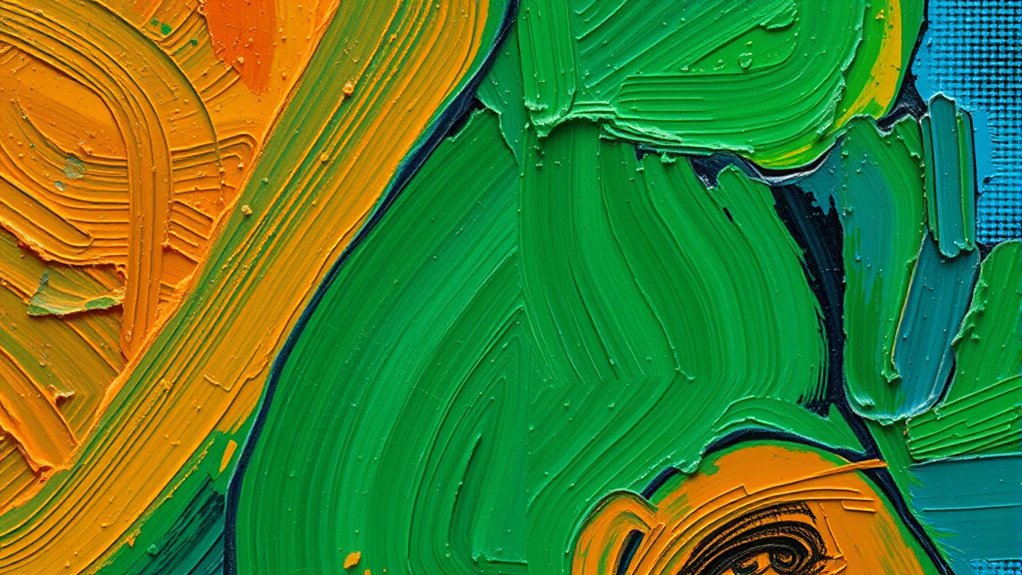
Paul Gauguin was a pioneering French artist known for his bold use of color and innovative approach to Post-Impressionism. You can see his distinctive style in the way he transforms ordinary scenes into vibrant, symbolic worlds. His paintings aren’t just visual representations; they’re layered with meaning, and symbolism plays an essential role. Gauguin believed that colors and shapes could communicate deeper truths beyond the surface. You might notice how he uses vivid reds, greens, and yellows to evoke emotions and spiritual ideas. These colors aren’t merely decorative—they serve as symbols, expressing concepts like passion, nature, or mysticism. His work often reflects a desire to reach beyond the material world and explore the spiritual domain. This search for meaning is central to his use of symbolism, turning his paintings into visual poems that invite you to interpret their layered messages.
Gauguin’s time in Tahiti profoundly influenced his artistic vision. When you look at his Tahitian works, you’ll see how deeply he absorbed the culture’s themes and aesthetics. The influence of Tahitian culture isn’t just superficial; it shapes the very essence of his art. You’ll notice how he incorporates traditional motifs, vibrant patterns, and depictions of local life that differ sharply from Western conventions. Through these images, Gauguin tries to capture an idealized, almost mythic version of Tahitian society—one that represents purity, innocence, and spiritual harmony. His fascination with Tahiti wasn’t just about exoticism; it was about finding a space where he could explore primal instincts and spiritual truths. The cultural influence helps him break free from European artistic traditions and craft a unique visual language rooted in the island’s imagery and symbolism.
In his Tahitian paintings, you’ll see how Gauguin blends symbolism with cultural influence to create a narrative that’s both personal and universal. The figures often look symbolic, embodying ideas and emotions rather than just individual characters. His use of simplified forms and bold colors makes the spiritual and cultural messages clearer and more powerful. You’re invited to look beyond the surface, to interpret the symbols and understand his longing for a more authentic, spiritual existence. Gauguin’s art becomes a bridge between Western notions of realism and the mystical, unspoiled world he seeks in Tahiti. His work is a testament to his belief that art can be a profound tool for spiritual exploration and cultural expression.
Additionally, understanding the Aboriginal artistic traditions and cultural practices can deepen your appreciation for how indigenous art influences contemporary interpretations of spirituality and land connection.

Yomcut Paul Gauguin Wall Art Poster – Arearea Canvas Art Print – Abstract Oil Painting Reproductions – Impressionist Modern Home Decor for Office Bedroom Unframed,12×16in/30×40cm
As an affiliate, we earn on qualifying purchases.
As an affiliate, we earn on qualifying purchases.
Frequently Asked Questions
What Inspired Gauguin’s Fascination With Tahiti?
You’re curious about Gauguin’s fascination with Tahiti, right? His artistic inspiration drew deeply from the island’s vibrant culture influences, which offered a stark contrast to European society. He sought authenticity and raw beauty, believing Tahiti’s traditions and landscapes could help him express more profound artistic truths. This cultural immersion fueled his creativity, inspiring bold colors and symbolic imagery that defined his unique style and made Tahiti a central theme in his work.
How Did Gauguin’s Spiritual Beliefs Influence His Art?
When you look at Gauguin’s art, you’ll see that his spiritual beliefs run deep, shaping his work with mystical inspiration and spiritual symbolism. He believed in connecting with a higher power and sought to express otherworldly truths through vibrant colors and symbolic forms. His art isn’t just visual; it’s a spiritual journey, making viewers feel the divine essence he’s trying to convey, like catching lightning in a bottle.
What Techniques Did Gauguin Use to Create His Distinctive Style?
You notice Gauguin’s distinctive style through his use of bold color symbolism and innovative brushwork techniques. He often applies flat, unmodulated areas of color to evoke emotion and spiritual meaning. His brushwork is expressive and purposeful, emphasizing form and mood over realistic detail. By combining these methods, Gauguin creates a vivid, symbolic world that invites viewers to see beyond the surface and connect with deeper spiritual themes.
How Did Gauguin’s Relationships Affect His Artistic Development?
You find that Gauguin’s personal relationships and artistic collaborations deeply shaped his style. When he connected with fellow artists and shared ideas, his work grew more vibrant and experimental. His romantic relationships, especially with women in Tahiti, inspired a shift toward bold, non-naturalistic colors and themes. These personal ties pushed him to explore new artistic expressions, making his development a demonstration of how relationships can ignite creative evolution.
What Is the Significance of Gauguin’s “Shut My Eyes” Painting?
You see Gauguin’s “Shut My Eyes” as a powerful piece of artistic introspection, where he explores inner visions through bold color symbolism. By closing his eyes, he emphasizes that true understanding comes from within, using vivid hues to express emotion and spiritual insight. This painting invites you to look beyond the surface, revealing the depths of his inner world and the transformative power of perception through art.
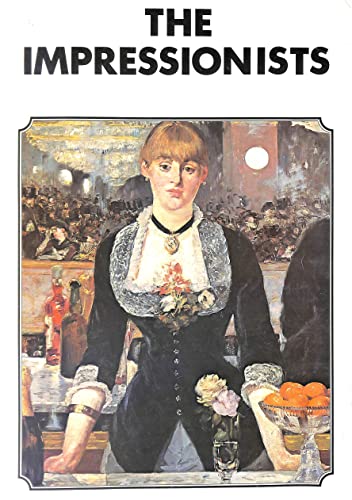
The Impressionists and Post-Impressionists: 105 Reproductions
Used Book in Good Condition
As an affiliate, we earn on qualifying purchases.
As an affiliate, we earn on qualifying purchases.
Conclusion
As you reflect on Gauguin’s words, it’s strange how shutting your eyes reveals new visions, just like he believed. You realize that sometimes, to truly see, you need to close your eyes and trust your inner eye. Coincidences blur the lines between perception and imagination, guiding you toward a deeper understanding. In those quiet moments, you find that seeing isn’t just with your eyes but with your soul, just as Gauguin discovered.

Dark Sun and Moon Celestial Wall Art Spiritual Gothic Tarot Wall Decor Painting Witchy Astrology Mystical Poster Canvas Prints Artwork for Bedroom Living Room 12×16 inch Framed
Vintage Sun and Moon Celestial Wall Art: Bring mystical depth and spiritual symbolism into your space with this…
As an affiliate, we earn on qualifying purchases.
As an affiliate, we earn on qualifying purchases.
Wall Art Canvas Abstract Art Paintings Blue Fantasy Colorful Graffiti on White Background Modern Artwork Decor for Living Room Bedroom Kitchen 24x16in
Wall Art Decor: Good idea for home interior walls decor such as living room, bedroom, kitchen, bathroom, guest…
As an affiliate, we earn on qualifying purchases.
As an affiliate, we earn on qualifying purchases.