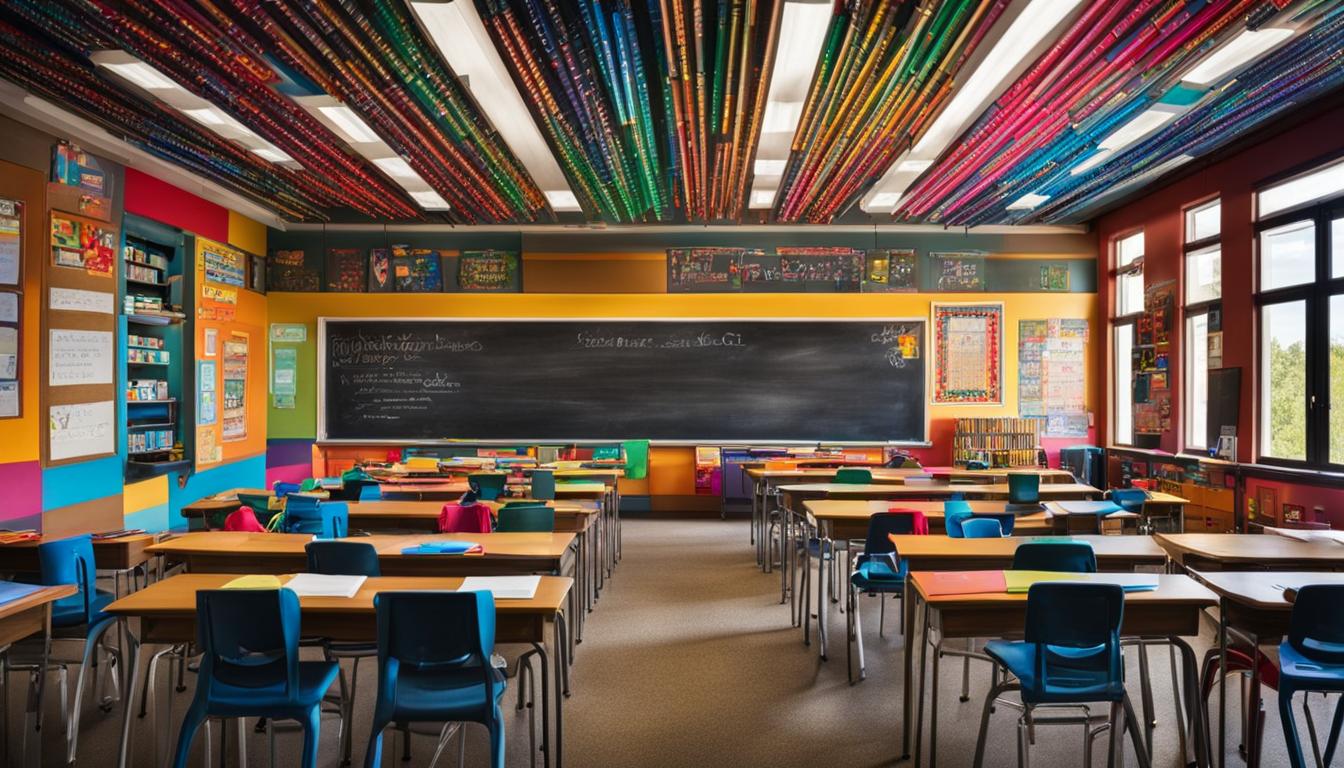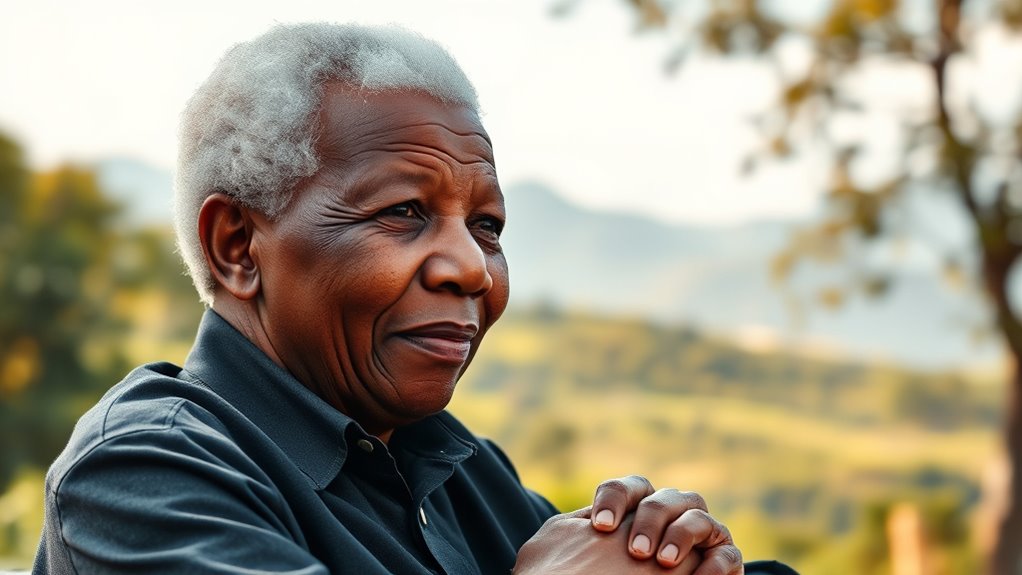

Nelson Mandela believed that education is your most powerful weapon for changing the world. He saw education as a key to breaking down barriers, promoting social justice, and creating opportunities for everyone. By investing in learning, you can empower yourself and others to build a fairer, more inclusive society. If you want to discover more about Mandela’s inspiring views on education’s role in transforming lives, keep exploring these ideas further.
Key Takeaways
- Nelson Mandela believed education is essential for societal transformation and overcoming inequality.
- He emphasized that education empowers individuals to change their lives and communities.
- Mandela viewed education as a vital tool for promoting peace, justice, and social cohesion.
- He advocated for inclusive and equitable education to uplift marginalized groups.
- Mandela saw lifelong learning as crucial for adapting to change and fostering resilient societies.

Nelson Mandela believed that education is the most powerful tool for transforming lives and societies. He saw it as a catalyst for change, capable of breaking down barriers and opening doors to opportunity. You can understand his perspective as a call to prioritize educational reform that guarantees everyone has access to quality learning. Mandela knew that a robust education system could uplift communities and foster social justice. He emphasized that education doesn’t end after school; instead, it’s a lifelong journey. Embracing lifelong learning allows individuals to adapt, grow, and contribute meaningfully to society. You’re encouraged to see education as an ongoing process that equips you with the skills to navigate an ever-changing world, especially in times of rapid technological and social shifts. A strong emphasis on continuous education can help bridge gaps in opportunity and ensure equitable growth for all.
Mandela believed that educational reform is essential to realize this vision. He advocated for policies that address disparities and remove obstacles that prevent marginalized groups from gaining knowledge and skills. When you support educational reform, you’re helping to create a system that promotes equity and inclusion. Mandela’s ideas stress that every person deserves the chance to learn and develop their potential, regardless of background or circumstances. By pushing for reforms that improve access, quality, and relevance of education, you contribute to a society where everyone can thrive. This approach not only benefits individuals but also strengthens entire communities by fostering a culture of learning and growth.
Lifelong learning plays a vital role in Mandela’s philosophy. You’re encouraged to see education as a continuous pursuit, not confined to childhood or formal institutions. Whether through reading, online courses, or community programs, lifelong learning empowers you to stay informed, develop new skills, and adapt to new challenges. Mandela believed that embracing this mindset helps build resilient societies where people remain engaged and capable of driving positive change. When you commit to ongoing education, you’re investing in yourself and your community’s future. It’s about recognizing that growth and improvement are ongoing processes that require dedication and curiosity.
Frequently Asked Questions
How Did Mandela’s Childhood Influence His Views on Education?
Your childhood shaped Mandela’s strong belief in education because his early years were marked by family influence and exposure to injustice. Growing up in a rural village, he saw how lack of access to quality education limited opportunities. His family’s values emphasized learning as a path to change. These experiences made him realize that education can empower individuals and transform society, fueling his lifelong commitment to education for all.
What Specific Educational Reforms Did Mandela Advocate For?
You learn that Mandela championed educational reforms like promoting educational equity and curriculum reform to create fair opportunities for all. He believed education could be a key to breaking barriers, much like how a sturdy bridge connects divided lands. Mandela pushed for policies ensuring equal access to quality education, emphasizing curriculum reform that included marginalized voices, helping you see how these changes aimed to transform society into a more inclusive, just place for everyone.
How Has Mandela’s Emphasis on Education Impacted Global Policies?
You see Mandela’s emphasis on education shaping policy reforms worldwide, inspiring countries to prioritize accessible and quality education. His global influence motivates governments and organizations to invest in learning initiatives that promote equality and development. By advocating for education as a fundamental right, he encourages international policy changes that aim to eradicate illiteracy, empower communities, and foster sustainable growth, ultimately transforming societies through knowledge and opportunity.
What Challenges Did Mandela Face Promoting Education in South Africa?
You face formidable challenges promoting education in South Africa, where racial inequality and resource shortages threaten progress. Despite Mandela’s efforts, entrenched disparities made it difficult to guarantee equal access. You constantly battle resistance from those clinging to the status quo, while struggling to secure funding and infrastructure. The fight is relentless, but your commitment to transforming education remains unwavering, knowing it’s the key to breaking systemic barriers and shaping a better future.
How Can Individuals Contribute to Mandela’s Vision of Education Today?
You can contribute to Mandela’s vision by engaging in community volunteering to support local education initiatives and advocating for equitable access to digital learning resources. By sharing your skills and resources, you help bridge educational gaps and empower learners. Embracing digital learning tools allows more people to access quality education regardless of location, fostering global change aligned with Mandela’s belief in education as a powerful weapon for transformation.
Conclusion
You see, Mandela believed education is the most powerful weapon to change the world. Did you know that, globally, over 258 million children and youth still lack access to quality education? That statistic highlights how essential your role is in promoting learning. When you invest in education, you’re helping build a future where everyone has the chance to succeed. Remember, your efforts can be the change Mandela envisioned—transforming lives and shaping a better world.