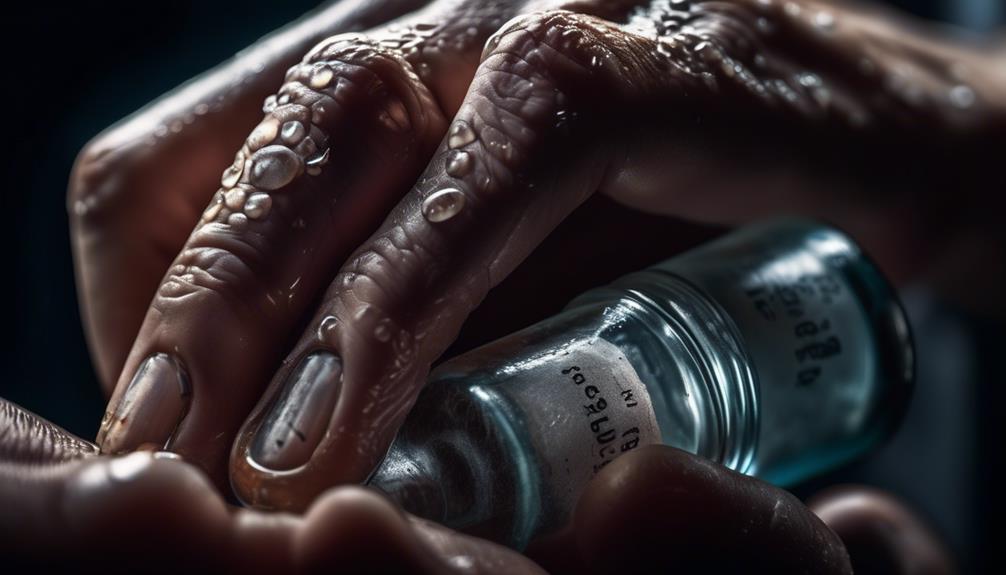
Louise Bourgeois’s art is a powerful act of restoration, inviting you to confront difficult memories and emotions. Her work transforms pain into creative expression, offering a safe space to explore raw truths through symbolic forms like spiders and fabrics. By engaging with her pieces, you can recognize buried feelings and find resilience in vulnerability. If you explore further, you’ll discover how her art fosters healing and inner strength, turning wounds into triumphant symbols of renewal.
Key Takeaways
- Louise Bourgeois used her art to confront personal trauma, transforming pain into a process of emotional and psychological healing.
- Her work embraces raw, challenging themes, providing a safe space for exploration and acknowledgment of difficult memories.
- Bourgeois employed symbolic motifs like spiders to represent fear, protection, and transformation, guiding viewers through emotional journeys.
- Her art functions as a mirror reflecting inner worlds, promoting growth by confronting buried emotions and dismantling old narratives.
- Art accessories and installations serve as tangible reminders of resilience, fostering renewal and empowering individuals through active engagement.
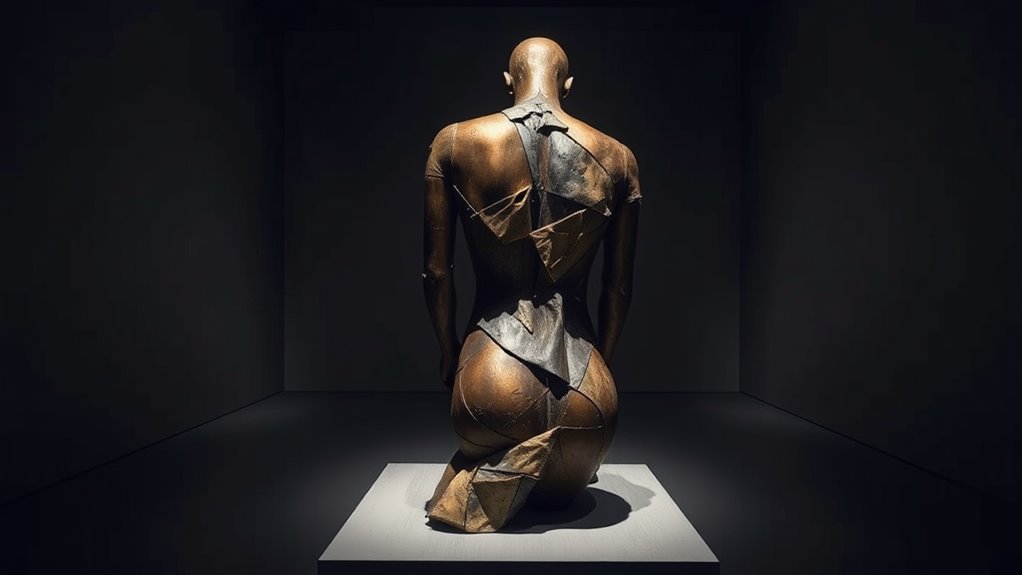
Louise Bourgeois’s art is a powerful act of restoration, inviting you to confront the depths of memory and emotion. Her work offers a unique pathway to emotional healing and psychological renewal, allowing you to process complex feelings and past traumas. When you engage with her sculptures, drawings, and installations, you’re encouraged to face your vulnerabilities head-on, transforming pain into a form of creative expression. Bourgeois believed that confronting difficult memories through art could serve as a therapeutic act, helping you peel back layers of emotional baggage and find clarity within chaos.
Her art doesn’t shy away from raw, sometimes uncomfortable truths. Instead, it provides a space where you can explore internal conflicts, fears, and desires in a safe yet provocative environment. Through her use of symbolic forms—like spider motifs, twisted fabrics, and fragmented figures—she channels personal struggles and collective wounds. As you observe these symbols, you may recognize echoes of your own experiences, facilitating a process of catharsis. This act of recognition can spark emotional healing, helping you release pent-up feelings and gain a new perspective on your past.
Bourgeois’s work emphasizes that psychological renewal often begins with acknowledgment. Her art acts as a mirror, reflecting your inner world and encouraging you to confront what’s buried beneath the surface. This process can be challenging, but it’s necessary for growth. By engaging with her pieces, you’re not only exploring your personal history but also connecting with universal themes of loss, love, and resilience. Her art reminds you that renewal often involves dismantling old narratives and rebuilding a stronger, more authentic self.
Furthermore, her sculptures serve as visual metaphors for transformation. For example, her recurring spider motifs symbolize both fear and protection, illustrating how confronting uncomfortable truths can ultimately foster strength. When you meditate on these symbols, you’re guided toward understanding that emotional healing isn’t linear; it’s a complex journey that involves facing discomfort, accepting vulnerability, and finding new meaning in your experiences. Bourgeois’s art, then, becomes a tool to help you navigate this process, offering comfort and insight along the way.
Engaging with her work also highlights the importance of art accessories and merchandise, which can serve as tangible reminders of your journey toward healing. Ultimately, engaging with Louise Bourgeois’s creations can facilitate a profound sense of psychological renewal. Her art invites you to acknowledge the shadows within, transforming pain into power. In doing so, you’re not just observing her work—you’re participating in a restorative act that honors your emotional depth and resilience. Her art becomes a sanctuary where healing begins, and where you can emerge renewed, stronger, and more self-aware.
Top picks for "louise bourgeoi restoration"
Open Amazon search results for this keyword.
As an affiliate, we earn on qualifying purchases.
Frequently Asked Questions
What Inspired Louise Bourgeois’s Focus on Themes of Healing and Recovery?
You’re inspired by Louise Bourgeois’s focus on healing and recovery through her use of psychoanalytic symbolism and a feminist perspective. Her personal experiences with trauma, loss, and family struggles drive her to explore emotional wounds. By transforming pain into art, she encourages healing. Her work reflects a deep understanding of the subconscious, helping others confront their own vulnerabilities and find strength through the process of artistic restoration.
How Did Bourgeois’s Personal Life Influence Her Artistic Approach to Restoration?
You see, Bourgeois’s personal trauma and family influence profoundly shaped her artistic approach to restoration. Her experiences with familial conflicts and emotional wounds drove her to transform pain into powerful pieces, emphasizing healing and recovery. By channeling her personal struggles into her art, she creates intimate, impactful works that invite others to reflect on their own journeys of healing and resilience. Her life and love for family fuel her focus on emotional restoration.
What Techniques Did She Use to Convey Emotional Restoration in Her Sculptures?
You see that Bourgeois uses symbolism and texture to evoke emotional restoration in her sculptures. She manipulates scale and form to create intimate, powerful experiences, inviting you to confront vulnerability and healing. Her tactile surfaces and meaningful symbols deepen the connection, making you feel the rawness of her emotions. Through these techniques, she transforms personal pain into universal messages of resilience and renewal, encouraging your own journey of emotional healing.
How Has Bourgeois’s Concept of Art as Healing Evolved Over Her Career?
You see her evolving view of art as a powerful tool for psychological resilience and transformative therapy. Over her career, Bourgeois’s concept of healing deepened from simple catharsis to an intricate process of self-discovery. She believed art could mend even the most fractured minds, making her work a relentless pursuit of emotional restoration. Her journey reflects an ever-deepening understanding of art’s capacity to heal, transcending personal trauma into universal resilience.
Are There Specific Artworks That Exemplify Her Ideas About Emotional Restoration?
You see her iconic spider sculptures, like “Maman,” as perfect examples of her symbolic symbolism and restorative process. These artworks embody her emotional healing, transforming personal trauma into powerful symbols of strength and protection. As you observe these pieces, you understand how Bourgeois’s art acts as a therapeutic ritual, helping her and viewers confront and process deep-seated feelings, ultimately fostering emotional restoration through symbolic forms.
Conclusion
So, next time you’re tearing down a masterpiece or ignoring the cracks in your own life, remember Louise Bourgeois. She proves that art isn’t just about beauty—it’s about fixing, restoring, and embracing the flaws that make us human. Maybe your broken vase has more wisdom than a perfect sculpture. After all, in the grand gallery of life, it’s the repairs, not the perfection, that truly make the masterpiece. Cheers to your next restoration project!