
In Keats’s statement, “A thing of beauty is a joy forever,” he highlights how appreciating natural beauty and simple pleasures can bring lasting happiness. He believes that beauty, found in nature or everyday moments, connects us to deeper truths and elevates our spirits. Keats’s Romantic ideals emphasize emotion, intuition, and the transcendental power of beauty. If you want to understand how he celebrates the fleeting yet eternal, keep exploring his poetic vision.
Key Takeaways
- The poem emphasizes that beauty, whether in nature or art, provides everlasting joy and emotional fulfillment.
- Keats advocates appreciating simple, natural moments as sources of true happiness and inspiration.
- The poem reflects Romantic ideals by celebrating emotion, intuition, and the divine qualities of beauty.
- It employs vivid imagery and lyrical language to evoke the transient yet enduring nature of beauty.
- Keats suggests that the appreciation of beauty can offer eternal happiness beyond fleeting moments.
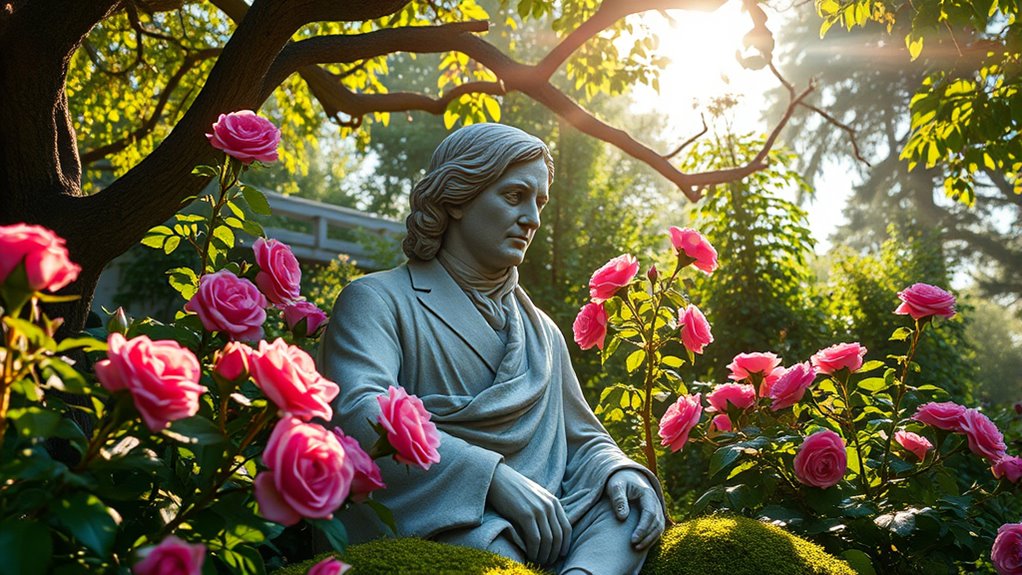
John Keats, one of the most celebrated poets of the Romantic era, captured the enduring power of beauty in his poetry, famously declaring that “a thing of beauty is a joy forever.” His work invites you to see beyond fleeting appearances and find lasting happiness in the simple, natural, and aesthetic moments that enrich everyday life. When you analyze his poetry, you notice that Keats emphasizes the importance of appreciating beauty as a reflection of deeper truths, aligning closely with Romantic ideals. These ideals emphasize emotion, nature, and the individual’s connection to the sublime, all of which are central themes in Keats’s work.
Through poetry analysis, you begin to understand how Keats elevates ordinary experiences into profound moments that reveal the eternal. His vivid imagery and lyrical language serve as tools for capturing the transient yet everlasting qualities of beauty. For example, in “Endymion,” he explores the idea that beauty and truth are intertwined, urging you to seek and cherish the aesthetic qualities that elevate your perception of the world. Keats’s use of sensual detail and musical rhythm creates a sense of harmony that echoes Romantic beliefs in the power of emotion and intuition over rationality.
You also see that Keats’s poetry reflects Romantic ideals by emphasizing nature as both a source of inspiration and a mirror of human emotion. He sees beauty in the natural landscape, from blooming flowers to the changing seasons, and suggests that these moments of beauty are accessible to everyone. This democratization of beauty aligns with the Romantic belief that genuine happiness and truth are found outside of societal constraints, in the natural world and in personal experience. Keats’s lyrical ode, “To Autumn,” exemplifies this, celebrating the cyclical beauty of nature and encouraging you to find joy in its quiet, enduring presence. Additionally, Keats’s focus on the aesthetic qualities of fleeting moments highlights the Romantic emphasis on ephemeral beauty.
Furthermore, Keats’s poetry challenges you to find aesthetic pleasure even in fleeting moments, reinforcing the idea that true beauty doesn’t fade with time. His focus on the transient enhances your appreciation for the ephemeral, inspiring you to seek joy in the present. By combining poetry analysis with the ideals of Romanticism, you recognize that Keats isn’t just celebrating beauty but also urging you to embrace it as a source of eternal happiness. His poetry reminds you that though life is fleeting, the beauty you notice and cherish can leave a lasting impact—truly, a joy that endures forever.
Top picks for "john keat beauty"
Open Amazon search results for this keyword.
As an affiliate, we earn on qualifying purchases.
Frequently Asked Questions
What Inspired Keats to Write His Famous Poetry?
You’re inspired by romantic ideals and the beauty of nature, which fuel your poetry. Keats found inspiration in the natural world’s serenity and the emotional depth of human experience. His love for art, beauty, and the pursuit of truth drives his writing. You notice how he celebrates fleeting moments and transforms them into eternal joy, embodying the Romantic spirit that seeks profound connection with nature and emotion.
How Did Keats’s Personal Life Influence His Work?
Your understanding deepens as you see how Keats’s personal life acts as a mirror, reflecting his poetry’s emotional core. His romantic relationships symbolize hope and longing, while personal tragedies, like the loss of loved ones, cast shadows that inspire themes of fleeting beauty and mortality. These experiences carve the poetic landscape, making his work resonate with raw honesty and heartfelt vulnerability, transforming personal pain into universal beauty.
What Was the Critical Reception of Keats’s Poetry During His Lifetime?
You see that during his lifetime, Keats’s poetry faced mixed literary criticism and uncertain public reception. Critics often admired his vivid imagery and emotional depth but also dismissed his work as overly romantic or unrealistic. Despite this, his reputation grew gradually, and his lyrical style gained recognition among fellow poets. Ultimately, Keats’s work was appreciated more posthumously, cementing his legacy as a master of Romantic poetry.
How Has Keats’s Poetry Impacted Later Generations?
Imagine scrolling through social media and finding a quote inspired by Keats’s romantic ideals—his poetry continues to influence modern poets and artists. You see his vivid imagery and celebration of beauty inspiring countless generations. Keats’s poetic influence promotes a deep appreciation for nature and emotion, shaping romanticism’s legacy. You’re impacted by his timeless themes, which remind you that true beauty in art and life is everlasting, echoing through centuries.
Are There Any Lesser-Known Works by Keats Worth Exploring?
You should explore Keats’s lesser-known works, such as his obscure sonnets and unpublished drafts, which reveal his evolving thoughts and poetic depth. These pieces often get overlooked but offer unique insights into his creative process and themes. By delving into these works, you can gain a richer understanding of his artistry and appreciate the nuances that make his poetry timeless and inspiring.
Conclusion
You might find it fascinating that Keats’s poem has over 2 million views on literary platforms, showing its timeless appeal. His words remind us that beauty, whether in nature or art, sustains us through life’s challenges. By embracing Keats’s idea, you can find joy in the simple, lasting pleasures around you. Remember, a thing of beauty truly is a joy forever, inspiring generations to cherish what’s eternal.