
Henri Matisse shows us that true creativity takes courage. By boldly using vivid colors, simple shapes, and emotional expression, he defied traditional art norms and transformed perceptions of color and form. His daring choices inspired countless artists and movements, emphasizing that pushing boundaries leads to innovation. If you keep exploring, you’ll discover how Matisse’s fearless approach can inspire your own creative journey and challenge you to embrace your unique voice.
Key Takeaways
- Matisse’s bold use of color and form exemplifies how creative risk-taking fosters artistic innovation.
- His shift from traditional realism to expressive abstraction demonstrates courage in artistic experimentation.
- Mastering color theory and simplifying forms required bold choices that redefined modern art.
- His fearless exploration inspired future movements and encouraged artists to trust their personal vision.
- Embracing emotional honesty and daring techniques shows that true creativity involves courage and risk.
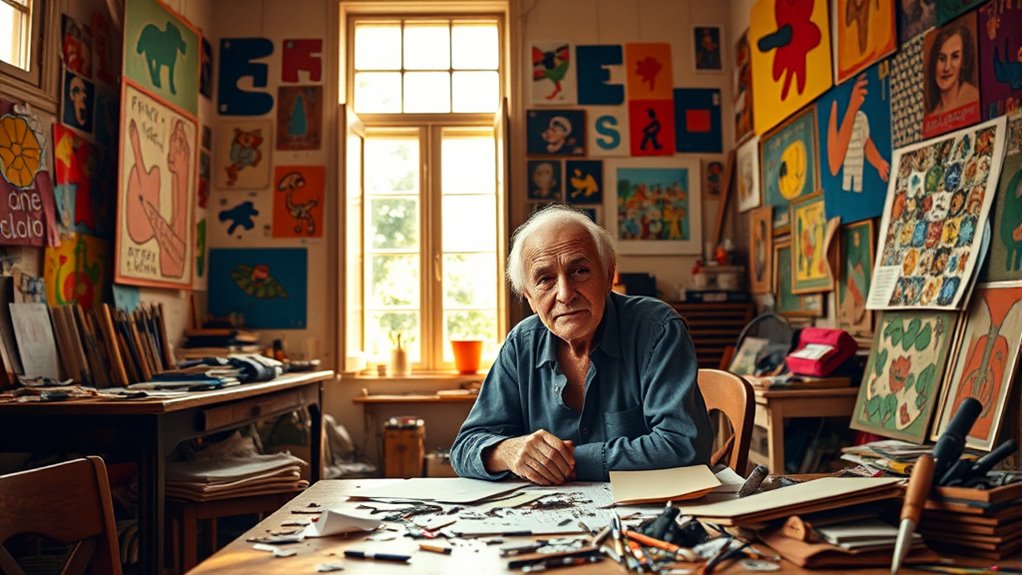
Have you ever wondered how a single artist could redefine modern art? Henri Matisse did just that, transforming the way we see color and form. His mastery of color theory became his hallmark, allowing him to evoke emotion and mood with bold, vibrant hues. Unlike many of his contemporaries, Matisse believed that color wasn’t just decorative—it was a powerful tool for expression. You can see this in his paintings, where contrasting colors clash and harmonize, creating a visual symphony that pulls you into his world. His innovative use of color broke away from traditional realism, emphasizing emotional truth over literal accuracy. This daring approach challenged viewers and inspired countless artists, cementing his artistic influence across generations.
Henri Matisse revolutionized modern art with his bold use of color and emotional expression.
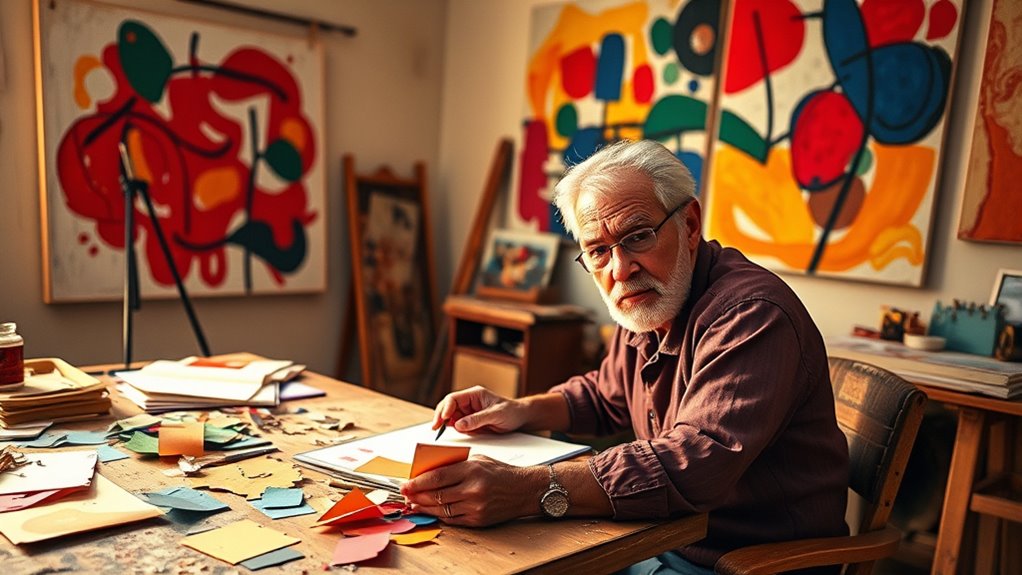
As you observe Matisse’s work, you realize that his approach to color theory wasn’t just technical; it was intuitive and deeply personal. He often simplified complex forms into flat, bold areas of color, emphasizing the emotional impact rather than the details. His famous cut-outs, such as “The Snail” or “Blue Nudes,” exemplify this mastery—large, flat shapes filled with striking color choices that seem to pulse with energy. These works demonstrate how he used color to shape space and guide your eye through the composition. Matisse’s ability to manipulate color in such a way didn’t just influence his contemporaries; it reshaped modern art’s entire direction, urging artists to think beyond representational accuracy.
Your perception of art changes when you understand how much Matisse’s artistic influence extends beyond aesthetics. His fearless experimentation with color and form inspired movements like Fauvism, which prioritized painterly qualities and strong color over realism. His work encouraged artists to embrace their personal vision, to trust their emotional responses rather than adhere strictly to traditional rules. Matisse’s influence is evident in countless modern artists who continue to explore expressive color and simplified forms. Whether it’s through his vibrant paintings or his innovative cut-outs, his legacy pushes you to see color as an active, dynamic force in art—something to be wielded courageously.
Matisse understood that art requires daring, and his willingness to experiment with color theory exemplifies this courage. His artistic influence is a testament to the power of bold choices and emotional honesty. When you look at his work, you’re reminded that creativity isn’t about following rules; it’s about trusting your instincts and pushing boundaries. Matisse’s legacy invites you to approach art—and life—with the same fearless spirit, showing that true innovation often comes from taking risks and embracing your unique voice.

Apple Barrel, Vibrant Spectrum Collection Acrylic Craft Paint, PROMOABIII, 2 fl oz each, 16 assorted matte colors, 16 count
CONVENIENT SIZE & FUN BRIGHT COLORS – This versatile acrylic paint set includes 16 – 2 oz bottles…
As an affiliate, we earn on qualifying purchases.
As an affiliate, we earn on qualifying purchases.
Frequently Asked Questions
What Inspired Matisse’s Bold Use of Color?
You’re inspired by Matisse’s bold use of color through his deep understanding of color theory and his passion for artistic experimentation. He believed that color could evoke emotion and express personality, pushing boundaries with vibrant, unexpected hues. By daring to experiment freely, he transformed traditional art, showing that courage in choosing colors leads to powerful, compelling works. His fearless approach encourages you to explore and trust your creative instincts.
How Did Matisse Adapt After His Health Decline?
You might think Matisse’s health decline limited his creativity, but he showed true artistic resilience by adapting his techniques. When he couldn’t paint easily, he turned to paper cut-outs, mastering this new form with boldness. His willingness to explore and innovate demonstrates how, despite physical challenges, he kept evolving artistically, proving that resilience fuels creativity and that adaptability can lead to new, inspiring artistic expressions.
What Were Matisse’s Main Artistic Influences?
You should explore how Matisse’s main influences include color theory and artistic mentorship. His fascination with vibrant colors and innovative use of hue shaped his style, inspired by early exposure to Impressionism and Post-Impressionism. Mentorship from influential artists helped refine his techniques, encouraging his bold experimentation. These influences drove his creative evolution, making his work stand out with expressive color and lively compositions.
How Did Matisse’s Style Evolve Over His Career?
You see Matisse’s style evolve like a vibrant garden blooming, shifting from bold, wild color explorations to more delicate, refined forms. His early work bursts with vivid hues and expressive brushstrokes, while later, he embraces cut-outs and simplified shapes, showcasing stylistic shifts that highlight his courage to reinvent. This journey reflects his desire to capture emotion through color and form, constantly pushing boundaries with each phase.
What Legacy Did Matisse Leave in Modern Art?
You see that Matisse’s legacy in modern art is profound, thanks to his bold color innovation and mastery of expressive forms. His daring use of vibrant hues inspires countless artists today, encouraging them to experiment freely. Additionally, his role as an artistic mentor helped shape future generations, spreading his revolutionary ideas. His work continues to influence modern art, reminding you that creativity takes courage and that innovation can leave a lasting mark.
1,500 Color Mixing Recipes for Oil, Acrylic & Watercolor: Achieve precise color when painting landscapes, portraits, still lifes, and more
As an affiliate, we earn on qualifying purchases.
As an affiliate, we earn on qualifying purchases.
Conclusion
As you reflect on Matisse’s boldness, remember that true creativity demands courage—much like a modern-day trailblazer steering uncharted digital territories. His fearless experimentation reminds you that stepping outside your comfort zone can lead to masterpieces. So, embrace the challenge, trust your instincts, and let your passion be your guide. After all, the spirit of innovation transcends time, turning even a humble palette into a timeless icon of artistic bravery.

Framed Extra Large Blue Abstract Wall Art for Living Room, Modern Canvas Prints Painting Artwork for Walls, Minimalist Abstract Pictures for Living Room Dining Room Bedroom Office Wall Decor 30×60 In
[Framed Wall Art]: One piece large framed blue and gold abstract canvas wall art, crafted with a sturdy…
As an affiliate, we earn on qualifying purchases.
As an affiliate, we earn on qualifying purchases.

The Cut Out And Collage Book: One-Sided Decorative Art for Cut and Collage, Mixed Media, Junk Journal, Paper Crafts, and More
As an affiliate, we earn on qualifying purchases.
As an affiliate, we earn on qualifying purchases.