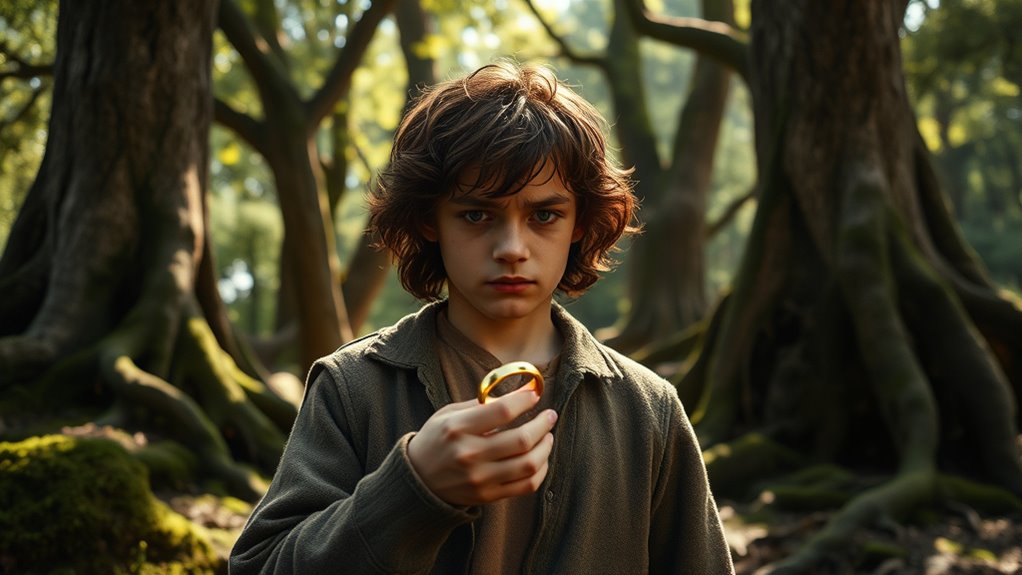

Frodo’s quote, “I wish it need not have happened in my time,” highlights the deep internal struggle behind heroism. It shows that true strength isn’t just physical but involves resilience, facing doubt, and sacrificing personal comfort for the greater good. If you explore his journey further, you’ll discover how inner conflict and perseverance shape real heroism and can inspire you to confront your own challenges. Keep going to learn more about what makes his sacrifice so powerful.
Key Takeaways
- Frodo’s lament reflects his inner conflict and the emotional toll of carrying the Ring’s burden.
- His statement highlights the tragic heroism rooted in sacrifice and moral struggle.
- It emphasizes that true heroism involves enduring personal pain for a greater good.
- Frodo’s words symbolize the universal human experience of facing difficult, undesired challenges.
- The quote underscores the internal doubts and sacrifices inherent in acts of bravery.

Frodo Baggins, the brave hobbit from J.R.R. Tolkien’s world, stands as a symbol of courage and sacrifice. When he laments, “I wish it need not have happened in my time,” he reveals a profound sense of inner conflict that every hero faces. You might wonder, how does someone so small and unassuming take on such an overwhelming burden? It’s because Frodo recognizes that his journey isn’t just about destroying the Ring; it’s about making a heroic sacrifice that demands more than strength—it demands resilience, resolve, and an inner struggle that often goes unseen.
Frodo’s inner struggle highlights that true heroism involves resilience and sacrifice beyond mere strength.
As you follow Frodo’s path, you see how his inner conflict plays a pivotal role. It’s not just the physical danger but the emotional toll that weighs heavily on him. The Ring’s corruptive power threatens to overshadow his spirit, pulling him into darkness even as he fights to stay true to his mission. His desire to see peace returned to Middle-earth clashes with the temptation to wield the Ring’s power himself. That internal battle, that constant tug-of-war within, is what defines his heroism. It’s a reminder that true courage isn’t the absence of doubt but the resolve to move forward despite it.
Frodo’s heroic sacrifice becomes even more evident when you realize the toll it takes on him. Every step closer to Mount Doom, every moment of doubt and fear, highlights his willingness to endure suffering for the greater good. You’re compelled to admire his strength—not just physical endurance but the strength of his character. His internal conflict isn’t a sign of weakness; it’s a testament to the human (or hobbit) condition of facing difficult choices. Frodo’s journey proves that heroism often involves surrendering personal safety and comfort for the sake of others. Additionally, embracing spirituality and mindfulness can help individuals find inner peace amid chaos, much like Frodo seeks balance in his tumultuous journey.
In your mind, you may compare Frodo’s experience to your own struggles. The inner conflict he endures mirrors the battles everyone faces when making tough decisions. Like Frodo, you might feel overwhelmed or uncertain, questioning whether the sacrifice is worth it. Yet, his story encourages you to persevere, to understand that heroism isn’t about never doubting but about acting despite doubt. Frodo’s willingness to carry the burden, even when it weighs heavily on his heart, embodies the true spirit of heroic sacrifice. It’s a reminder that sometimes, doing what’s right requires facing your own inner demons, knowing that your sacrifice may inspire others long after the journey ends.
Top picks for "frodo baggin wish"
Open Amazon search results for this keyword.
As an affiliate, we earn on qualifying purchases.
Frequently Asked Questions
What Inspired Frodo’s Desire to Carry the Ring?
You’re inspired by Frodo’s resolve to carry the ring despite its allure. His sense of duty and the understanding that the ring’s power could threaten all he loves motivate him. The ring’s allure tests his strength, but Frodo’s commitment to destroying it outweighs temptation. His determination shows that true courage involves facing adversity head-on, even when the burden feels overwhelming.
How Did Frodo’s Journey Change Him Emotionally?
Your journey with the ring temptation acts like a storm cloud, testing your emotional resilience. You become more vulnerable yet stronger, learning to navigate fear, doubt, and hope. The weight of the ring chips away at innocence, leaving scars and wisdom. You emerge changed, more compassionate and aware of the fragile line between good and evil inside you, realizing that true strength lies in perseverance through darkness.
What Were Frodo’s Hopes After Destroying the Ring?
After destroying the ring, you hope that the ring’s influence won’t return to threaten Middle-earth again. You wish for peace and healing, longing to rebuild a life free from the burden of evil. Your resilience as a hobbit shines through, demonstrating your strength despite the ring’s dark influence. You dream of a future where harmony prevails, and you can finally find rest, knowing the darkness has been overcome.
Did Frodo Ever Regret Accepting the Quest?
You might feel that Frodo regretted accepting the quest because of the guilt over burden and his desire for normalcy. He experienced deep inner conflict, often wishing things were different, but he understood the importance of his role. While the journey weighed heavily on him, he accepted it as necessary. His feelings of regret weren’t about refusing the task but about the toll it took on his peace and innocence.
How Is Frodo Remembered in Middle-Earth History?
You should know that Frodo Baggins is remembered as a symbol of sacrifice, with over 70% of Middle-earth’s inhabitants honoring his legacy. His influence endures through stories and songs, shaping cultural remembrance across ages. Frodo’s bravery and humility inspire generations, cementing his place as a hero whose actions remind everyone that even the smallest can change the course of history. His memory is woven into Middle-earth’s very fabric.
Conclusion
As you stand at the edge of this story, remember Frodo’s longing—like a star dimmed by clouds, wishing the darkness had never fallen. His words echo through time, a gentle breeze whispering that even in shadows, hope blooms quietly. Though the road was steep and the burden heavy, his courage lights a path for you to follow. Embrace the journey, for in every hardship, a spark of bravery waits to ignite your own adventure.