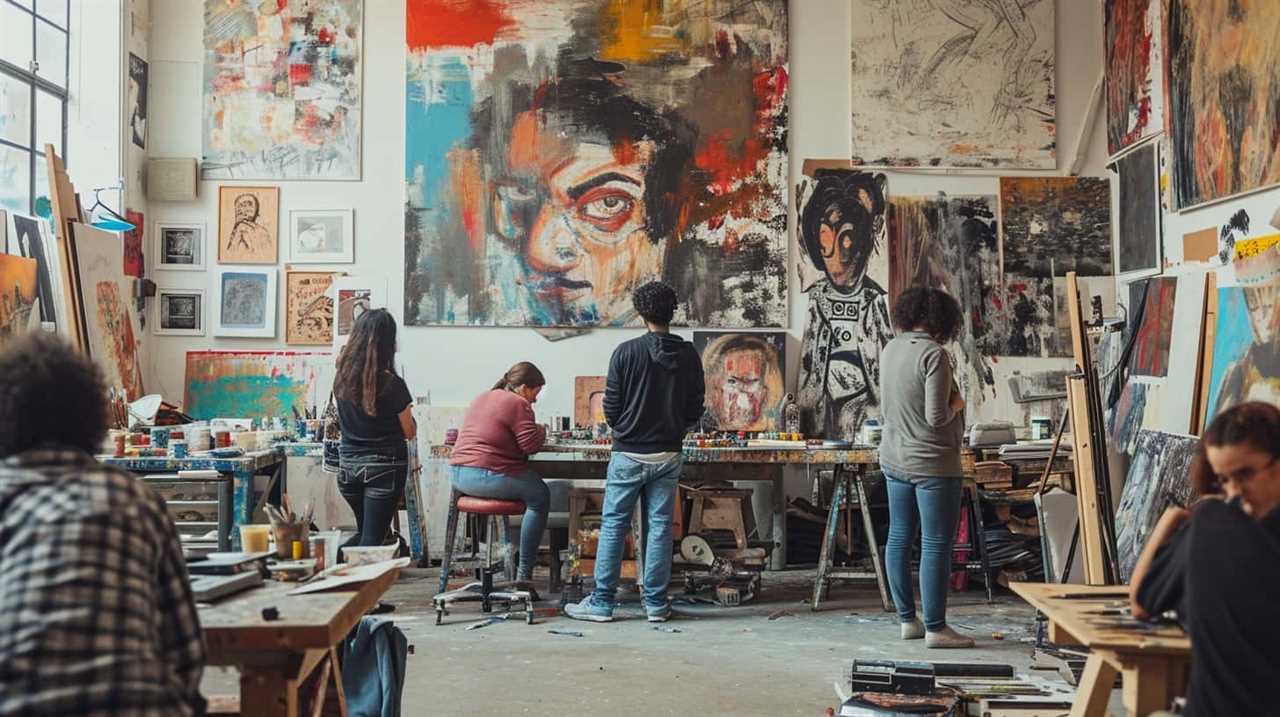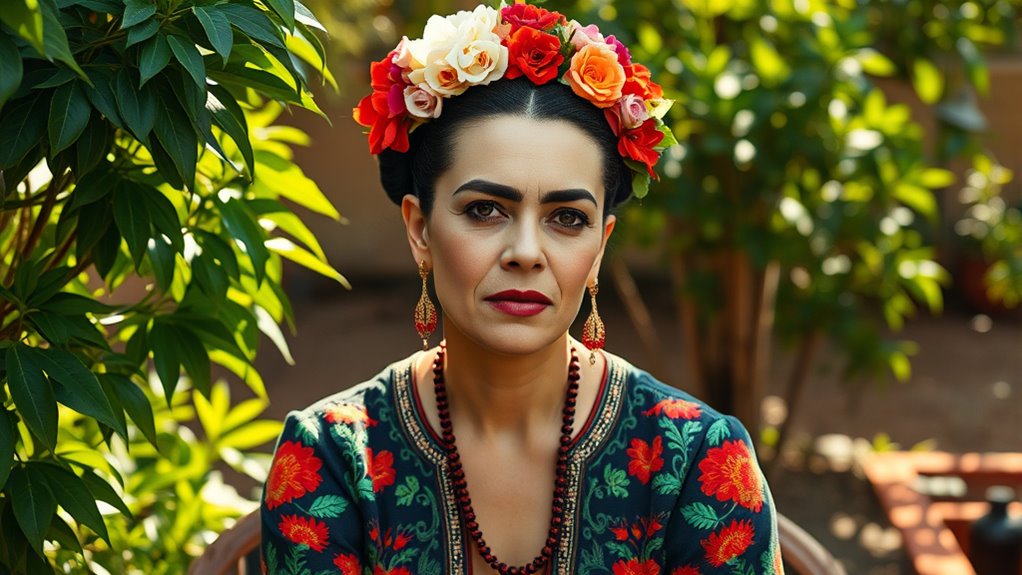

Frida Kahlo believed that as long as she could paint, she could find happiness and purpose. Her vibrant self-portraits show how she used art to transform pain and express her true self. Despite physical struggles, she refused to stop creating, viewing painting as an essential part of her life and identity. Her dedication to art kept her resilient and joyful. If you keep exploring, you’ll uncover how her work continues to inspire many today.
Key Takeaways
- Frida Kahlo expressed joy in life through her passionate commitment to painting despite physical and emotional pain.
- Her art served as a vital outlet for her resilience, allowing her to find happiness in creative expression.
- Kahlo’s self-portraits reflect a celebration of life, cultural pride, and personal strength amid suffering.
- She viewed painting as a necessary act of survival and a source of purpose and fulfillment.
- Her legacy demonstrates that art can be a powerful tool for embracing life, even in adversity.
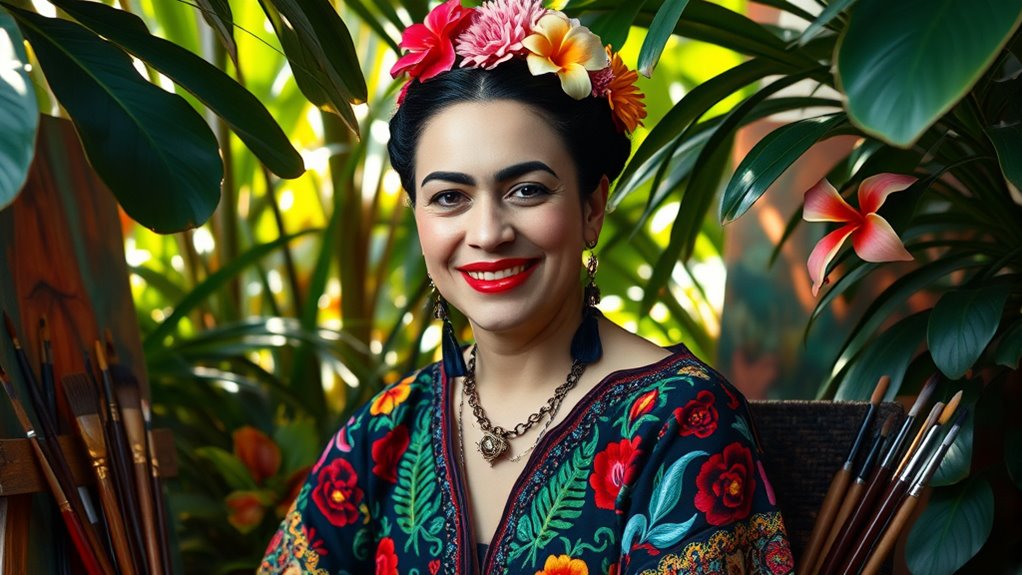
Frida Kahlo was a Mexican painter whose bold, vivid self-portraits have made her one of the most influential artists of the 20th century. When you look at her work, you immediately notice how her self-portraits aren’t just simple depictions of her face—they’re powerful expressions of her identity, pain, and resilience. She used her art as a mirror to her inner world, blending personal suffering with her rich Mexican culture. Her self-portraits often incorporate traditional Mexican clothing, vibrant colors, and symbolic elements rooted in indigenous traditions, making her a visual ambassador for Mexican culture. Through her art, you see her pride in her heritage, her roots woven into every brushstroke, and her desire to honor her origins. Her self-portraits are more than just images; they’re a celebration of her cultural identity and a statement of her individuality.
As you explore Kahlo’s self-portraits, you realize how her personal experiences shaped her art. She endured physical pain from a young age, including a severe bus accident that left her with lifelong injuries. Despite this, she refused to let her suffering silence her creativity. Instead, she transformed her pain into powerful visual stories that resonate across generations. Her self-portraits aren’t just representations of her appearance—they’re a raw, honest reflection of her emotional and physical struggles. You can see her vulnerability, her defiance, and her unyielding spirit in every work. Kahlo’s ability to confront her pain openly in her art is inspiring, encouraging you to embrace your own struggles and find strength in vulnerability. Additionally, her use of color accuracy and vibrant palettes further amplifies the emotional intensity of her paintings.
Kahlo’s unique approach to self-portraiture pushes boundaries, blending surrealism, symbolism, and Mexican folk art. She often incorporated elements like monkeys, flowers, and skulls, which carry cultural significance and deepen the storytelling in her artwork. These symbols connect her personal life with her cultural roots, creating a dialogue between her internal world and her external environment. Her self-portraits aren’t just about her appearance; they’re layered narratives that invite you to interpret her emotional landscape through the lens of Mexican traditions. Her unwavering commitment to expressing her truth, rooted in her cultural identity, continues to influence artists and viewers today. When you study her self-portraits, you see a woman who refused to be confined by societal expectations, choosing instead to celebrate her individuality and heritage with boldness and authenticity.

BIGASUO Digital Picture Frame, 10.1" Frameo Digital Frame WiFi with 32GB Memory, 1280x800 IPS Touch Screen, Send Photos/Videos from Your Phone Anywhere, Photo Gifts for Parents and Grandparents
[Frameo Digital Frame WiFi] Trusted by millions of users worldwide, Frameo offers a secure and private way to...
As an affiliate, we earn on qualifying purchases.
Frequently Asked Questions
What Inspired Frida Kahlo’s Unique Artistic Style?
Your unique artistic style is inspired by a vibrant color palette and rich cultural influences. Kahlo’s bold use of colors reflects Mexican traditions and personal emotions. She incorporates symbols and imagery from her heritage, blending indigenous motifs with surreal elements. This fusion creates a distinctive, emotionally charged visual language that captures her identity, pain, and resilience. Your appreciation for her work recognizes how these cultural and color choices shape her powerful, unforgettable art.
How Did Kahlo’s Physical Disabilities Influence Her Work?
Did you know Kahlo suffered over 30 medical operations? Her physical disabilities deeply shaped her work, serving as powerful symbols of disability and identity. She often used her pain to express emotional and physical struggles, turning her trauma into vivid symbolism. Her art celebrates resilience, showing how physical pain can fuel creativity. You can see her disabilities not as limitations but as integral to her unique artistic voice and personal story.
What Were Kahlo’s Favorite Themes and Motifs?
You’ll notice Kahlo’s favorite themes and motifs include symbolic self-portraits and Mexican cultural motifs. She uses self-portraits to explore her identity and emotional pain, often incorporating vibrant colors and personal symbols. Mexican motifs, like pre-Hispanic art and traditional clothing, reflect her pride in her heritage. These elements create a rich, deeply personal visual language that connects her life experiences with her cultural roots, making her work uniquely powerful.
Did Kahlo Have Any Significant Relationships That Impacted Her Art?
Romantic partnerships deeply shaped Kahlo’s art, revealing raw, real reflections of her emotional connections. Her tumultuous relationship with Diego Rivera inspired passionate paintings filled with love, longing, and loss. You can see how her emotional entanglements fueled her creativity, blending personal pain with powerful imagery. These relationships weren’t just romantic; they were revolutionary, fueling her artistic fire and forging her unique, unforgettable visual voice.
How Has Kahlo’s Legacy Influenced Modern Artists?
You can see Kahlo’s legacy shaping modern artists through her powerful cultural influence and embrace of feminist themes. Her bold self-portraits inspire you to challenge societal norms, explore identity, and express vulnerability. Many contemporary artists draw on her raw honesty and Mexican heritage, making her a symbol of resilience and empowerment. Her work encourages you to push creative boundaries and advocate for social and gender equality through art.

Digital Picture Frame, 15.6 Inch Large Frameo Digital Photo Frame WiFi, 32GB, 1920 * 1080 IPS HD Touch Screen, Tabletop&Wall-Mounted, Share Picture Video, Birthday, Wedding, for Mom
Instant Share via Frameo APP; Connect your frame to WIFI, and share photos and videos(Max.15s) quickly via a...
As an affiliate, we earn on qualifying purchases.
Conclusion
So, if you’re ever feeling down, just remember Frida Kahlo’s secret to happiness: as long as she can paint, she’s alive. Who needs fame, fortune, or even good health when you’ve got a brush and a fiery spirit? Take a page from her book—ditch the drama and pick up a paintbrush. After all, life’s too short not to create your own colorful chaos. Paint on, and stay wonderfully alive.

Digital Picture Frame, 10.1'' Frameo Digital Frame Wifi, 32GB Memory, 1280*800 HD Touch Screen Digital Photo Frame, Wall Mountable, Auto-Rotate, Share Instantly, Wedding, Birthday Gifts for Women, Mom
Instant Share via Frameo APP; Connect your digital picture frame to WiFi and instantly share photos via Frameo...
As an affiliate, we earn on qualifying purchases.

32GB FRAMEO 10.1 Inch Smart WiFi Digital Photo Frame 1280x800 IPS LCD Touch Screen, Auto-Rotate Portrait and Landscape, Built in 32GB Memory, Share Moments Instantly via Frameo App from Anywhere
【SHARE PHOTOS AND VIDEO PRIVATELY, SAFELY】 Send photos or small videos (Max.15 seconds) directly to FRAMEO APP from...
As an affiliate, we earn on qualifying purchases.