Claude Monet’s obsession with flowers shaped his entire artistic style. You’ll see his focus on capturing their fleeting beauty through vibrant colors and loose brushstrokes. His impressionist techniques highlight light, movement, and emotion, making flowers symbols of renewal and ephemeral moments. His series of water lilies and floral paintings reflect this love, blending natural scenes with artistic interpretation. If you keep exploring, you’ll discover how these vibrant blooms reflect Monet’s deeper fascination with nature’s transient beauty.
Key Takeaways
- Monet’s quote highlights his lifelong obsession with flowers as essential subjects in his artwork.
- Flowers symbolize renewal, vitality, and fleeting beauty, central themes in Monet’s impressionist style.
- His paintings emphasize light, color, and movement, capturing flowers’ transient and vibrant qualities.
- Water lilies, a recurring motif, blur the boundary between nature and artistic interpretation.
- Monet’s evolving techniques focus on sensory effects, emphasizing color and light over detailed realism.
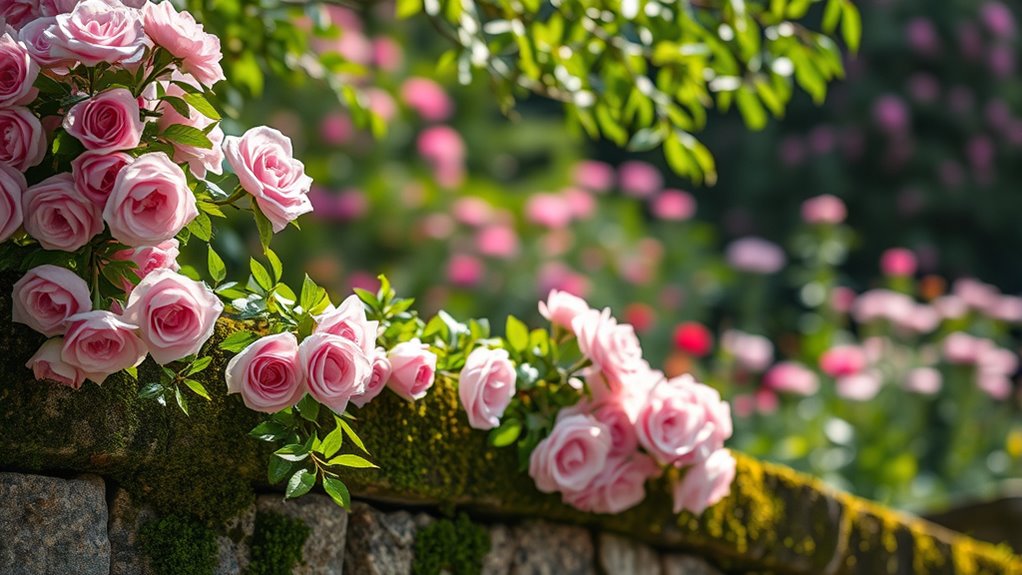
Claude Monet’s lifelong obsession with flowers is vividly captured in his poignant quote, “I must have flowers, always and always.” As you explore his works, you’ll see how flowers became more than just subjects—they were indispensable to his artistic vision and emotional expression. Monet’s fascination with capturing the fleeting beauty of nature led him to develop unique Impressionist techniques that emphasize light, color, and movement. Instead of focusing on precise details, he applied loose brushstrokes and vibrant hues, allowing the viewer to experience the vibrancy and transience of flowers in bloom. This approach transforms his floral paintings into dynamic impressions of nature’s ever-changing moods, inviting you to see flowers not just as static objects but as living entities bursting with life.
In Monet’s hands, flowers also serve as powerful symbols, embodying themes of renewal, vitality, and the passage of time. His paintings often highlight the delicate fragility and vibrant energy of blossoms, reflecting his deep emotional connection to nature. You’ll notice how he subtly uses floral symbolism to evoke feelings of hope or fleeting beauty, capturing moments that seem suspended in time. These floral motifs are not merely decorative but serve as a conduit for expressing his fascination with nature’s ephemeral qualities. Monet’s choice of flowers—such as water lilies, roses, and irises—further emphasizes their symbolic weight, each type carrying its own emotional or spiritual significance. His water lily pond series, for example, blurs the line between the natural world and artistic interpretation, emphasizing the harmony between landscape and emotion. Additionally, his innovative use of plein air painting allowed him to capture flowers in their natural setting, adding authenticity to his work.
Throughout his career, Monet’s impressionist techniques evolve, yet his focus on flowers remains essential. He experiments with light reflections, shadow play, and color contrasts to bring flowers to life on canvas. You’ll notice how his brushwork captures the shimmering effects of sunlight on petals and leaves, immersing you in scenes that feel both immediate and timeless. Monet’s floral paintings are a testament to his mastery of impressionism, where the sensory experience of flowers—color, texture, and light—take precedence over realistic detail. By doing so, he invites you into a world where flowers symbolize more than their physical beauty—they embody the fleeting, precious moments of life and artistic inspiration.
Frequently Asked Questions
What Inspired Monet’s Obsession With Flowers?
You’re inspired by flowers because they symbolize beauty and renewal, which deeply resonate with you. Monet’s obsession stems from his fascination with flower symbolism and the desire for botanical accuracy. You notice how he captures the fleeting effects of light and color on blooms, making them come alive on canvas. His dedication to depicting flowers authentically fuels your admiration, encouraging you to appreciate nature’s delicate, vibrant details in your own observations.
How Did Monet’s Floral Paintings Influence Modern Art?
Your appreciation for Monet’s floral paintings reveals how they shaped modern art by emphasizing Impressionist techniques like loose brushwork and capturing fleeting moments. His use of color symbolism invites you to see flowers as more than just objects—they evoke emotions and seasons. Monet’s focus on light and color influences contemporary artists to experiment with perception, blending reality and imagination, inspiring new ways to express nature’s beauty in modern art.
Are Monet’s Flower Paintings Accurate Representations of Specific Gardens?
Did you know Monet painted over 2500 works, showcasing his dedication? His flower paintings aren’t precise botanical representations but are inspired by specific garden influences. Monet captures the essence and atmosphere of gardens rather than exact botanical accuracy, emphasizing light and color. This approach invites viewers to experience the mood of a garden rather than its precise details, highlighting his unique vision and influence on modern art.
What Techniques Did Monet Use to Create His Floral Masterpieces?
You see Monet create his floral masterpieces using rapid brushstroke textures that capture the lively essence of flowers. He employs color blending techniques, layering vibrant hues to produce depth and movement. His brushstrokes are often loose and expressive, which helps convey the fleeting beauty of flowers in bloom. This approach allows you to feel the vibrancy and natural spontaneity of the gardens Monet loved to paint.
Did Monet’s Flower Paintings Have Any Symbolic Meanings?
You might think Monet’s flower paintings are purely aesthetic, but some believe they hold symbolic meanings through floral symbolism. While Monet primarily aimed to capture natural beauty and fleeting moments, certain flowers he depicted—like lilies—could symbolize purity or renewal. Investigating this theory shows that, although not explicitly symbolic, his choice of flowers often aligns with deeper themes, adding layers of interpretation to his vibrant floral masterpieces.
Conclusion
Your journey through Monet’s world reveals a man whose love for flowers blooms endlessly, like a garden that never withers. His passion paints a vivid tapestry of colors and life, reminding you that beauty is a constant renewal, forever in bloom. As you step back, picture his studio as an eternal spring, where flowers grow in your mind’s eye—an everlasting demonstration to his obsession and devotion. Monet’s flowers are forever, just like your appreciation for his art.