Andy Warhol’s quote, “Don’t think about making art,” encourages you to embrace spontaneity and accept that art can come from everyday moments and mass production. He blurred the lines between commercial images and fine art, emphasizing that art reflects society’s obsession with fame, consumerism, and media. Warhol challenged traditional notions of creativity, showing that repetition, popular culture, and technology can be powerful artistic tools. If you keep exploring, you’ll discover how his ideas reshaped the very meaning of art in society.
Key Takeaways
- Warhol emphasized that art can be spontaneous, encouraging creators to focus on expression over perfection or traditional craftsmanship.
- His approach suggested that making art is accessible to everyone, removing the need for formal training or technical skill.
- Warhol believed that the act of creating and engaging with popular culture is a form of artistic expression.
- He promoted the idea that art is about ideas and societal commentary, not just aesthetics or technical execution.
- Warhol’s philosophy challenges artists to let go of overthinking and embrace intuition and consumer culture in their work.
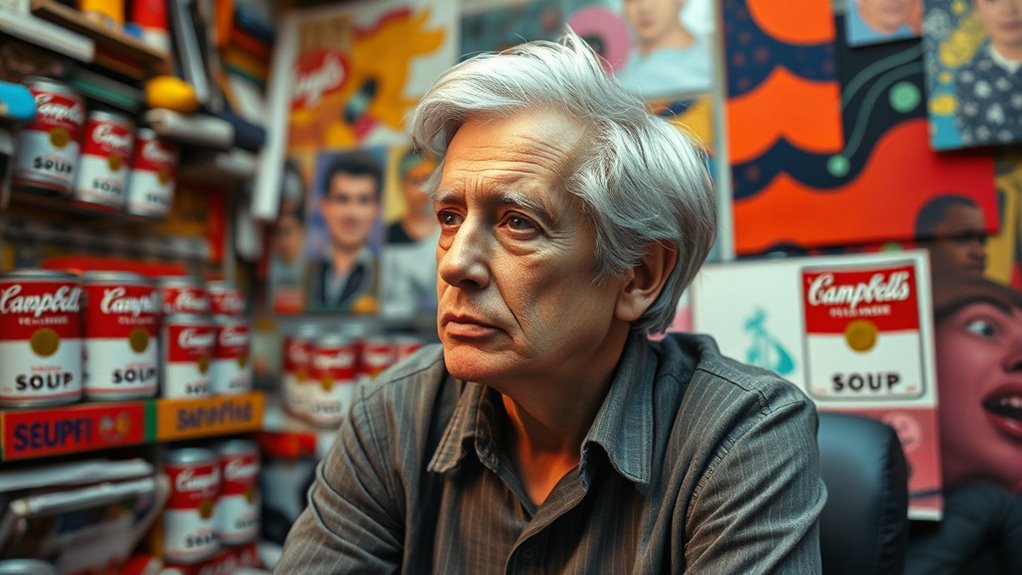
Have you ever wondered how one artist could redefine American pop culture? Andy Warhol did just that through his groundbreaking approach to art and his ability to blur the lines between commercial imagery and fine art. His work is a testament to conceptual innovation—challenging traditional notions of what art should be and how it should be created. Warhol saw the potential in everyday objects and celebrity images, transforming them into symbols that spoke to the mass production and consumerism of his time. Instead of approaching art as a handcrafted endeavor, he embraced mechanical reproduction, using silkscreen printing to mass-produce images. This technique wasn’t just a stylistic choice; it was a conceptual statement about the nature of art in a society obsessed with celebrity culture. Warhol understood that in a world of instant fame and media saturation, the line between the famous and the mundane was dissolving. By turning celebrities like Marilyn Monroe, Elvis Presley, and Campbell’s Soup cans into art, he elevated popular culture to the same level as traditional fine art, forcing viewers to reconsider what was worthy of admiration. His use of performance tuning techniques in his process exemplifies how technological methods can redefine artistic boundaries.
In Warhol’s universe, celebrity culture isn’t just a backdrop; it’s a central theme. He recognized that in the 20th century, fame had become a spectacle, a product to be consumed and replicated. His art captures this obsession, making celebrities into icons that can be endlessly reproduced, echoing the mass media’s influence. Warhol’s Campbell’s Soup cans and Marilyn Monroe portraits aren’t just images; they’re commentary on the commodification of fame and the pervasive reach of consumerism. His work invites you to question how much of what we see in the media is genuine and how much is manufactured for mass consumption. With each piece, Warhol challenges you to think about the relationship between art, commerce, and celebrity, demonstrating that art can be as much about ideas and societal critique as it is about aesthetics.
What makes Warhol’s approach so compelling is his refusal to think about art as something separate from everyday life. He believed that art should be accessible, that it should reflect the culture around us rather than exist in a secluded, elite sphere. By doing so, he created a new paradigm—one where art and celebrity culture are intertwined, each influencing and shaping the other. Warhol’s work isn’t just about producing striking images; it’s about questioning how society values fame, beauty, and consumer goods. His influence continues to resonate today, reminding us that art can be a powerful lens for understanding the complexities of modern culture.
Frequently Asked Questions
What Inspired Warhol’s Unique Approach to Art and Celebrity Culture?
You’re inspired by pop art origins and celebrity influence, which shaped Warhol’s unique approach. He saw everyday objects and celebrities as art, blurring boundaries between high and low culture. Warhol’s fascination with fame and mass production led him to create iconic images that reflect society’s obsession with celebrity. His work challenges traditional ideas of art, making you think differently about consumer culture and the power of fame.
How Did Warhol’s Personality Influence His Artistic Collaborations?
Your personality is like a magnet, drawing others into his creative orbit. Warhol’s outgoing, enigmatic traits shaped his collaborative dynamics, making him both an inspiring leader and a flexible partner. His openness and curiosity fostered innovative ideas, encouraging artists and assistants to experiment freely. This blend of traits created a vibrant, creative environment where ideas flowed effortlessly, ultimately amplifying his influence and helping him redefine art and celebrity culture.
What Was Warhol’s Most Controversial Artwork and Why?
Your most controversial Warhol artwork is the “Campbell’s Soup Cans,” because it challenged traditional art by blurring lines between celebrity obsession and commercialism in art. Instead of creating unique pieces, he mass-produced these images, questioning the value of originality. This sparked debates about artistry and consumer culture, making it a provocative statement on society’s obsession with fame and commercial products, and cementing Warhol’s role in pop art history.
Did Warhol Have Any Significant Influences From Other Artists?
You’ll find that Warhol was heavily influenced by artists in avant-garde circles and through artistic mentorships. These connections introduced him to experimental techniques and bold ideas, shaping his unique style. He admired figures like Marcel Duchamp, whose conceptual approach inspired Warhol’s focus on ideas over traditional craftsmanship. This exposure helped him push boundaries and redefine art, making him a pivotal figure in modern art history.
How Did Warhol’s Work Impact Contemporary Art Movements?
Imagine a world where consumer culture collides with art, and you see Warhol’s influence. His pop art challenges traditional ideas, blending commercial imagery with fine art. You witness contemporary movements embracing bold visuals, mass production, and irony, all inspired by his approach. His work sparks new ways to interpret everyday objects, making art accessible and relevant. Warhol’s impact reshapes how you experience and think about art today.
Conclusion
You step back and see the canvas come alive—bright colors, bold shapes, and familiar faces blending into a vibrant chaos. Warhol’s world invites you to forget traditional rules and just create. Feel the pulse of pop culture pulsing through each stroke, transforming everyday objects into art. In this moment, you realize making art isn’t about perfection, but about capturing life’s fleeting, colorful essence. Now, go ahead—dare to make your own bold mark.