
Frida Kahlo painted self-portraits because she experienced deep loneliness and use her art to create a connection with others. Her vivid symbols, like thorn necklaces and lush foliage, reflect her pain, resilience, and search for identity. Through her paintings, she challenges societal expectations and explores her cultural roots. If you want to see how she transforms solitude into powerful imagery that speaks of strength and vulnerability, there’s more to discover in her work.

Get the little things that make your day delivered free with Prime
- Fast, free delivery on millions of items
- Prime Video, Amazon Music and more included
- Member-only deals all year
Key Takeaways
- Kahlo’s self-portraits express her feelings of loneliness and internal struggles through symbolic imagery.
- Painting herself allows Kahlo to explore and assert her identity amidst emotional isolation.
- Self-portraits serve as a personal refuge, transforming solitude into meaningful art.
- Symbols like thorn necklaces or solitary animals highlight her sense of loneliness and resilience.
- Kahlo’s focus on self-portraits emphasizes her desire for self-understanding and connection amid isolation.
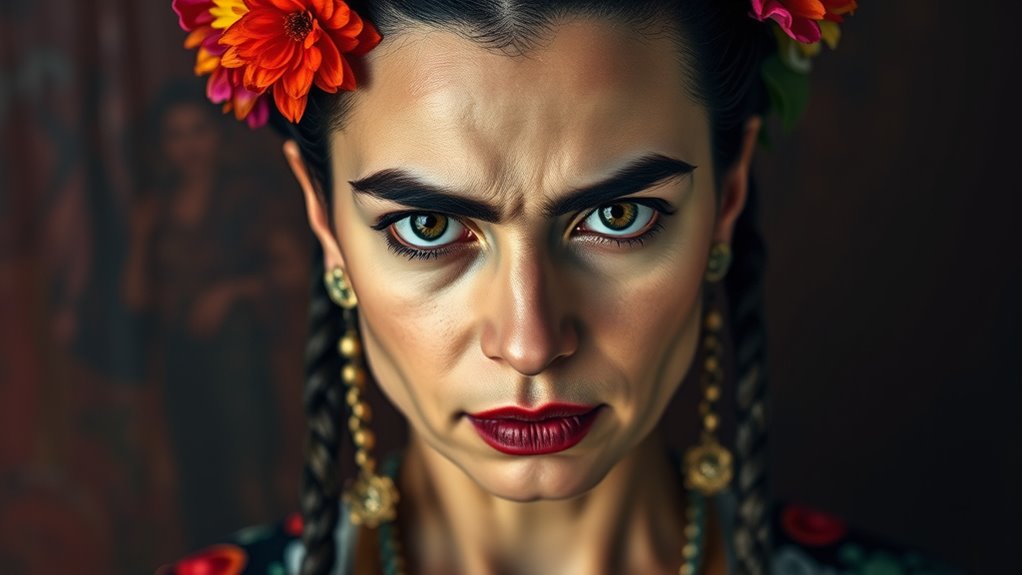
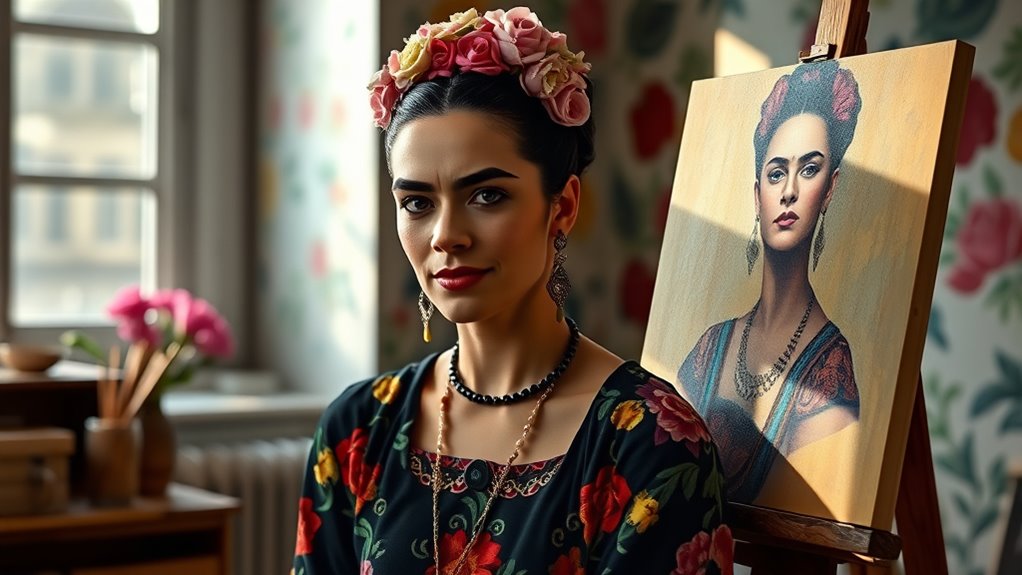
Frida Kahlo’s self-portraits are powerful visual expressions that reveal her inner world and resilience. When you look at her paintings, you’re not just seeing her likeness—you’re witnessing symbolic elements that probe deep into her emotions, struggles, and identity. Kahlo masterfully uses symbolism in art to communicate complex themes, often blending personal pain with universal human experiences. Her self-portraits serve as intimate diaries, where each detail carries meaning, from the thorn necklace symbolizing pain and suffering to the lush foliage representing fertility and growth. Through these symbols, she transforms her personal hardships into art that speaks to resilience and endurance. Additionally, her innovative use of cultural narratives promotes a deeper understanding of her heritage and personal story. You might notice how she explores gender identity in her work, challenging traditional notions of femininity and masculinity. Kahlo’s paintings often depict her in ways that defy conventional gender roles, showcasing her as both delicate and strong, vulnerable and defiant. She embraces her gender fluidity by presenting herself in ways that blur societal expectations—wearing traditional Mexican clothing, yet positioning herself as an independent, fierce individual. Her self-portraits become a platform for gender identity exploration, where she redefines what it means to be a woman, a Mexican, and an artist. This exploration isn’t just about self-expression; it’s a statement on authentic identity and breaking free from societal constraints. When you observe her work, you see how she intertwines personal symbolism with broader cultural symbols, making her self-portraits resonate on multiple levels. The recurring imagery of monkeys, skulls, and flowers isn’t accidental—it’s a language she uses to speak about her pain, her heritage, and her evolving sense of self. Her bold approach to gender identity exploration was groundbreaking at the time, inspiring others to question rigid gender norms and embrace their true selves. Kahlo’s art becomes a mirror, reflecting her internal struggles and her courage to stand firm in her identity despite societal pressures. Ultimately, her self-portraits invite you to look beyond surface appearances. They challenge you to interpret the layers of meaning woven into her images—her pain, her joy, her defiance, and her resilience. Kahlo’s mastery of symbolism in art and her fearless exploration of gender identity make her self-portraits enduring symbols of authenticity and strength. Through her art, you’re reminded that embracing your true self, no matter how complex or painful, can be a powerful act of resilience.
Frida Kahlo self-portrait wall art
As an affiliate, we earn on qualifying purchases.
As an affiliate, we earn on qualifying purchases.
Frequently Asked Questions
What Inspired Frida Kahlo’s Unique Artistic Style?
You’re inspired by Frida Kahlo’s unique artistic style because of her deep connection to her Mexican heritage and surrealist influence. Her vibrant colors, symbolic imagery, and surreal elements reflect her cultural roots and personal struggles. This blend of tradition and dream-like visuals creates a distinctive style that captures her emotional intensity. Her art is a powerful expression of identity, pain, and resilience, making her work truly unforgettable and original.
How Did Kahlo’s Personal Life Influence Her Self-Portraits?
Your personal struggles deeply influence Kahlo’s self-portraits, as she uses emotional expression to convey her pain and resilience. You see her physical and emotional scars vividly reflected in her work, creating raw, honest images. Her experiences with health issues, heartbreak, and trauma shape her art, making her self-portraits powerful depictions of vulnerability. Through her personal life, she transforms suffering into compelling visual stories that resonate universally.
Did Kahlo’s Health Issues Affect Her Artistic Choices?
Like a storm shaping the landscape, Kahlo’s health complications deeply influenced her artistic expression. Her chronic pain and health issues became central themes, often reflected in her self-portraits. You can see her resilience and vulnerability in her work, as she used art to process her struggles. Her persistent health challenges pushed her to explore raw emotion and personal symbolism, making her art a powerful affirmation to her endurance.
What Symbolism Is Commonly Found in Kahlo’s Self-Portraits?
You’ll notice that Kahlo’s self-portraits often feature symbolic motifs like monkeys, thorns, and tears, representing her emotional pain and resilience. She also uses cultural references, such as Mexican folk art and traditional clothing, to express her identity and heritage. These symbols help convey complex feelings and stories, making her work deeply personal and universally relatable. Her use of symbolism invites you to explore her inner world.
How Has Kahlo’s Work Impacted Modern Art and Culture?
Imagine a world where your gender expression and political activism inspire generations—Kahlo’s work does just that. Her fearless self-portraits challenge gender roles and advocate for social change, transforming modern art and culture. You see her influence in bold, personal narratives, empowering others to embrace authenticity. Kahlo’s legacy fuels ongoing conversations about identity and activism, making her a timeless icon whose impact continues to resonate worldwide.
symbolic art prints inspired by Frida Kahlo
As an affiliate, we earn on qualifying purchases.
As an affiliate, we earn on qualifying purchases.
Conclusion
Imagine stepping into Kahlo’s world, where her self-portraits are mirrors in a vast forest. Each brushstroke is a path you walk alone, yet they guide you through her inner landscape. Her art becomes a lantern in the darkness, illuminating her solitude as a place of strength and self-discovery. Embrace her journey, and you’ll see that sometimes, the bravest thing you can do is paint your own story, even in the quietest moments.
As an affiliate, we earn on qualifying purchases.
art supplies for self-portrait painting
As an affiliate, we earn on qualifying purchases.
As an affiliate, we earn on qualifying purchases.
Halloween Picks
halloween
As an affiliate, we earn on qualifying purchases.