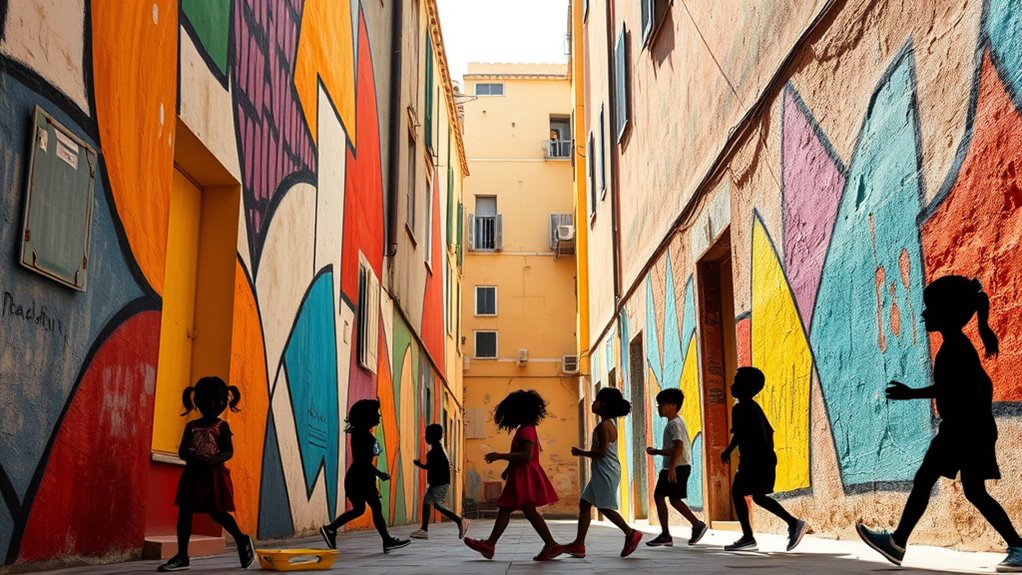

Picasso believed that every child is born with an innate artistic spirit, filled with curiosity and uninhibited creativity. As we grow, societal pressures often diminish this natural talent, but it can be rediscovered by reconnecting with that childhood innocence. Embracing spontaneous expression, imperfections, and trusting your intuition keeps your creativity vibrant and authentic. If you look deeper, you’ll learn how nurturing that childhood perspective can fuel your artistic journey and lifelong potential.
Key Takeaways
- Picasso believed all children possess innate artistic creativity that can be rediscovered and nurtured at any age.
- Childhood art reflects pure, spontaneous expression driven by curiosity, not technical skill.
- Societal pressures often diminish natural artistic innocence, but it can be reclaimed through conscious effort.
- Emphasizing childhood creativity encourages authentic, original art rooted in emotional honesty.
- Reconnecting with childhood innocence fosters continuous growth, spontaneity, and genuine artistic expression throughout life.

Everyone starts life with a natural ability to create, and Picasso believed that every child embodies this artistic spirit. From the moment you’re born, you possess a kind of artistic innocence—an uninhibited desire to explore shapes, colors, and forms without fear of judgment. This childhood creativity flows freely, driven by curiosity rather than technique or perfection. As a child, you don’t worry about rules or standards; you simply express what’s in your mind and heart. This pure, unfiltered approach is what Picasso celebrated as the essence of true artistry.
Everyone begins life with pure creative potential, unburdened by rules or judgment.
During childhood, your imagination runs wild, and your hands translate that imagination into drawings, paintings, and sculptures. You see the world differently, often transforming everyday objects into imaginative visions. This freedom allows you to experiment boldly, mixing colors without concern for harmony or realism. Your art is honest, spontaneous, and full of emotion—qualities that often get lost as you grow older and become more conscious of expectations. Picasso saw this as a loss of innocence, where the natural artistic instinct begins to fade under societal pressures, but he also believed it can be rediscovered.
You might recall how, as a child, you’d draw for hours, creating worlds that only you could see. Your childhood creativity isn’t about technical mastery; it’s about expressing your inner world with authenticity. Picasso argued that this innocence is a crucial part of your artistic potential. It’s the reason children often produce art that feels genuine and original. When you tap into that childhood creativity again, you reconnect with a fundamental part of yourself—a part that’s unencumbered by fear of failure or the need for approval.
Furthermore, nurturing this childlike creativity can help you develop a more authentic and spontaneous artistic style throughout your life. This early artistic innocence is a powerful force, reminding you that everyone has the ability to create without limitations. It encourages you to approach art—and life—with openness and spontaneity. Picasso believed that nurturing this natural instinct, even as you grow older, is essential to maintaining your creativity. It’s about embracing imperfections, experimenting freely, and trusting your intuition. When you do that, you honor your childhood creativity, allowing it to flourish again. Recognizing that every child is an artist means understanding that your own artistic spirit is alive and waiting to be reignited, no matter what age you are.

iBayam Art Supplies, 149-Pack Drawing Kit Painting Art Set Art Kits Gifts Box, Arts and Crafts for Kids Girls Boys Adult Artist, with Coloring Book, Crayons, Pastels, Pencils, Watercolor Pens & Cakes
【All-in-one Art Set】 Our drawing art set includes 33 watercolor pens, 12 colored pencils, 12 oil pastels, 12…
As an affiliate, we earn on qualifying purchases.
As an affiliate, we earn on qualifying purchases.
Frequently Asked Questions
How Did Picasso’s Childhood Influence His Artistic Style?
Your childhood creativity and formative artistic experiences deeply shaped Picasso’s style. Growing up, he was encouraged to explore art, which fostered his natural talent and experimental spirit. These early adventures allowed him to develop a unique approach, blending different techniques and perspectives. As a result, his childhood influences helped him break traditional rules and innovate, making his art revolutionary and continually evolving over time.
What Materials Did Picasso Commonly Use in His Early Works?
You notice that Picasso often used materials like oil paints and charcoal in his early works, creating vibrant, colorful palettes that capture emotion. He also experimented with clay sculptures, showcasing his versatility and love for different textures. These materials allowed him to explore form and color freely, reflecting his childhood curiosity and playful approach to art, which remained central throughout his career.
How Did Picasso’s View of Childhood Evolve Over His Career?
You might think Picasso’s view of childhood stayed innocent, but it actually evolved, revealing a complex perspective on artistic innocence and childhood perception. Over his career, he recognized that childhood isn’t always pure or simple. Ironically, as he matured, he appreciated how childhood shapes creativity—sometimes messy, often raw, and full of surprises. His work reflects this shift, showing that childhood is a crucial, evolving part of artistic expression.
Did Picasso Create Art Specifically for Children?
Yes, Picasso created art specifically inspired by childhood, reflecting his belief that every child is an artist. You can see this in his playful, vibrant works that capture childhood innocence and expression. His childhood inspiration fueled his artistic development, encouraging experimentation and breaking traditional rules. By embracing childlike wonder and spontaneity, Picasso’s art invites you to see the world through fresh, uninhibited eyes, fostering creativity and free expression.
What Are Some Misconceptions About Picasso’s Approach to Childhood and Art?
You might think Picasso believed children were miniature adults, but he challenged juvenile stereotypes by showcasing their raw, unfiltered creativity. He didn’t see childhood as a stage of limited artistic maturity but as a vibrant, spontaneous force. Some assume he idealized childish art, yet he used it to explore profound, complex ideas. His approach celebrates unrefined expression, reminding you that true artistry often stems from pure, instinctive inspiration.

LEYEDZ Acrylic Paint Set for Kids & Adults, 41 PCS Paint Kit, Art Painting Supplies Kit with 24 Acrylic Paints, 8 Paint Brushes, 5 Canvas Panels
【Complete Painting Set】—This all-in-one acrylic paint set includes 24 vibrant acrylic paints, 8 premium brushes, 5 blank panels,…
As an affiliate, we earn on qualifying purchases.
As an affiliate, we earn on qualifying purchases.
Conclusion
So, next time you see a child’s messy scribbles, don’t dismiss them as just doodles. Remember, Picasso believed every child is an artist—yet somehow, society convinces us to unlearn that creativity. Ironically, it’s often the adults who stifle the very art that once flowed freely from children’s imaginations. So, embrace your inner child’s creativity. After all, maybe the greatest masterpieces are just waiting to be rediscovered, hidden behind a little childhood innocence.

Esweny 200PCS Vintage Scrapbooking Supplies Kit for Journaling, Junk Journal Planners Aesthetic Cottagecore Room Decor Wall Art Collage Album(Artistic)
What you will get: Our 200 pieces Scrapbooking Supplies Pack include 80*washi stickers,120*vintage printing papers.
As an affiliate, we earn on qualifying purchases.
As an affiliate, we earn on qualifying purchases.

Fuxi 9" x 12" Sketch Book, Top Spiral Bound Sketch Pad, 100 Sheets 68lb/100gsm Acid-Free Drawing Paper, Art Sketchbook for Drawing Pad for Kids Artists & Beginners Professional Art Supplies for Adults
【Premium & Tough Material】–Extremely strong toughness and durability of this sketching paper pad allows for erasing without damaging…
As an affiliate, we earn on qualifying purchases.
As an affiliate, we earn on qualifying purchases.