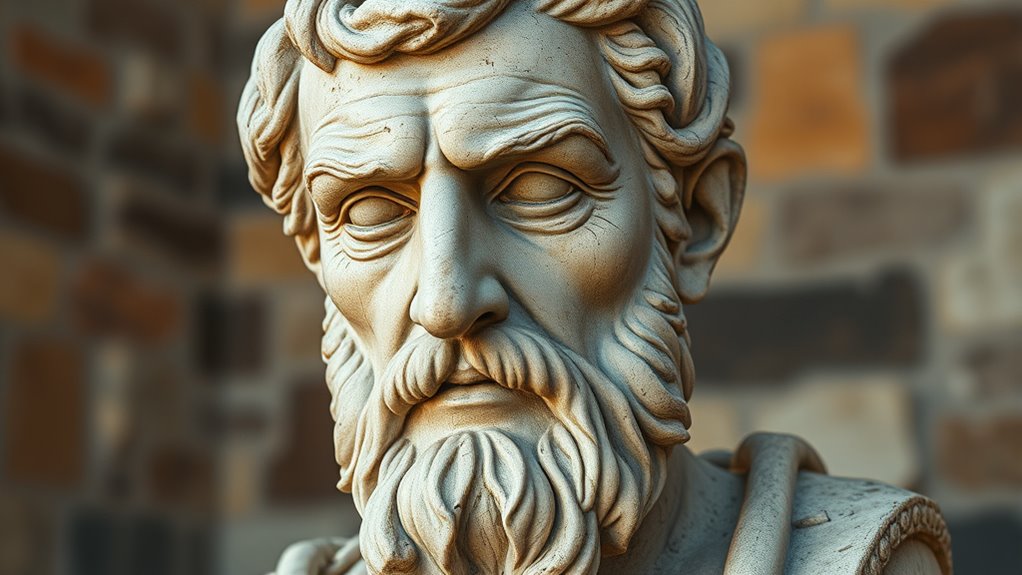

Diogenes teaches you that true happiness comes from wanting less and appreciating what you have. He believed that wanting nothing is a divine quality, while wanting little is a reflection of being similar to the gods. By controlling your desires and simplifying your life, you’ll find inner peace and freedom from dependency on material things. Embracing this mindset helps you focus on what truly matters and discover real contentment. Keep exploring to learn how this philosophy can transform your life.
Key Takeaways
- Diogenes believed true happiness comes from controlling desires, aligning with the idea that wanting little is a god-like trait.
- Wanting nothing signifies inner peace and independence from external possessions, elevating humans to a divine state.
- The philosophy emphasizes that true contentment is achieved through simplicity and mastery over insatiable desires.
- Gods are free from desires, making desirelessness a divine privilege, while humans can attain this through self-discipline.
- Living with minimal wants reflects inner strength and aligns humans closer to the divine nature of the gods.

Have you ever wondered what true contentment looks like? It’s a question that often leads us to seek more—more possessions, more achievements, more comfort. But Diogenes, the ancient Greek philosopher, suggests a different path. He believed that real happiness isn’t found in accumulation but in mastering desire itself. When you embrace material simplicity, you strip away the excess that clouds your mind and clutters your life. Instead of chasing after fleeting pleasures, you focus on what truly matters, which is often very little. Diogenes shows us that desire control is the key to freedom. The less you crave, the less you’re bound by wants that can never truly satisfy you.
Imagine living with only what you need—just enough food, shelter, and clothing to sustain you. This isn’t about deprivation but about clarity. When you don’t constantly pursue more, your mind becomes clearer and more focused. Material simplicity isn’t about renouncing everything, but about maintaining a perspective that values quality over quantity. You learn to distinguish between what you genuinely need and what society pressures you to want. As a result, your desires become more manageable, less insatiable. You realize that many of your wants are illusions, fleeting and empty in the end.
Controlling desire isn’t easy, but it’s a crucial step towards liberation. When you’re not driven by endless cravings, you can appreciate what you already have. You become less anxious about acquiring more and more, and instead, find contentment in the present moment. Diogenes exemplified this mindset by living simply in a barrel, rejecting societal norms and material excess. He demonstrated that true freedom comes from within—when your desires are minimal and well-regulated. It’s a conscious choice to prioritize inner peace over external possessions. Cultivating desire control can lead to a more fulfilling and less stressful life.

Minimalist Home Secrets: Less Stuff More Happiness: A Purposeful Home Design That Proves Less Can Be More (Minimalist Lifestyle Book 2)
As an affiliate, we earn on qualifying purchases.
As an affiliate, we earn on qualifying purchases.
Frequently Asked Questions
How Did Diogenes Influence Modern Minimalist Philosophy?
You see, Diogenes’ emphasis on ancient austerity and Cynic simplicity inspires modern minimalist philosophy. His teachings encourage you to reject material excess and focus on essential needs. By embracing a life of little desire, you learn to find contentment beyond possessions. This influence promotes intentional living, helping you prioritize values over stuff, ultimately fostering a more meaningful, uncluttered existence rooted in simplicity.
What Specific Practices Did Diogenes Use to Live Simply?
You can embrace ancient asceticism by living with only essential possessions, like Diogenes did with his simple tub and minimal clothing. He practiced philosophical simplicity by rejecting material luxuries, focusing instead on virtue and self-sufficiency. To follow his example, seek contentment with little, avoid excess, and prioritize inner fulfillment over material wealth. This approach helps you find freedom and clarity, just as Diogenes demonstrated through his intentionally simple lifestyle.
How Is Diogenes Viewed in Contemporary Philosophical Circles?
You see Diogenes still debated in contemporary philosophical circles, where his ancient reputation as a cynic influences modern thought. Scholars interpret his actions as radical honesty and rejection of materialism. Today, he’s viewed as a symbol of minimalism and authenticity, inspiring those questioning societal norms. His ideas challenge you to contemplate a simpler life, making him relevant in discussions about ethics, personal freedom, and the pursuit of true happiness.
Did Diogenes Face Any Significant Controversies During His Life?
You’d find that Diogenes stirred quite a storm, facing public disputes and societal backlash for his shameless antics and radical ideas. His provocative behavior, like living in a barrel and criticizing social norms, challenged authority and morality. These acts often made him a controversial figure, sparking outrage among the public and rulers alike. Yet, his boldness only cemented his reputation as a fearless seeker of truth.
How Can Modern Individuals Apply Diogenes’ Principles Today?
You can apply Diogenes’ principles by embracing material simplicity and spiritual detachment. Focus on reducing unnecessary possessions, which helps you find contentment beyond material wealth. Cultivate a mindset of wanting little, freeing yourself from desires that cause suffering. This way, you gain clarity and inner peace, aligning your life more closely with nature and authenticity, just like Diogenes encouraged for a more meaningful and liberated existence.

Syrinx Guided Meditation Light – Meditation Aid with Rhythmic Glow for Focus, Mindfulness Tool for Calm Down Corner, Quiet Rooms, Home or Office Use
WHAT IS IT — The Syrinx Meditation Breath Light is a rechargeable guided breathing tool that helps you…
As an affiliate, we earn on qualifying purchases.
As an affiliate, we earn on qualifying purchases.
Conclusion
Remember, wanting less isn’t about deprivation, but about freedom. You might think it limits your happiness, but actually, it lets you focus on what truly matters. By adopting Diogenes’ mindset, you gain clarity and peace, not scarcity. So, don’t let the idea of giving up desires scare you. Instead, see it as a way to open a richer, more meaningful life—where true contentment comes from wanting only what’s essential.

Bamboo Dish Brush Set, 4 Pcs Palm Wooden Dish Scrubber Brush, Dish Brushes, Durable Wood Dishes Scrub Brush, Natural Round Vegetable Cleaning Pots Pans Sink Washing Kitchen Brush by Aisuly
【4PCS Biodegradable Dish Brush】Bamboo dish brush set are truly made from organic bamboo handle, 2 PCS dark brislte…
As an affiliate, we earn on qualifying purchases.
As an affiliate, we earn on qualifying purchases.

Om Shanit Crafts Meditation Shawl, Meditation Blanket, Prayer Shawl for Men Women
FULL-BODY COVERAGE. A meditation shawl big enough to cocoon your entire body, becoming your personal oasis of peace…
As an affiliate, we earn on qualifying purchases.
As an affiliate, we earn on qualifying purchases.