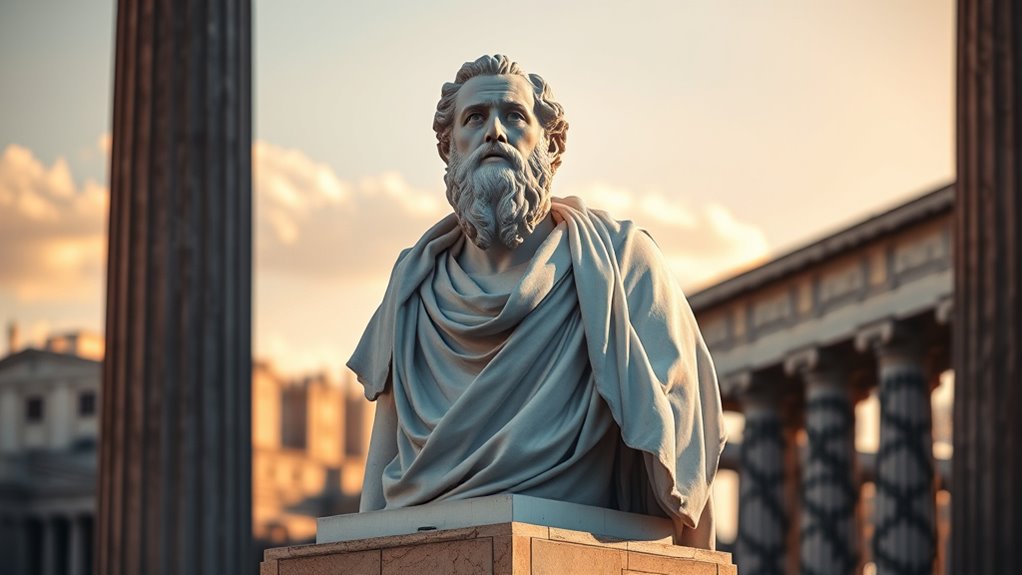

In Plato’s view, your true character is revealed by how you wield power. If you lead with virtue, wisdom, and responsibility, you serve justice and promote the common good. But if you let greed or ambition take over, you risk tyranny and moral decay. The way you handle power reflects your integrity and moral responsibility. continue exploring how Plato’s ideas can inspire ethical leadership and the true measure of character.

Get the little things that make your day delivered free with Prime
- Fast, free delivery on millions of items
- Prime Video, Amazon Music and more included
- Member-only deals all year
Key Takeaways
- True measure of a person’s character lies in their responsible and virtuous use of power.
- Ethical leadership requires wisdom, moral responsibility, and a focus on justice over personal gain.
- Power should be exercised with accountability, serving the common good rather than self-interest.
- Responsible use of power reflects moral integrity and a commitment to societal harmony.
- Unchecked or selfish use of power indicates moral weakness, not strength or true leadership.
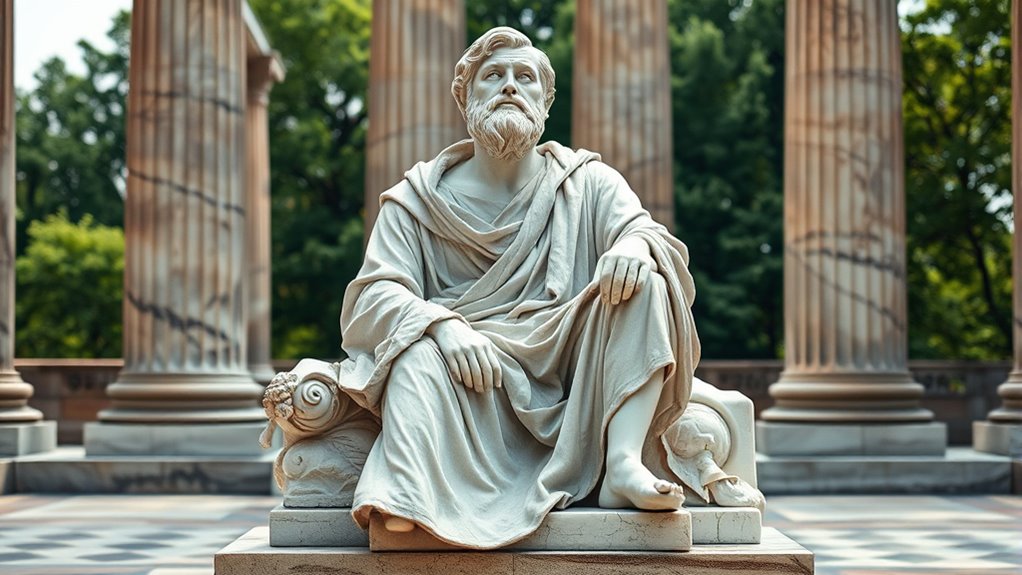
Have you ever wondered how a philosopher like Plato views power? If you’re curious about leadership and its ethical dimensions, understanding Plato’s perspective can offer profound insights. For Plato, power isn’t just about control or dominance; it’s about moral responsibility. When you hold power, you’re entrusted with a duty to serve the greater good, not just personal gain. This emphasis on moral responsibility shapes how he believes leaders should act. Power, in his view, demands a sense of accountability and integrity—qualities that elevate a ruler beyond mere authority. It’s not enough to wield influence; you must do so ethically, with a firm commitment to justice and virtue. This is where leadership ethics come into play. For Plato, true leadership stems from wisdom and a deep understanding of what’s right. Leaders should be philosophers at heart—those who seek truth and prioritize the well-being of their society over personal ambition. When you think about power through this lens, it becomes clear that Plato advocates for a kind of leadership rooted in moral responsibility. Leaders are guardians of justice, tasked with guiding their communities toward harmony and the common good. They are not rulers for self-interest but stewards who must balance authority with humility and ethical awareness. In practical terms, this means that any exercise of power must be scrutinized through the lens of leadership ethics. Are your actions just? Do they promote fairness? Are you acting with virtue? These questions are central to Plato’s vision of responsible leadership. He warns against the corrupting influence of unchecked power, which can lead to tyranny and moral decay. Instead, he champions the idea that those who govern should be guided by knowledge, virtue, and a sense of moral responsibility. Power, in this philosophy, is a trust—one that must be exercised with wisdom and ethical integrity. You, as a leader or aspiring leader, should constantly reflect on how your decisions impact others. Are you upholding justice? Are you acting with moral responsibility? These considerations go hand in hand with leadership ethics, which ultimately define the measure of a true ruler. Plato’s teachings remind you that power is not an end but a means to serve justice and foster the common good. When wielded responsibly, it becomes a force for positive change—something that only the morally conscious can truly do. Recognizing the importance of ethical leadership can help prevent the destructive effects of unchecked authority and promote societal harmony.
As an affiliate, we earn on qualifying purchases.
Frequently Asked Questions
How Did Plato’s Views on Power Influence Modern Political Thought?
You see that Plato’s ideas on power shape modern political thought by emphasizing ethical leadership and understanding power dynamics. He teaches you that true leaders should prioritize virtue over personal gain, inspiring current discussions on responsible governance. His belief that power must be used wisely influences how we design institutions and evaluate leaders, ensuring they serve the common good rather than selfish interests.
What Are Examples of Leaders Embodying Plato’s Ideals?
Leaders like Nelson Mandela and Abraham Lincoln embody Plato’s ideals, demonstrating dedicated leadership virtues and ethical responsibility. You see their selfless service, unwavering integrity, and willingness to wield power wisely, prioritizing the common good over personal gain. These figures exemplify how true leadership isn’t just about authority but about acting ethically with power, inspiring others and embodying the essence of virtuous governance.
How Does Plato Define True Justice in Leadership?
You see, true justice in leadership, according to Plato, involves practicing virtue ethics and demonstrating moral integrity. It means you prioritize the common good over personal gain and govern wisely, guided by wisdom and temperance. When you lead with honesty and uphold moral values, you embody genuine justice. Your actions reflect a balanced soul, showing that true leadership is about serving others with virtue, not just wielding power for self-interest.
What Criticisms Exist of Plato’s Concept of Power?
Power, like a double-edged sword, can cut both ways, and critics say Plato’s view oversimplifies power dynamics. They argue that focusing solely on how leaders wield authority legitimacy ignores complexities like corruption or manipulation. Some see his ideal rulers as detached from reality, risking tyranny if they misuse their influence. You might question if true justice in leadership can ever be achieved without confronting these darker sides of power.
Can Plato’s Ideas Be Applied to Contemporary Governance?
You can apply Plato’s ideas to modern governance by emphasizing moral integrity and leadership virtues in leaders. Focus on selecting individuals who demonstrate ethical decision-making and true wisdom. By valuing virtue over raw power, you promote a more just and effective government. Encouraging leaders to prioritize moral integrity guarantees they use power responsibly, aligning with Plato’s belief that true leadership lies in virtue, not dominance.
moral responsibility leadership guide
As an affiliate, we earn on qualifying purchases.
As an affiliate, we earn on qualifying purchases.
Conclusion
Remember, the true weight of a man isn’t measured by the crown he wears but by how he wields the torch of power. Like a lighthouse guiding ships through darkness, your choices illuminate your character. If you use your power to serve others, you become a beacon of integrity. But if you misuse it, you cast shadows that will linger long after. Your actions define you—be the light that guides, not the shadow that follows.
As an affiliate, we earn on qualifying purchases.
As an affiliate, we earn on qualifying purchases.
Halloween Picks
halloween
As an affiliate, we earn on qualifying purchases.