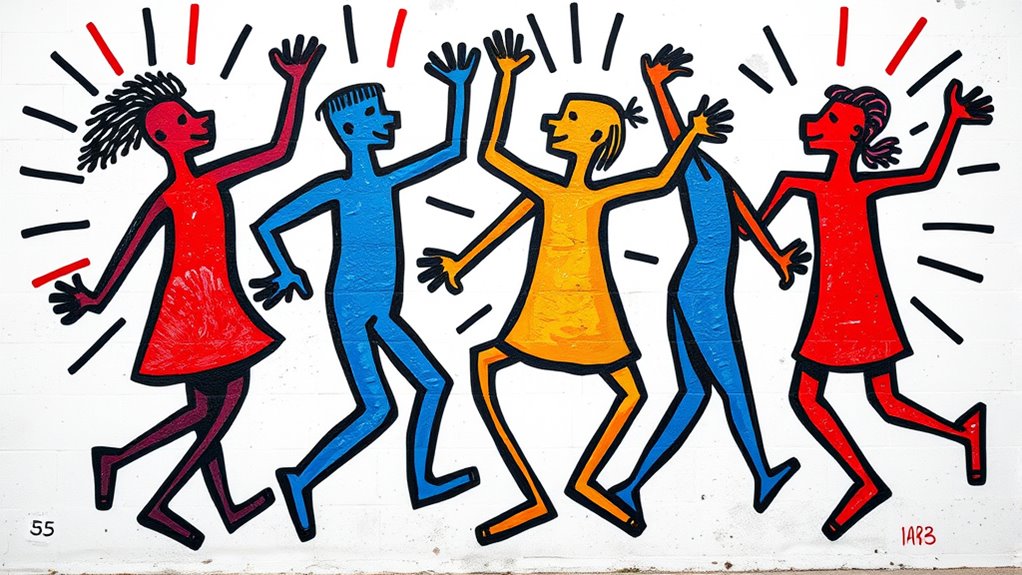

Keith Haring’s art is all about accessibility, using bold lines, bright colors, and simple symbols that everyone can understand. His public murals turn everyday spaces into lively, thought-provoking areas that inspire reflection and dialogue. Through playful yet powerful images, he communicates social and political messages about issues like AIDS awareness, peace, and equality. If you look closer, you’ll see how Haring’s work reflects his belief that art should belong to everyone and spark change.
Key Takeaways
- Keith Haring’s art features bold, vibrant images designed for universal accessibility and immediate visual impact.
- His public murals transform spaces into lively, thought-provoking environments open to all viewers.
- Haring’s work blends pop art with social messages, promoting awareness for issues like AIDS, peace, and equality.
- He believed art should be accessible to everyone, integrating it into everyday life and public spaces.
- Haring’s iconic symbols and simple lines create a visual language that transcends cultural barriers and invites engagement.
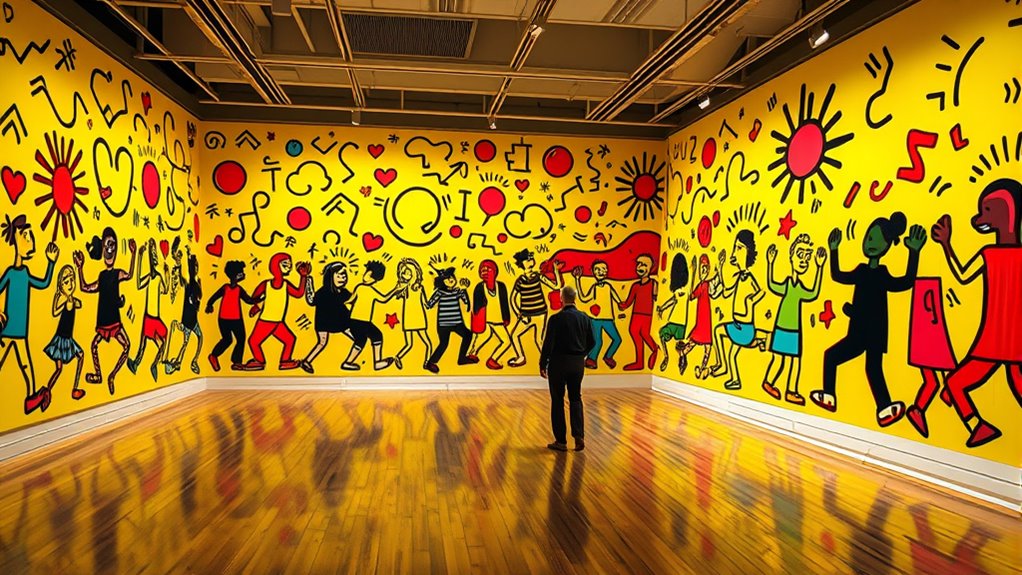
Have you ever seen bold, vibrant images that seem to jump off the wall? That’s the kind of art Keith Haring created—art that’s impossible to ignore. His work bursts with energy, using simple lines and bright colors to communicate powerful messages. You might have come across his public murals adorning city walls or his iconic pop art pieces that have become part of popular culture. Haring believed that art should be accessible to everyone, and his public murals serve as perfect examples. They transform ordinary spaces into lively, thought-provoking environments, inviting passersby to stop, look, and reflect. Whether in a busy subway station or on the side of a building, his murals make art a part of everyday life, breaking down the barriers that often keep art confined to galleries.
His style is instantly recognizable—clean, bold lines, playful figures, and a palette that commands attention. You don’t need to be an art expert to enjoy his work; it’s designed to communicate directly to everyone. His approach to pop art is no different. He took the everyday imagery and simplified it into symbols that carry universal meaning. Think of his images of dancing figures, barking dogs, or radiant babies—these icons transcend language and culture. They’re accessible and relatable, making his art a form of visual language that anyone can understand. Haring’s use of pop art was a deliberate choice, blending high art with mass culture, so that his messages could reach a broad audience. His works often carried social and political messages, from advocating for AIDS awareness to promoting peace and equality, all while maintaining that sense of fun and optimism. Additionally, Haring’s work often incorporated artistic techniques that emphasized clarity and immediacy, ensuring his messages resonated universally.
Top picks for "keith everybody"
Open Amazon search results for this keyword.
As an affiliate, we earn on qualifying purchases.
Frequently Asked Questions
What Inspired Keith Haring’s Signature Cartoon-Style Artwork?
You’re curious about what inspired Keith Haring’s signature cartoon-style artwork. His graffiti influences played a major role, as he was inspired by urban street art and subway drawings. He also drew from pop culture, incorporating vibrant colors and bold lines to make art accessible and energetic. By blending graffiti influences with pop culture elements, Haring created a distinctive style that’s lively, approachable, and instantly recognizable worldwide.
How Did Haring’s Activism Influence His Art?
Your activism deeply influenced Haring’s art by making it a powerful tool for social justice. He used bold lines, vibrant colors, and accessible imagery to raise awareness about issues like AIDS awareness, LGBTQ rights, and anti-apartheid movements. By blending activism and art, he created works that communicate urgent social messages, inspiring others to see art as a means to advocate for change and engage communities in conversations about justice.
What Are Some Lesser-Known Facts About Haring’s Personal Life?
You might not know that Keith Haring came from a supportive family background, which helped nurture his creativity. For example, his close personal relationships with fellow artists and friends influenced his work and activism. Haring often kept his personal life private, but he was openly gay, and this aspect deeply shaped his art and activism. His family’s encouragement and his personal relationships played crucial roles in his artistic journey.
How Has Haring’s Work Impacted Contemporary Street Art?
Haring’s work has profoundly influenced contemporary street art by blending graffiti culture with bold urban aesthetics. You can see his impact in the way artists embrace public spaces, using vibrant, accessible imagery to communicate social messages. His innovative style inspires you to break traditional art boundaries, encouraging a new generation of street artists to create impactful, community-centered works that challenge and beautify urban environments.
Where Can I See Original Keith Haring Pieces Today?
You can see original Keith Haring pieces in major museum collections like MoMA in New York and the San Francisco Museum of Modern Art, which house over 20 of his works. notably, Haring’s art also populates public spaces worldwide, from murals to sculptures. So, whether you visit a museum or explore public art installations, you’ll find plenty of opportunities to experience his vibrant, accessible artwork firsthand.
Conclusion
You now see how Keith Haring believed art belongs to everyone, breaking down barriers with vibrant, accessible images. His work invites you to think beyond boundaries and embrace creativity in your daily life. So, next time you encounter his bold lines and lively figures, ask yourself: isn’t art meant to connect us all, regardless of who we are? Remember, Haring’s message is clear—art is for everybody, including you.