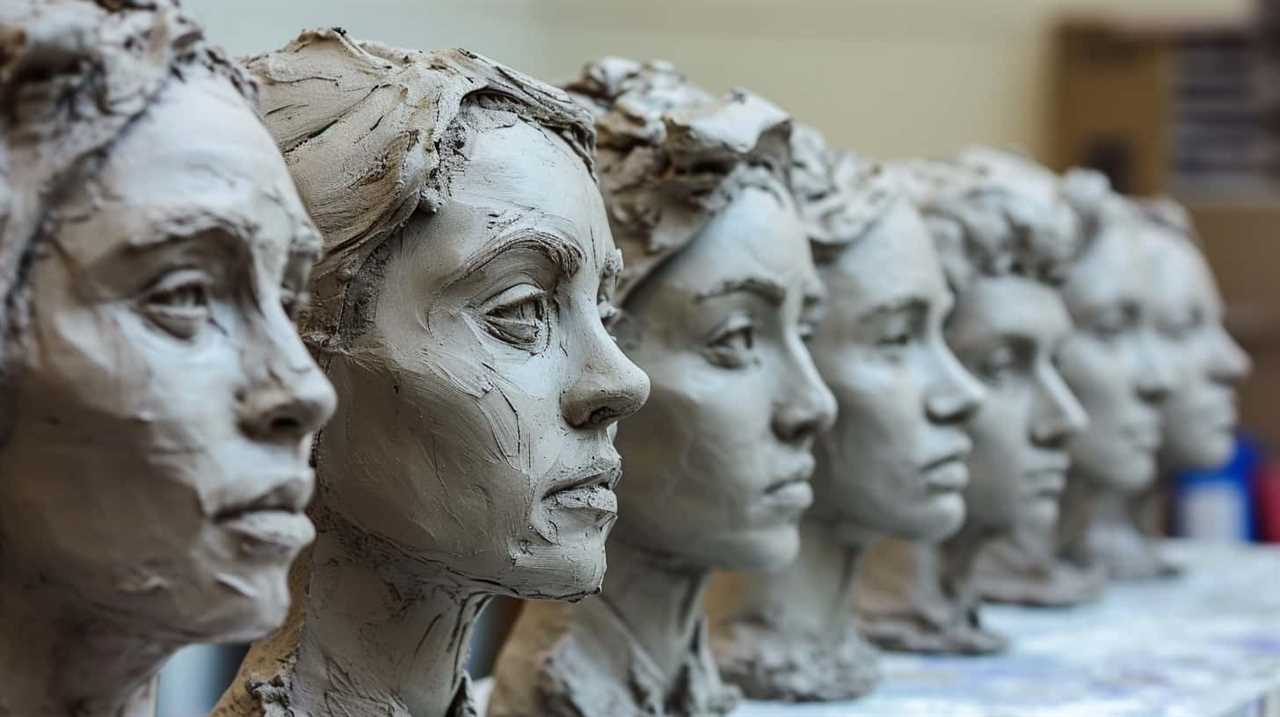
Michelangelo believed that every block of stone already contains a hidden sculpture waiting to be uncovered. Your role is to see the form within, understanding the marble’s internal structure, flaws, and natural features. Patience and skill are key as you carefully chisel away excess material to reveal what’s inside. By respecting the material and trusting your intuition, you can uncover the story hidden within the stone—there’s more to learn about this fascinating process behind every sculpture.
Key Takeaways
- Michelangelo believed sculptures are hidden within marble and only need revealing through skillful carving.
- The process involves understanding the marble’s internal structure to avoid flaws and fractures.
- Carving is about removing excess material, not creating forms from nothing.
- Artistic insight and patience are essential to interpret and unveil the sculpture inside the stone.
- The final artwork exists within the marble; the artist’s role is to discover and reveal it.
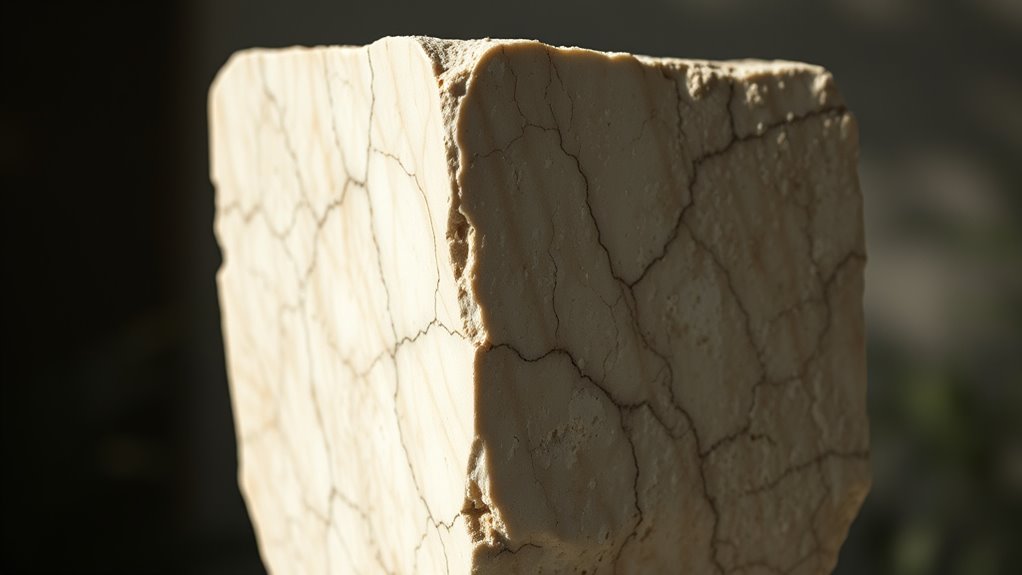
Michelangelo believed that every block of stone already contains a perfect sculpture inside it, waiting to be unveiled. This idea forms the core of his approach to sculpting, where the process isn’t about creating something entirely new, but about uncovering what’s already hidden within the marble. When you engage in marble quarrying, you might start with a rough idea of the final piece, but your real work begins when you extract the raw material. Quarrying isn’t just about cutting stone; it’s about selecting the right block, understanding its internal structure, and knowing where the potential lies. The quality and consistency of the marble influence how easily you can uncover the sculpture within. A well-chosen marble block will have fewer flaws and a more uniform grain, making it easier to work with and reducing the risk of cracks or breaks during sculpting.
Once you have your marble, sculpting techniques come into play. Michelangelo’s mastery was rooted in his ability to see the form within the stone and remove everything that wasn’t part of the final figure. His chiseling methods combined precision and force, allowing him to chip away large chunks with a point tool and then refine details with finer instruments. Your goal is to gradually strip away the excess, revealing the contours and details that are already present but hidden. Patience becomes essential, as rushing can cause fractures or ruin the sculpture entirely. Michelangelo’s sculpting techniques also involved a deep understanding of anatomy, light, and shadow—knowing where to carve to bring life and realism to the figure. Every cut was intentional, every stroke aimed at unveiling the sculpture’s true form. Additionally, understanding the internal structure of the marble helps in planning your carving approach and avoiding unexpected flaws.
Throughout your work, you’re constantly interpreting the marble’s natural grain and flaws. These features guide your hand, telling you where to carve more deeply or where to leave the stone intact. Michelangelo believed that the sculpture already existed within the marble; your task is to listen to the stone’s voice, to discern what’s hidden inside and bring it to light. By combining skilled sculpting techniques with careful marble quarrying, you transform a rough, unassuming block into a masterpiece. It’s a process of discovery, patience, and respect for the material—an art that requires both technical skill and intuitive insight. When you finally step back and see the finished sculpture, you realize that the marble was never just a block; it was a story waiting to be told, a figure longing to be free.

Piriuuo Wax Carving Tools Set, Stainless Steel Clay Sculpting Tools Double-Ended Pottery Carving Tools Wax Modeling Tools Dental Carvers Tools Wax Accessories Modeling Sculpting and Shaping(5 Style)
- Package Includes: Set of 5 versatile wax sculpting tools
- Premium Material: Made of durable, rust-resistant stainless steel
- Practical Design: Double-ended tools with knurled handles for precision
As an affiliate, we earn on qualifying purchases.
As an affiliate, we earn on qualifying purchases.
Frequently Asked Questions
What Inspired Michelangelo’s Unique Sculpting Style?
You’re inspired by Michelangelo’s artistic philosophy, which sees every block of stone as holding a hidden masterpiece. His unique sculpting style emerges from a blend of technical innovation and intuitive craftsmanship, allowing him to reveal the figure within the marble. You admire how he approaches each piece with confidence, believing that the art already exists inside the material, waiting for his skill to free it.
How Did Michelangelo Select His Marble Blocks?
You carefully select marble blocks through extensive marble quarrying, seeking high-quality stone with minimal flaws. You inspect each piece for color, texture, and purity, understanding these factors influence your sculpture techniques. You prefer durable, fine-grained marble that allows precise carving. Your keen eye guarantees you choose a block that reveals the potential for your masterpiece, knowing that the right marble is essential to bringing your vision to life with skill and artistry.
What Tools Did Michelangelo Primarily Use?
You primarily use chisels, mallets, and rasps for Michelangelo’s sculpting techniques. Imagine carving a masterpiece like a gardener pruning a tree—each tool shapes the marble carefully. During marble quarrying, he relied on point chisels to rough out forms, then finer tools for detail. Michelangelo’s mastery with these tools allowed him to transform rough stone into stunning sculptures, revealing the hidden beauty inside each marble block.
How Long Did It Take Michelangelo to Complete His Major Sculptures?
You’ll find that Michelangelo took several years to complete his major sculptures, often dedicating years to the process. His work involved extensive marble quarrying and mastery of sculpting techniques, carefully chipping away at the stone to reveal the form inside. For example, creating the David sculpture took about three years, reflecting his meticulous approach and deep understanding of marble’s properties.
Did Michelangelo Ever Leave Unfinished Works?
You’ll find Michelangelo’s passion for sculpture incomplete masterpieces in his unfinished works. He often started with grand visions but left some sculptures, like the Prisoners or the unfinished series for the Medici Chapel, incomplete. These fragments reveal the raw, unpolished beauty of sculpture completion, like a painter’s sketch. His unfinished masterpieces remind us that even great artists leave some creations still waiting to be freed from their stone prisons.
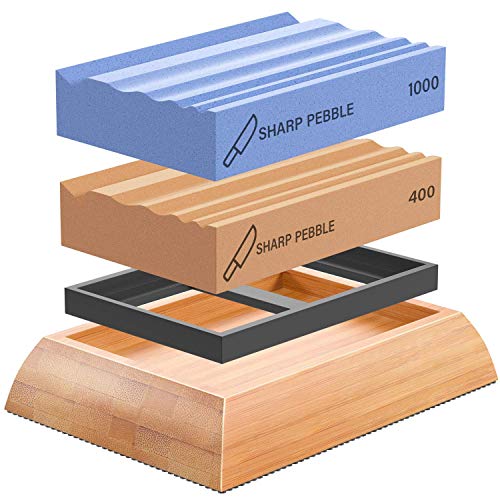
Sharp Pebble Grooved Sharpening Stones for Wood Carving Tools & Gouges
- Innovative Grooved Design: Sharpen tools with various contours
- Easy Water-Based Use: No oils needed, simple water cleaning
- Dual Grit Stones: 400 grit for dull edges, 1000 grit for polishing
As an affiliate, we earn on qualifying purchases.
As an affiliate, we earn on qualifying purchases.
Conclusion
So, next time you face a tough challenge, remember Michelangelo’s insight: every obstacle holds potential beneath the surface. Maybe the “block” is just waiting for your effort to reveal its hidden beauty. Could it be that within every difficulty lies an opportunity to create something extraordinary? Embrace the process, trust your skills, and believe that, like a sculptor, you can uncover greatness hidden inside every challenge you encounter.

10 Packs 5/8 inch Stone Splitter, Wedge and Feather Shims, Concrete Rock Stone Splitter Hand Tools, by GENHAKON
- Heavy-Duty Steel Construction: Made of high-quality heat-treated steel
- Easy to Use: Includes 5/8 inch plug shim and wedge
- Wide Application: Suitable for rocks, concrete, and ore splitting
As an affiliate, we earn on qualifying purchases.
As an affiliate, we earn on qualifying purchases.

GORGECRAFT 5Pcs Seal Carving Stone Unfinished Chinese Sealing Name Stamp Blank Qingtian Stones Engraving Hand Carved Tools Chisels Knife Set for DIY Painting Calligraphy Art Crafts Supplies
- Seal Carving Kit: Includes stones and carving tools for personalization
- Complete Carving Set: 5 stones and 3 carving knives included
- Natural Qingtian Stone: Made from durable, easy-to-carve natural stone
As an affiliate, we earn on qualifying purchases.
As an affiliate, we earn on qualifying purchases.